.jpg)
Know What to Expect from Dental Implant Recovery Pain
Are Dental Implants Painful? What Recovery Usually Feels Like
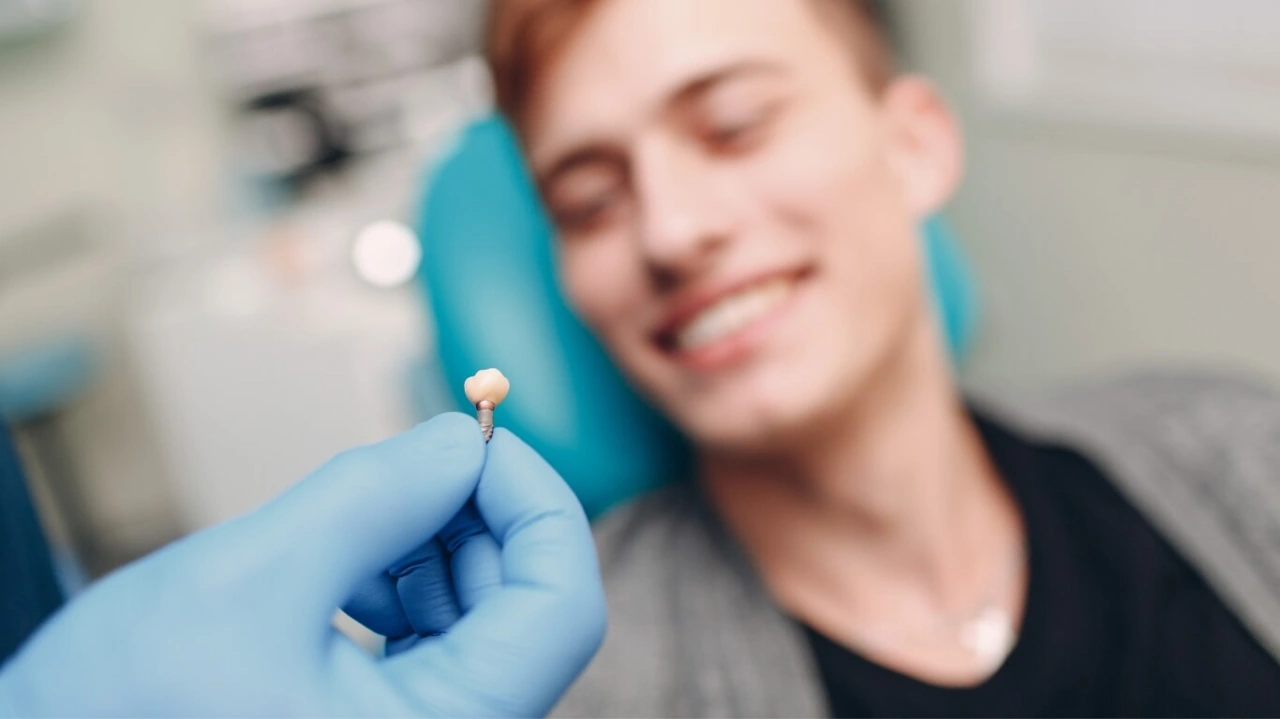
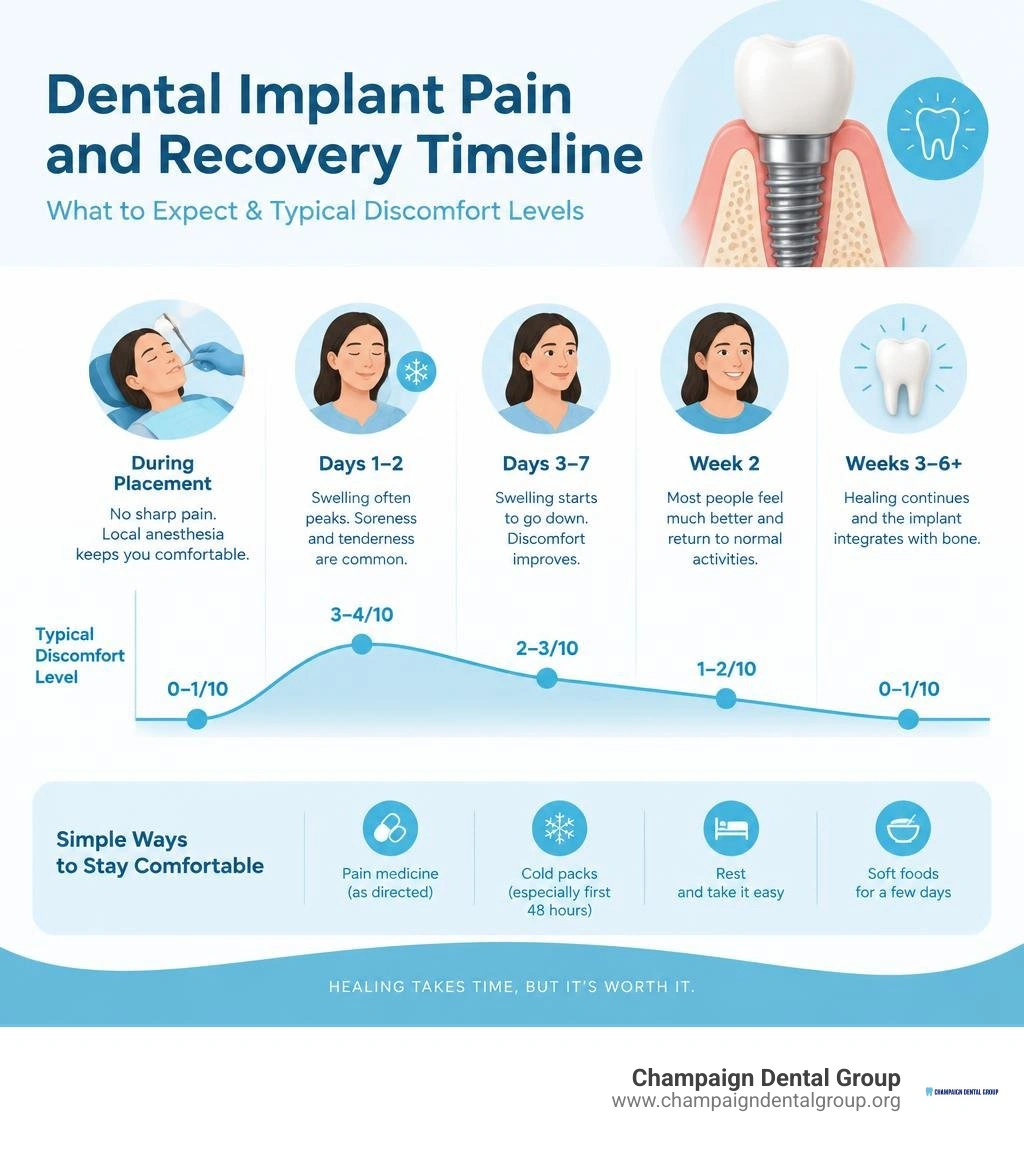
Dental implant placement should not hurt during the procedure. Local anesthesia numbs the area, and sedation can help if you feel nervous. You may notice pressure or vibration, but not sharp pain.
Afterward, most people have mild to moderate soreness, swelling, and tenderness for a few days. Many patients rate recovery discomfort around 3 to 4 out of 10. Swelling often peaks about two days after surgery, then improves. Over-the-counter pain medicine, cold packs, rest, and soft foods are often enough for a single implant.
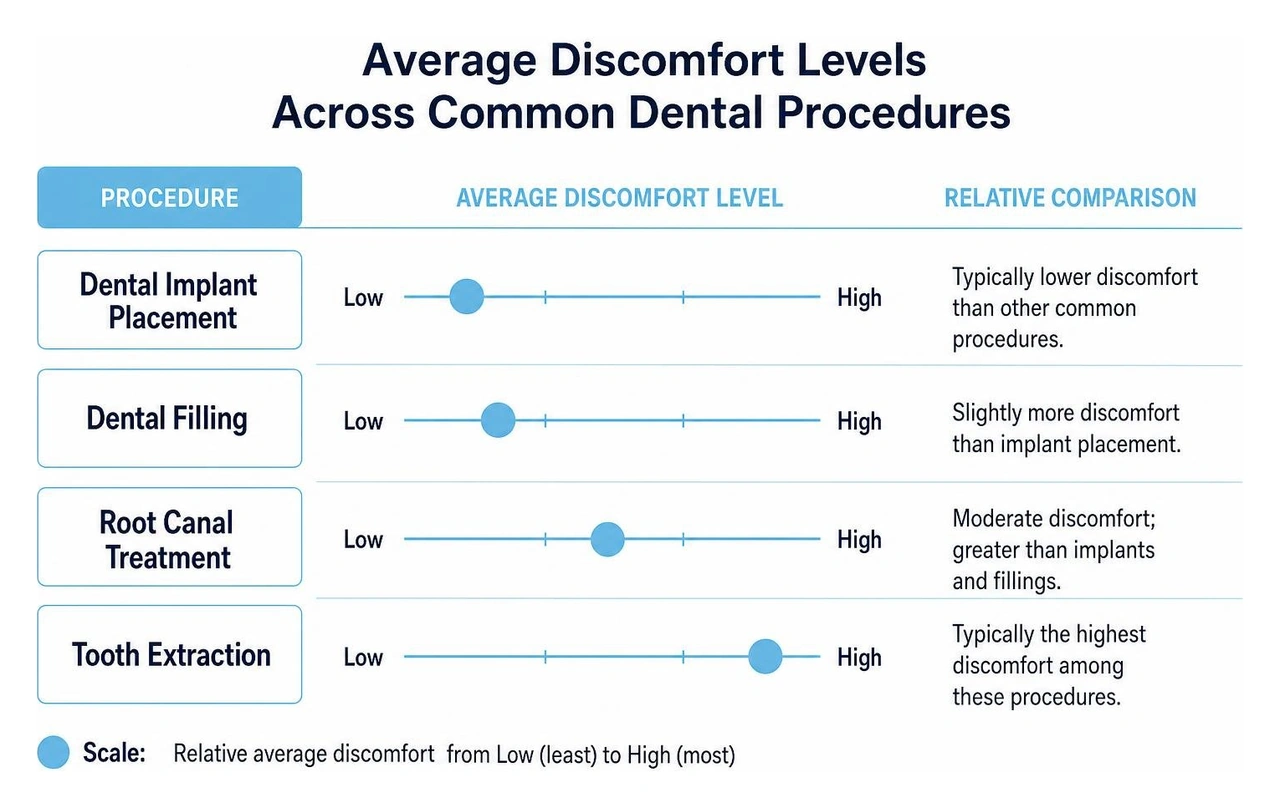
Implant recovery is often easier than people expect. Research comparing people who had both procedures found that implant placement caused less pain after surgery than tooth extraction. Still, each case is different. Multiple implants, bone grafting, smoking, and existing health concerns can make recovery more uncomfortable.
I am Dr. Ellen Zwick, and the next sections will help you understand what is normal, how to stay comfortable, and when pain deserves a call to your dentist.
Are dental implants painful vocab explained:
Are Dental Implants Painful During the Procedure?
A common question people ask when considering tooth replacement is whether the surgical placement itself causes severe pain. Thanks to modern dental techniques, placing an implant is remarkably smooth and gentle. Before any work begins, we use advanced local anesthetics to completely numb the treatment area.
Many people are surprised to learn that bone tissue has very few nerve pain receptors compared to the natural pulp of a tooth or the surrounding gum tissue. This biological reality means that preparing the bone creates far less sensitivity than patients expect. While you will feel mild vibration and light pressure, you will not feel sharp discomfort. Modern practices utilize digital imaging and 3D precision guides to ensure accurate placement while keeping tissue trauma minimal. If you are exploring multiple treatment options, you can learn more about our comprehensive dental services to see how modern techniques improve everyday dental visits.

Are Dental Implants Painful When Numbing Wears Off?
Local anesthesia typically lasts a few hours after your appointment. As the numbness begins to fade, it is normal to experience a dull ache or mild throbbing in the gums around the surgical site.
To manage this initial transition smoothly, we recommend taking your first dose of recommended over-the-counter pain medication before the local numbing wears off completely. For the vast majority of patients, the first 24 hours feel like a mild, localized soreness rather than sharp or unmanageable pain.
Sedation Options and Comfort Measures During Surgery
Dental anxiety is completely normal, and our team believes that no one should put off rebuilding their smile because of worry. We offer several comfort options to keep you relaxed from start to finish:
- Nitrous Oxide: Often called laughing gas, this gentle option helps you feel calm and relaxed while remaining fully awake. It leaves your system quickly, allowing you to drive home after your visit.
- Oral Conscious Sedation: A prescribed medication taken prior to your procedure helps melt away deeper anxiety. You remain awake and responsive, though time will seem to pass quickly.
- IV Sedation: For complex cases or patients with significant dental fear, intravenous sedation provides deep relaxation, often leaving you with little to no memory of the surgical visit.
Day-by-Day Dental Implant Recovery Timeline
Understanding what each stage of recovery looks like helps set realistic expectations and gives you peace of mind as your mouth heals.
Days 1 to 3: Managing Initial Swelling and Soreness
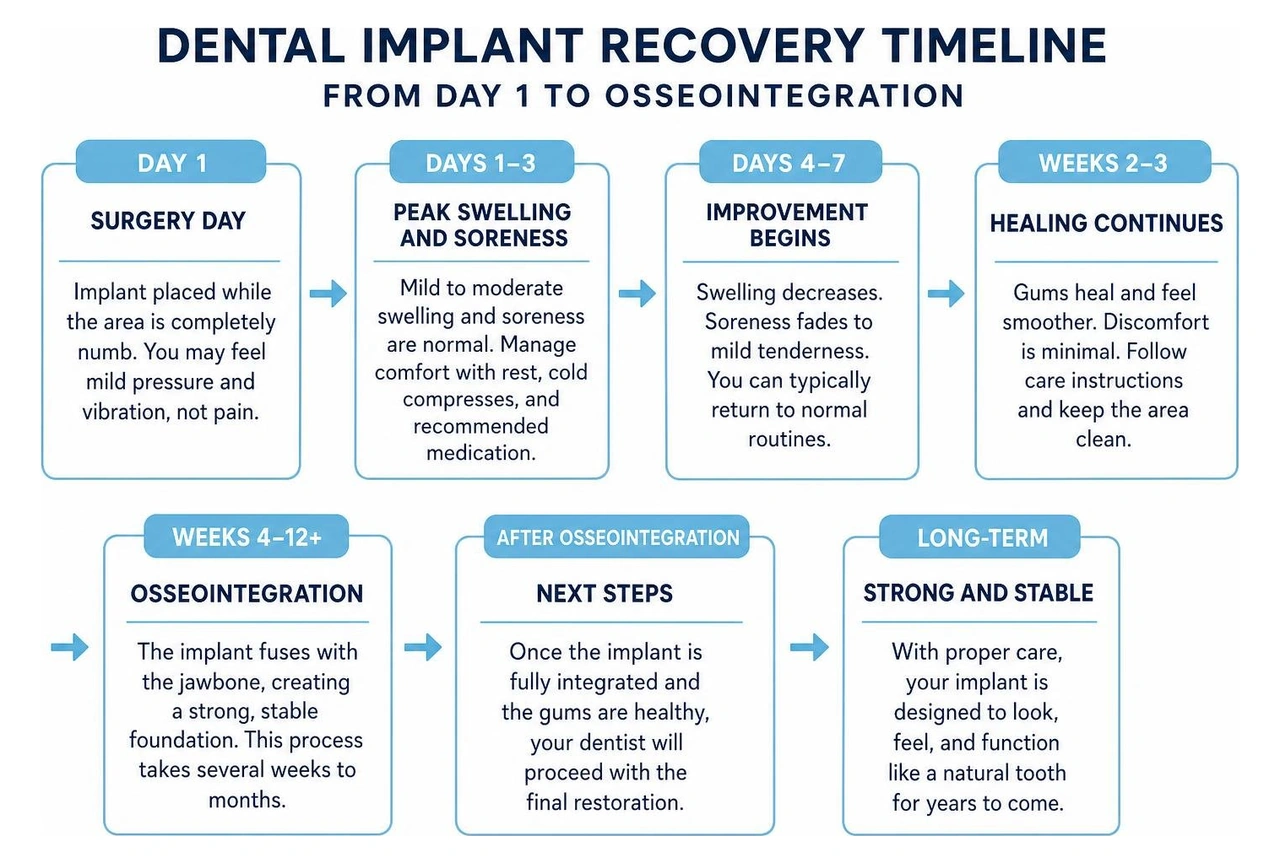
The first 48 to 72 hours represent the peak of your body's natural inflammatory response. Common symptoms include:
- Mild to moderate swelling in the cheek or jaw area
- Minor bruising or light pink saliva
- Tenderness around the gum line
Applying an ice pack to your cheek in 20-minute intervals during the first day helps limit swelling significantly. Sleeping with your head slightly elevated on an extra pillow also prevents fluid from pooling in your facial tissues. Sticking to cool, soft foods like yogurt, applesauce, and smoothies (without using a straw) protects the healing area.
Days 4 to 7: Rapid Pain Reduction and Tissue Healing
By the fourth day, postoperative swelling and tenderness decrease rapidly. Most patients stop needing pain medication entirely by day four or five. During this window, gum tissue continues to close and heal around the site, and any dissolvable sutures begin to break down naturally. You will find yourself returning to regular daily tasks and gradually reintroducing firmer foods into your diet.
Weeks 2 and Beyond: Osseointegration and Bone Fusion
After the initial two weeks, the soft tissue has largely healed, and the critical biological process known as osseointegration begins. Over the next three to six months, your jawbone naturally bonds directly to the medical-grade titanium post, creating a sturdy foundation that mimics a real tooth root.
Clinical research into the biocompatibility of implant materials shows that titanium integrates safely and securely into living bone structure, ensuring durable, long-term stability without chronic irritation.
Comparing Implant Discomfort to Extractions and Other Procedures
It is natural to measure an upcoming procedure against past dental experiences, such as having a cavity filled, getting a root canal, or having an extraction.
Are Dental Implants Painful Compared to Tooth Extractions?
Most people assume placing an implant must hurt more than pulling a tooth, but the opposite is usually true (AlQutub, 2021). Tooth extractions often involve removing an inflamed, infected tooth from an active nerve site, leaving an open socket that requires extensive clotting.
By contrast, an implant is placed in a clean, controlled environment, and the gum tissue is gently closed around the post. Studies show that patients who have experienced both procedures report significantly lower pain scores after implant surgery than after extractions, with fewer disruptions to daily routines (AlQutub, 2021).
Factors Influencing Discomfort and Pain Management Options
Your personal recovery experience depends on surgical details, overall health, and how well you care for your mouth following treatment.
To manage postoperative discomfort safely and effectively, clinical studies show that combining 400 mg of ibuprofen with 1,000 mg of acetaminophen provides better acute dental relief than prescription opioid regimens, with far fewer side effects. In fact, roughly 60% of single-implant patients never need to fill a prescription narcotic.
Factors That Increase or Decrease Healing Time
Several individual factors can influence your healing timeline:
- Surgical Complexity: Needing supportive procedures such as a bone graft or sinus lift can cause slightly more swelling and extend initial soreness by a few days.
- Number of Implants: A single implant heals very quickly, whereas full-arch restorations require a bit more downtime.
- Tobacco Use: Smoking or vaping constricts blood flow and significantly slows tissue healing, increasing complication risks.
- Oral Hygiene: Keeping your mouth clean with gentle warm salt-water rinses after the first 24 hours prevents irritation and speeds healing.
Red Flags: When to Contact Your Dentist About Post-Op Pain
While mild soreness is expected, severe or escalating pain is not normal. Contact your dental team promptly if you notice:
- Discomfort or swelling that worsens after day four instead of improving
- A body temperature over 101 degrees Fahrenheit
- Continuous bleeding that does not slow after applying gentle gauze pressure
- Numbness or tingling in your lip, chin, or tongue that lasts past the first day
- Any visible loosening or shifting of the implant post
Frequently Asked Questions About Dental Implant Pain
How long does soreness last after dental implant surgery?
Most patients experience mild soreness for roughly 3 to 5 days. By the end of the first week, discomfort is generally minimal, and many people feel back to normal within a few days.
What is the most effective pain medication for implant recovery?
A scheduled rotation of over-the-counter ibuprofen and acetaminophen is widely recognized as the gold standard for dental recovery. It manages both swelling and pain effectively without the grogginess associated with stronger prescription drugs.
Can I return to work the day after receiving an implant?
Yes, many patients who receive a single dental implant return to work and light everyday routines the very next day. If you undergo multiple placements or choose deeper sedation, taking two to three days to rest at home is recommended.
Restoring Your Smile with Comfortable Dental Implants in Urbana
Missing teeth can impact your confidence, chewing comfort, and overall oral health. At Champaign Dental Group, our family-focused practice has proudly served the Champaign County community from our office at 139 Patrick Ave in Urbana, Ohio since 1997. We treat our patients like family, providing general dentistry, restorative care, orthodontics, oral surgery, and sedation dentistry under one roof.
If you are missing teeth and want a stable, natural solution, we invite you to explore our restorative dental implants. Whether you live in Urbana, Mechanicsburg, Tremont City, West Liberty, or Springfield, our caring team is here to ensure your dental visits are gentle, transparent, and completely free of anxiety. We also provide our in-house Smile Protection Savings Plan to help uninsured individuals and families receive the quality care they deserve.
Ready to take the next step toward a complete, healthy smile? Please schedule an appointment with our friendly Urbana team today. We look forward to seeing you soon and helping you smile with total confidence.
References
AlQutub AW. "Pain Experience after Dental Implant Placement Compared to Tooth Extraction.." International journal of dentistry, 2021. PMCID PMC8424234.