.jpg)
The Mystery of Black Plaque on Teeth Explained

What Black Plaque on Teeth Is Telling You About Your Oral Health
Black plaque on teeth can be a bit of a surprise, whether you spot it in the mirror one morning or our team points it out during a visit. It might look a little scary, but knowing what it is can help you take the right steps for your smile without any worry.
Here is the short version if you are looking for the basics:
- It is hardened plaque (also called tartar) that has darkened over time
- It forms when soft plaque is not removed and picks up stains from coffee, tea, or tobacco
- It can also darken when tartar under the gumline mixes with a little blood from irritated gums
- It cannot be brushed away at home once it has hardened
- It needs a professional cleaning to be removed safely
- If left alone, it can lead to gum trouble and tooth decay
Roughly 2% to 20% of people see black tartar at some point, so you are definitely not alone. But it is something we should take care of together.
The good news? It is very easy to treat. And the earlier we catch it, the simpler the fix tends to be.
At Champaign Dental Group, we see this quite often. Families across Urbana and Champaign County come to us worried about dark buildup, and we help them understand exactly what is happening in a relaxed, friendly way.
This guide walks you through everything: what black plaque actually is, why it forms, and how we can help you get your bright smile back.
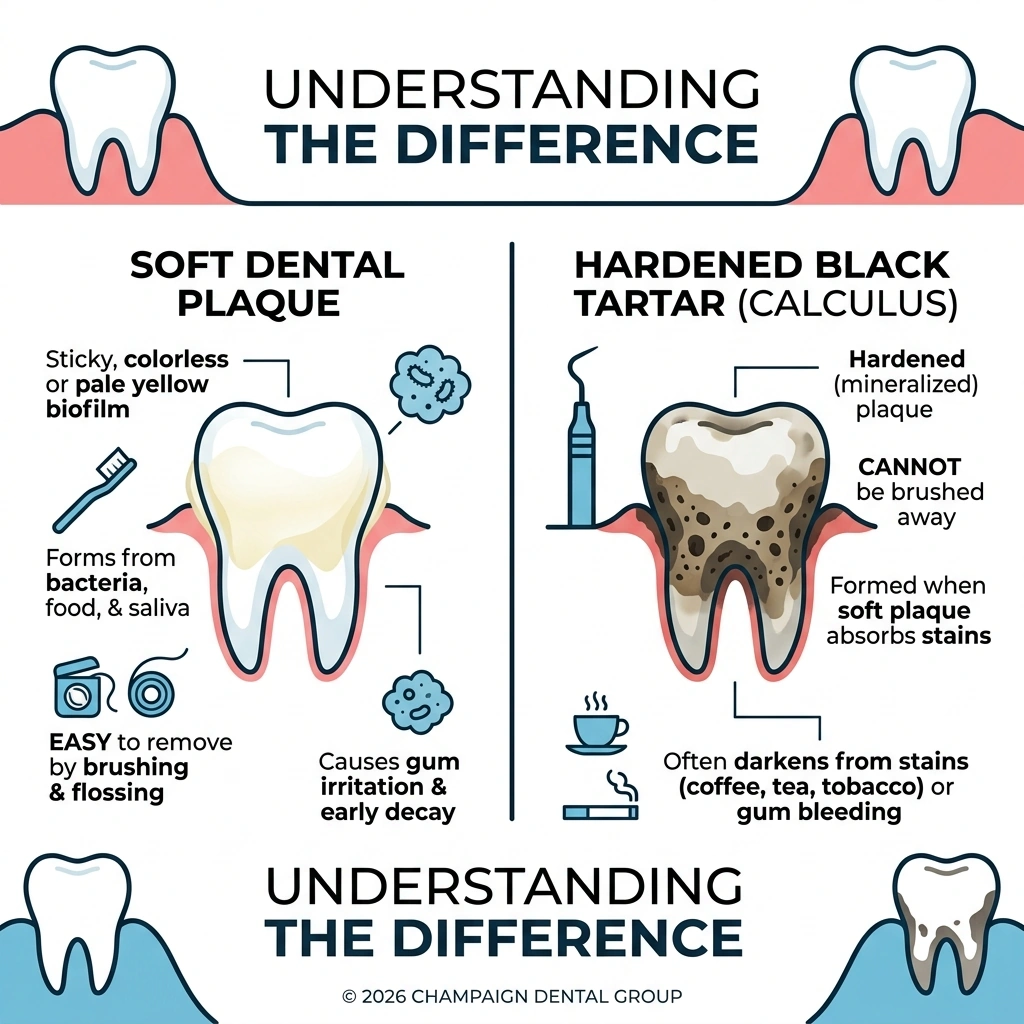
Black plaque on teeth terms you need:
What Exactly is Black Plaque on Teeth?
When we talk about black plaque on teeth, we are usually talking about tartar that has changed color. Plaque itself is a soft, sticky film of bacteria that forms on your teeth every day. If you brush and floss well, you can clear most of it away.
However, if plaque stays on the tooth for more than a day or two, it begins to harden. It takes in minerals from your saliva and turns into a tough substance called tartar. Once it reaches this stage, it is stuck to your tooth like cement.
The "black" part comes from outside factors. Because tartar is porous (meaning it has tiny holes like a sponge), it soaks up stains easily. Over time, things like coffee, dark sodas, and tobacco turn that yellowish tartar into a dark brown or black spot. In some cases, the dark color comes from inside the mouth, such as when gums are a bit irritated and a tiny amount of blood gets trapped in the tartar under the gumline.
For a deeper look at how this buildup happens, you can read our guide on plaque and tartar removal.
Identifying Black Plaque on Teeth in Your Smile
How do you know if that dark spot is black plaque on teeth or something else, like a cavity? There are a few signs to look for:
- Location: Black tartar most often shows up right along the gumline or between the teeth. It is often found on the back of the lower front teeth.
- Texture: If you run your tongue over the area, it will feel rough or bumpy compared to the smooth feel of your tooth.
- Shape: It often looks like a dark line following the curve of your gums or small, jagged shapes between the teeth.
- Persistence: Unlike a food stain, you cannot brush this away, no matter how hard you try.
If you are worried about whether it is safe to have these deposits addressed, check out our is dental calculus removal safe guide.
Why Black Plaque on Teeth Needs a Professional Touch
It can be tempting to try and pick at a dark spot, but we always recommend leaving that to the pros. Black plaque on teeth is very hard. Trying to remove it yourself can lead to scratched teeth or hurting your sensitive gum tissue.
Furthermore, black tartar is often a sign of buildup that has grown beneath the gumline. When tartar is under the gums, the bacteria it holds are in constant contact with your soft tissues, which can lead to swelling and gum disease.
Interestingly, some scientific research on black stains and cavity risk suggests that people who get these specific dark stains might actually have fewer cavities. However, they are still a major risk factor for more serious gum health issues, so it is best to have them cleaned away.
Common Causes and Risk Factors
Why do some of our neighbors get black plaque on teeth while others just see the usual yellow kind? It often comes down to a mix of daily habits and the unique way your mouth works.
| Feature | Surface Staining | Black Plaque/Tartar |
|---|---|---|
| Primary Cause | Foods, drinks, and tobacco | Hardened bacteria and minerals |
| Appearance | Broad, dull discoloration | Sharp lines or hard deposits |
| Removal | Polishing | Professional cleaning |
| Health Risk | Mostly cosmetic | Gum health concerns |
One interesting cause involves certain types of bacteria that produce dark colors as they grow. When these bacteria interact with the natural iron in your saliva, they can create dark spots that stick to the teeth.
Dietary habits also play a big role. Enjoying coffee, tea, red wine, and dark berries provides the colors that dye the tartar black. Tobacco use is another common cause, as the smoke and nicotine seep into the porous tartar. To understand the relationship between these bacteria and tooth damage, see our article on what causes cavities.
Environmental and Biological Triggers
Sometimes, the cause is not what you eat, but how your body functions.
- Saliva Balance: Some people have saliva that is less acidic, which helps protect against cavities but can also encourage minerals to settle on the teeth and form tartar faster.
- Iron Supplements: If you are taking liquid iron, these can sometimes stain plaque and tartar black.
- Mouth Breathing: Breathing through your mouth can dry things out, making it harder for saliva to wash away food and bacteria.
The CDC notes that gum disease affects nearly half of adults over 30, and black tartar is often a sign that your gums need a little extra care.
High Risk Groups
Certain groups are more likely to see black plaque on teeth:
- Smokers: Tobacco not only stains tartar but also makes it harder for your body to stay healthy.
- Children: Surprisingly, black stains are quite common in kids. While it can be a worry for parents, it is often related to harmless bacteria and is sometimes linked to a lower risk of cavities in baby teeth.
- Those with Braces: Brackets and wires create little hiding spots where plaque can harden if it is missed during brushing.
If you have noticed a significant amount of built up plaque on teeth, it is a great time to come see us.
Professional Removal and Treatment Options
Because black plaque on teeth is hardened and bonded to the tooth, it needs professional tools to be removed safely. At Champaign Dental Group, we use a gentle approach to make sure you feel comfortable while we get your smile healthy again.
The main treatment is a professional cleaning. We use specialized tools or ultrasonic cleaners that use gentle vibrations and a cooling mist of water to break up the tartar and wash it away. It is a very effective way to remove those stubborn black spots without hurting the tooth underneath.
If the tartar has moved below the gumline, we may recommend a deeper cleaning. This helps smooth out the roots of the teeth to remove bacteria and make it harder for plaque to stick in the future.
For more details on this process, you can read about deep cleaning teeth.
Why Home Removal is Unsafe
We have seen "DIY" tartar removal kits sold online, including metal scrapers. Please, for the sake of your smile, avoid these!
- Tooth Damage: Professional tools require training to use at the right angle. Using them yourself can easily scratch your enamel, which does not grow back.
- Gum Health: Slipping with a sharp tool can cause cuts or sore spots on your gums, which can lead to infection.
- Incomplete Removal: It is hard to see every part of your own teeth. Most harmful black tartar hides between teeth and under the gums where you cannot reach it.
Instead of risking your health, use a professional dental calculus remover service.
Advanced Care for Your Comfort
For our neighbors with extra staining or sensitive teeth, we offer helpful solutions:
- Gentle Polishing: This uses a stream of air, water, and a special powder to clear away surface stains that brushing misses.
- Laser Care: In some cases, we use gentle lasers to clean the gum areas and help them heal.
- Air Abrasion: For very small areas, this "sandblasting" technique can be used as a quiet, drill-free alternative.
Prevention and Long Term Care
Once we have helped you get a clean, bright smile, the goal is to keep it that way. Prevention is always easier and more affordable than treatment.
- The Two-Minute Rule: Brush for at least two minutes, twice a day. We often recommend electric toothbrushes, as they are great at removing more plaque than manual ones.
- Daily Flossing: Tartar loves to hide between teeth. If you find traditional floss tricky, try a water flosser or small interdental brushes.
- Tartar-Control Toothpaste: Look for toothpastes with the ADA Seal of Acceptance that contain special ingredients to help prevent plaque from hardening.
- Antibacterial Mouthwash: Rinsing daily can help keep the bacteria in your mouth at a healthy level.
Finding the best plaque cleaner for your specific needs is something our team loves to help with. You can also review the ADA guidelines on home oral care for more tips.
Healthy Choices for a Brighter Smile
What you eat can actually help keep your teeth clean between visits.
- Crunchy Veggies: Celery, carrots, and apples act like natural toothbrushes, helping to wipe away soft plaque.
- Water: Drinking water after meals helps wash away food bits and dark colors from coffee or tea.
- Cheese and Yogurt: These are high in calcium and help keep your mouth healthy.
The Importance of Regular Checkups
Even with great care at home, most of us will still get a little tartar. Coming in every six months for a professional cleaning lets us catch black tartar while it is still a tiny speck.
During these visits, we use a professional calculus and plaque remover approach to ensure every surface of your tooth is clean, including the spots you cannot see.
Frequently Asked Questions
Is black plaque a sign of a cavity?
Not always. While both can look dark, black tartar is a buildup on top of the tooth, whereas a cavity is a small hole in the tooth. However, because tartar traps bacteria, it can eventually lead to a cavity if it is not removed.
Can I brush away black tartar at home?
No. Once plaque has hardened into tartar, it is essentially a rock stuck to your tooth. Brushing will not remove it, and scrubbing too hard can actually wear down your tooth surface.
Does black plaque cause bad breath?
Yes. Tartar is porous and acts like a home for bacteria that cause odors. Because you cannot brush the bacteria out of the tartar, the smell stays until the tartar is professionally removed.
Conclusion
Black plaque on teeth might be a mystery when you first see it, but it is just a signal from your body that your smile needs a little extra love. Whether it is caused by your morning coffee or just the natural way your mouth works, the solution is simple: professional care and a good routine at home.
At Champaign Dental Group, located at 139 Patrick Ave in Urbana, we have been a proud part of the community since 1997. We are not a corporate office; we are your neighbors. We know that seeing dark spots on your teeth can cause a little anxiety, which is why we offer a kind, judgment-free space for your whole family.
From our family to yours, we are here to help you keep a healthy, confident smile. Whether you need a simple cleaning, oral surgery, or sedation dentistry to help you feel at ease, we provide it all right here in Urbana. For our neighbors without insurance, our Smile Protection Savings Plan makes sure quality care is always within reach.
If you have noticed black spots or buildup, do not wait for it to become a bigger problem. Reach out to us today to schedule your visit. We look forward to seeing you soon and helping you get your smile back on track!
For more information about our preventative care, visit our dental hygiene services page.