.jpg)
The Truth About Drinking Alcohol After Your Tooth Extraction

Can I Drink Alcohol 24 Hours After Tooth Extraction? Here's What You Need to Know
Can I drink alcohol 24 hours after tooth extraction? No — and most dental professionals recommend waiting at least 7 to 10 days before having any alcoholic drink after a tooth extraction.
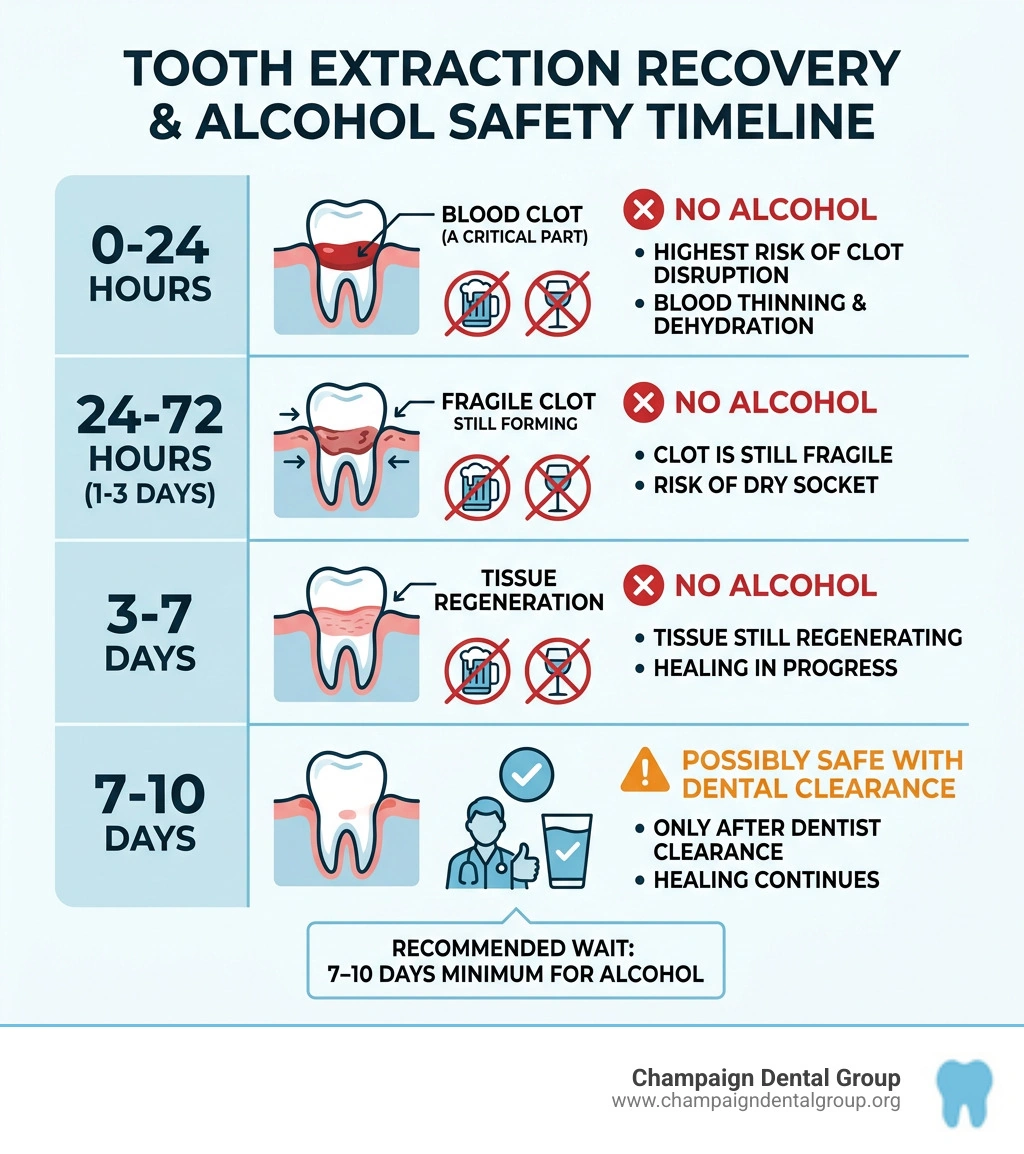
Here's a quick summary of the safe timeline:
0-24 hours after extraction: Alcohol is not safe. This is the highest-risk time for clot disruption.
24-72 hours after extraction: Alcohol is still not safe. The clot remains fragile.
3-7 days after extraction: Alcohol is not recommended. Gum tissue is still regenerating.
7-10 days after extraction: Alcohol may be okay, but only with your dentist's clearance.
After your tooth is removed, a blood clot forms in the empty socket. That clot is critical. It protects the exposed bone and nerves underneath while new tissue grows in.
Alcohol gets in the way of that process. It thins your blood, dehydrates your body, and can dissolve or dislodge the clot — leading to a painful condition called dry socket.
The first 24 to 72 hours are the most vulnerable window. But the risks don't stop there.
Whether you just had a simple extraction or a more complex procedure like wisdom tooth removal, the team at Champaign Dental Group wants to make sure your recovery goes smoothly — so let's walk through everything you need to know.
Simple can i drink alcohol 24 hours after tooth extraction glossary:
Why You Should Not Drink Alcohol 24 Hours After Tooth Extraction
We know that after a stressful dental appointment, you might feel like a cold beer or a glass of wine is exactly what the doctor ordered. Unfortunately, in this case, the doctor is ordering the exact opposite. While you might feel "fine" a day later, your body is working overtime to bridge the gap where your tooth used to be.
The primary reason to avoid alcohol during this window is its anticoagulant properties. Alcohol acts as a blood thinner. For a wound to heal, the blood must be able to clot and stay put. When you introduce alcohol, you effectively "thin out" the very foundation of your healing process. This can lead to secondary bleeding, where the socket starts oozing again long after it should have stopped.
Furthermore, alcohol is a notorious dehydrator. Proper hydration is the fuel for cellular repair. According to the Tooth Extractions Complete Guide, keeping the area moist and the body hydrated is essential for preventing complications. Alcohol strips the body of fluids, which can cause the delicate blood clot to shrink or become brittle, making it much easier to dislodge.
Finally, alcohol is an immunosuppressant. Your mouth is full of bacteria (some good, some not so good). After an extraction, your immune system needs to be at 100% to prevent these bacteria from causing an infection in the open wound. Drinking alcohol can weaken this defense, increasing your risk of post-operative infection—a complication that is both painful and avoidable. For more details on what to expect during the first day, check out our More info about tooth extraction aftercare.
Can I drink alcohol 24 hours after tooth extraction if I feel no pain?
It is a common misconception that the absence of pain means the wound is fully healed. In reality, the first 24 to 72 hours are considered the "danger zone." Even if you aren't feeling a throb, the blood clot is still incredibly fragile.
During this 72-hour window, the clot is essentially a "plug" that hasn't yet been reinforced by granulation tissue. Think of it like wet cement; it looks solid on the surface, but if you step on it (or in this case, drink alcohol), you’ll ruin the foundation. Drinking now can lead to a sudden onset of "secondary bleeding," which is often harder to control than the initial bleeding. Our Complete Dental Extraction Aftercare Guide emphasizes that tissue regeneration is a slow, biological process that can't be rushed by a lack of symptoms.
The biological impact of alcohol on oral wounds
When we look at the science, the news doesn't get much better for happy hour. Scientific research on alcohol and bone healing shows that ethanol (the type of alcohol we drink) can actually inhibit collagen production. Collagen is the "scaffolding" your body uses to rebuild the gum tissue and eventually the bone in the socket.
Alcohol also messes with your body’s inflammatory response. While we usually think of inflammation as a bad thing, a controlled amount of it is necessary to trigger the healing process. Alcohol blunts this response, leading to a "lazy" healing process that takes much longer. This prolonged healing time leaves the door open for bacterial growth, which is why we always provide specific Dental Advice After Extraction to our patients in Urbana and Champaign County.
The Dangers of Dry Socket and Alcohol Consumption
If there is one term that strikes fear into the hearts of dental patients, it’s dry socket (clinically known as alveolar osteitis). This condition occurs when the blood clot at the extraction site either fails to form, dissolves, or is physically dislodged before the wound has healed.
When the clot is gone, the underlying bone and sensitive nerve endings are exposed to everything you put in your mouth—air, food, and liquid. The result is an intense, radiating pain that can feel like it’s traveling up to your ear or down your neck. It often comes with a foul taste in the mouth and bad breath that won't go away with brushing.
Alcohol is a major contributor to dry socket because it can chemically dissolve the clot. Once that clot is gone, the healing process stops dead in its tracks. You then have to wait for granulation tissue formation to start all over again, which can add weeks to your recovery time. If you do notice increased bleeding, it’s vital to know How to Stop Bleeding After Tooth Extraction immediately by using firm pressure with clean gauze.
How alcohol thins the blood and dislodges clots
Alcohol causes vasodilation, which is a fancy way of saying it makes your blood vessels widen. This increases blood flow and blood pressure throughout the body, including the capillaries in your gums. This surge in pressure can literally push the blood clot right out of the socket from the inside out.
Protecting that socket is our number one priority. In our Molar Extraction Surgery Guide, we explain that molars have larger sockets and therefore need even more protection. Alcohol’s ability to thin the blood and increase pressure makes it the perfect storm for premature clot dissolution.
Medication Interactions: Alcohol, Painkillers, and Antibiotics
Mixing alcohol with post-operative medications isn't just a bad idea for your tooth; it can be dangerous for your entire body. Many patients are prescribed a combination of pain relievers and antibiotics to manage their recovery.
Medication Type: Pain relievers (acetaminophen)Common examples: TylenolAlcohol interaction: Can increase the risk of serious liver toxicity or damageRisk level: High
Medication Type: NSAIDsCommon examples: Ibuprofen (Advil), naproxenAlcohol interaction: Can raise the risk of stomach bleeding, ulcers, and irritationRisk level: Medium
Medication Type: OpioidsCommon examples: Codeine, hydrocodoneAlcohol interaction: Can cause extreme drowsiness and dangerous breathing problemsRisk level: Extreme
Medication Type: AntibioticsCommon examples: Amoxicillin, metronidazoleAlcohol interaction: Can trigger nausea, vomiting, rapid heart rate, and other reactionsRisk level: High
Taking acetaminophen (Tylenol) and drinking alcohol is a recipe for liver trouble. Both substances are processed by the liver, and combining them can cause a toxic buildup. If you are taking NSAIDs like Ibuprofen, alcohol can irritate your stomach lining, leading to nausea or even internal bleeding.
More importantly, if you were prescribed stronger pain medication, alcohol can dangerously enhance the sedative effects, leading to dizziness, impaired judgment, and slowed breathing. For specific Wisdom Teeth Removal Care Tips, we always remind our patients that safety comes first.
Is it safe to drink alcohol 24 hours after tooth extraction while taking antibiotics?
The short answer is a resounding no. Alcohol can interfere with how your body metabolizes antibiotics, either making them less effective or causing a "disulfiram-like reaction." This can result in severe nausea, vomiting, flushing of the skin, and a racing heart.
According to Scientific research on post-extraction infection, the risk of infection after a wisdom tooth extraction is already between 10% and 25%. Drinking alcohol while on antibiotics not only makes the medicine less effective but also puts unnecessary stress on your body while it's trying to fight off potential pathogens. A delay in healing is the best-case scenario; a systemic infection is the worst.
Safe Timeline: When Can I Have a Drink?
We generally recommend the 7 to 10-day rule. By day seven, the initial "plug" has usually been replaced by more stable granulation tissue. However, this timeline can vary based on several factors.
- Simple vs. Surgical Extraction: A simple extraction (where the tooth was visible and easy to pull) might heal faster. A surgical extraction, like an impacted molar, involves more trauma to the tissue and bone, requiring a longer wait.
- Stitches: If you have stitches, you should wait until they have dissolved or been removed by us before even considering a drink.
- Overall Health: If you have a weakened immune system or conditions like diabetes, your body needs more time to repair itself.
Before you pour a drink, it's always best to get a Molar Extraction follow-up or a quick clearance from your dentist. You can find More info about tooth extraction services on our website to see how we monitor your progress.
Is it safe to drink alcohol 24 hours after tooth extraction if it is a low-alcohol beverage?
Some patients ask if a "light" beer or a diluted wine spritzer is okay. While the alcohol content is lower, the risks remain similar. Furthermore, carbonated beverages like beer or sparkling wine carry their own set of problems. The bubbles can physically agitate the clot, and the "suction" required to drink from a bottle or glass can create a vacuum in your mouth that pulls the clot out.
Hydration should be your absolute priority. Water, milk, and certain fruit juices (non-acidic) are much better choices. Our Complete Dental Extraction Aftercare Guide suggests that sticking to non-alcoholic, non-carbonated drinks for at least the first 72 hours is the safest bet for a pain-free recovery.
Frequently Asked Questions about Post-Extraction Care
What should I do if I accidentally drank alcohol shortly after my extraction?
First, don't panic—but do stop drinking immediately. Rinse your mouth very gently with lukewarm salt water (about half a teaspoon of salt in 8 ounces of water). Do not swish vigorously; just let the water roll around and lean over the sink to let it fall out. Do not spit!
Monitor the site for any increased bleeding or a sudden spike in pain. If the area starts bleeding again, bite down on a clean piece of gauze for 30–45 minutes. If you experience severe pain that doesn't respond to your prescribed meds, contact our clinic in Urbana or Champaign right away.
What are safe beverage alternatives during the first 72 hours?
You don't have to stick to plain water for three days straight. Here are some safe, hydrating options:
- Coconut Water: Excellent for electrolytes and very hydrating.
- Herbal Tea: Make sure it is lukewarm, not hot. Peppermint or chamomile can be very soothing.
- Apple Juice: A good source of energy, but ensure it isn't too cold.
- Smoothies: These are great because they double as a meal. Just remember: NO STRAWS. Use a spoon instead.
Pair these with soft foods like mashed potatoes, yogurt, scrambled eggs, or pudding to keep your strength up without irritating the site.
How can I manage pain without using alcohol?
Alcohol is a poor painkiller because of the side effects we’ve discussed. Instead, try these proven methods:
- Ice Packs: Apply an ice pack to the outside of your cheek for 15–20 minutes at a time during the first 24 hours to reduce swelling.
- Elevation: Keep your head elevated with an extra pillow when you sleep to reduce pressure in your jaw.
- Clove Oil: A tiny drop of clove oil on a cotton ball (applied near, but not directly on, the socket) can provide natural numbing.
- Vanilla Extract: Surprisingly, the alcohol in pure vanilla extract is minimal but the antioxidants can help soothe the gums.
Always follow the prescribed dosage of your medication. If you're looking for affordable dental care options for your follow-up, ask us about our Smile Protection Plan.
Conclusion
At Champaign Dental Group, we’ve been serving the Urbana and Champaign County communities since 1997. We pride ourselves on providing compassionate patient care and using state-of-the-art technology to make your procedures as comfortable as possible. Our high-quality staff is always here to answer your questions—even the ones about when you can finally have that celebratory drink!
The truth is, waiting a few extra days to drink alcohol is a small price to pay for a lifetime of oral health. By following these guidelines, you protect your investment in your smile and avoid the intense pain of complications like dry socket. If you have any concerns about your Tooth Extractions or need to schedule a follow-up, don't hesitate to reach out to us. We’re here to ensure your recovery is nothing but a success!