.jpg)
Beyond the Bubble: A Guide to Chewing Gum and Jaw Muscle Development

Understanding the Buzz Around Chewing Gum to Build Jaw Muscles
Chewing gum to build jaw muscles has become a viral trend on social media, with many people—especially young adults—turning to specialized "fitness gum" in hopes of achieving a more chiseled, defined jawline. But does it actually work, and more importantly, is it safe for your teeth and jaw health?
Quick Answer: Does Chewing Gum Build Jaw Muscles?
- Yes, it can strengthen jaw muscles - Research shows that regular gum chewing can increase bite force by up to 37.8% after 4 weeks of consistent chewing exercise.
- But results are limited - Chewing gum primarily strengthens the masseter muscles (the main chewing muscles), but won't dramatically reshape your jawline.
- Significant risks exist - Overuse can lead to tooth enamel damage, worn teeth, chronic headaches, and jaw pain.
- Moderation matters - If you choose to try it, use sugar-free gum for short periods (5-10 minutes) rather than hours daily.
If you're a busy parent juggling family schedules, you've probably seen this trend pop up on your kids' social media feeds. Picture this: teens and young adults chomping away on ultra-tough gum for hours, convinced they're sculpting their way to a stronger, sharper facial profile. The trend has exploded on TikTok, with brands marketing specialized "jawline gum" that's reportedly 15 times harder than regular chewing gum.
The appeal is understandable. Modern diets consist mostly of soft, processed foods that require minimal chewing effort. Our ancestors spent hours breaking down tough, fibrous foods—a natural workout for their jaw muscles. Today's fitness gum trend tries to replicate that ancestral chewing pattern.
But here's where things get complicated. While some scientific studies suggest that structured gum chewing can increase bite force and strengthen chewing muscles, dental professionals are raising red flags. The same intense chewing that might build muscle can also cause tiny fractures in your tooth enamel, lead to chronic headaches, and create jaw pain that affects your daily life.
At Champaign Dental Group, our team has seen the consequences of this trend in our community. We believe in providing honest, evidence-based guidance to help families make informed decisions about their oral health. That's why we've put together this comprehensive guide—to separate the social media hype from the dental health reality.
The Science Behind Chewing Gum to Build Jaw Muscles
Many people are drawn to the idea of chewing gum to build jaw muscles because, intuitively, it makes sense. Just like lifting weights builds biceps, repeatedly working your jaw muscles should make them stronger, right? Let's explore the science to understand how this works and what the research truly says.
How It Works: Muscle Growth and Jaw Anatomy
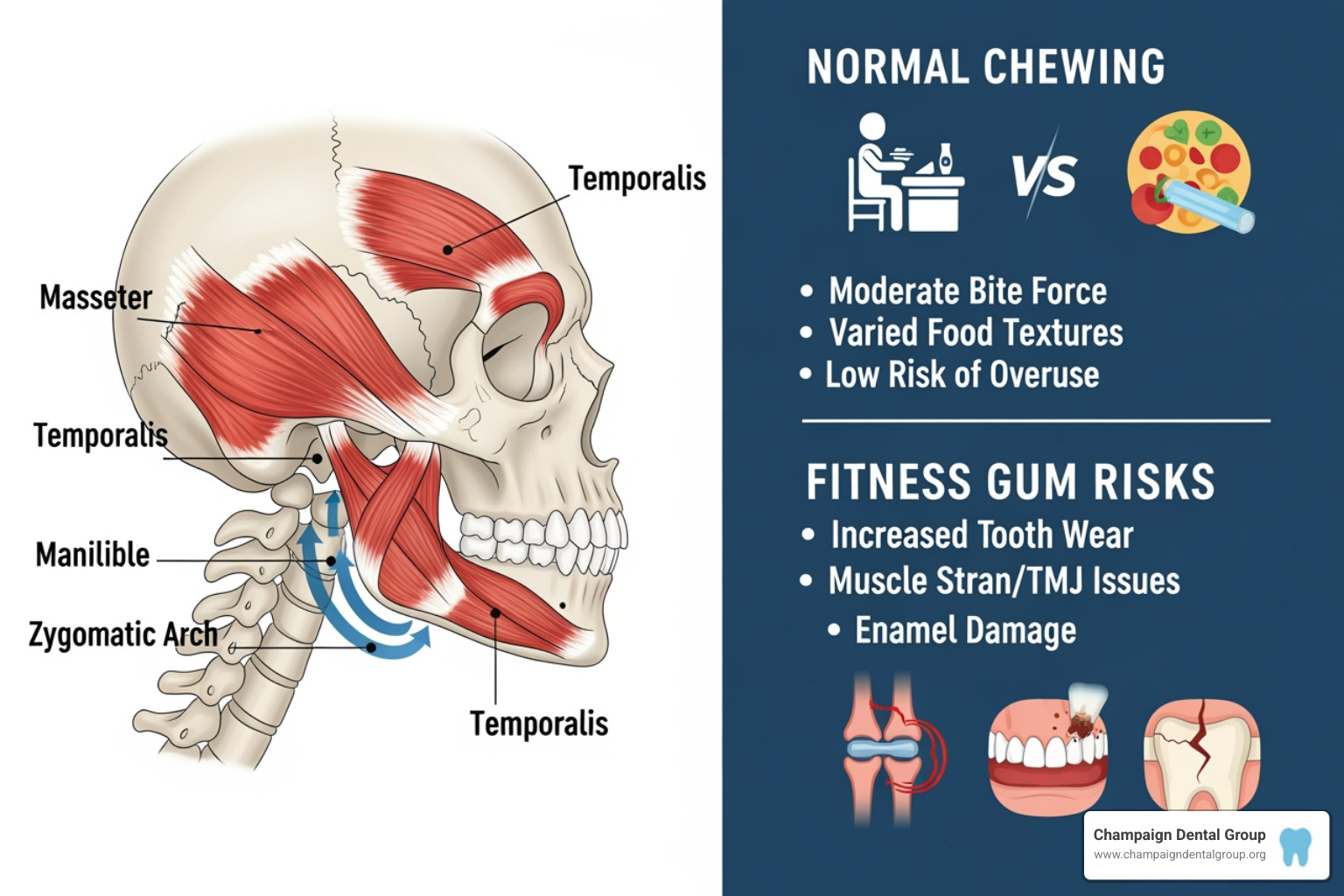
Our jaw is powered by several muscles, primarily the masseter and temporalis muscles. These are the muscles responsible for the powerful act of chewing. When we chew, these muscles contract and relax, exerting force. The idea behind fitness chewing gum is to provide increased resistance, forcing these muscles to work harder than they would with regular food or softer gum.
This concept aligns with the principle of muscle hypertrophy, which is the growth and increase in the size of muscle cells. When muscles are subjected to resistance training—meaning they're challenged to work against a force—they respond by growing larger and stronger. This is why athletes lift weights or engage in resistance exercises for their bodies. For the jaw, the "resistance" comes from the hardness and chewiness of the gum.
Proponents of fitness gum claim that this repetitive motion with increased resistance can lead to a more defined and chiseled jawline by increasing the size of these masseter muscles. A larger masseter muscle, they argue, contributes to a squarer, more prominent jaw angle.
What Research Says About Bite Force and Gum Chewing
While the concept seems logical, what does scientific research actually tell us about the effects of gum chewing on jaw muscles and bite force?
Several studies have explored this very question. For instance, a 2018 study titled "Effects of gum chewing exercise on maximum bite force according to facial morphology" investigated the impact of gum chewing on Maximum Bite Force (MBF) in adults. The study found that a 4-week gum chewing exercise program resulted in a significant increase in MBF across all participants. Specifically, the mean MBF of all subjects increased by an impressive 22.6% after just four weeks of consistent chewing. This particular study involved subjects chewing gum for 5 minutes, twice a day, for 4 weeks.
Interestingly, this research also highlighted the role of facial morphology. The study observed that the percentage increase in MBF was highest in individuals with dolicho facial morphology (longer, narrower faces), showing a remarkable 37.8% increase. This suggests that while gum chewing can improve masticatory performance for many, its effectiveness might be more pronounced in certain facial types. Previous studies have consistently reported that gum chewing exercise is helpful in enhancing bite force and masticatory function. Another study indicated that even a 4-week training with hard chewing gum influenced the functional capacity and strength of masticatory muscles.
However, it's crucial to understand the distinction between increased bite force and a visibly "chiseled" jawline. While stronger muscles can contribute to a more prominent jaw, facial aesthetics are influenced by a complex interplay of bone structure, skin elasticity, and fat distribution. Building muscle might make the masseters larger, but it won't fundamentally change your underlying bone structure or reduce fat under the chin. In fact, some experts warn that over-developed masseters could lead to a wider, more square jaw, which might not be the desired aesthetic for everyone.
The Hidden Risks of the Fitness Gum Trend
The allure of a sculpted jawline is strong, but chasing this aesthetic through intensive chewing gum to build jaw muscles comes with a significant downside. While the scientific evidence points to increased bite force, dental professionals are sounding the alarm about the potential for damage and discomfort.
The Dangers of Chewing Gum to Build Jaw Muscles for Your Teeth
Your teeth are designed for chewing food, not for constant, high-resistance workouts. Chewing ultra-hard fitness gum can put immense and unnatural stress on your dental structures, leading to a host of problems:
- Enamel Fractures: Your tooth enamel, though strong, is not indestructible. Constant chewing on tough gum can cause microscopic, or even visible, fractures in the enamel. These tiny cracks can weaken the tooth, making it more susceptible to further damage and sensitivity.
- Excessive Tooth Wear: The friction and force from prolonged chewing on hard gum can accelerate the wear and tear of your tooth surfaces. This can lead to flattened chewing surfaces, altered bite, and increased sensitivity as the protective enamel layer thins.
- Risk of Cavities (with sugared gum): While many fitness gums are sugar-free, some may still contain artificial sweeteners that can contribute to dental erosion or, if not sugar-free, directly lead to cavities. Even sugar-free gum, if chewed excessively, can potentially alter the oral microbiome, though the primary concern here is mechanical stress.
- Damage to Dental Fillings or Crowns: Existing dental work, such as fillings, crowns, or veneers, can be particularly vulnerable to the intense forces generated by fitness gum. The repetitive, high-stress chewing can dislodge fillings, crack crowns, or cause other restorative work to fail, leading to costly and often painful dental repairs. As our dental professionals in Urbana and Champaign County, OH, often remind us, protecting your existing dental work is paramount to long-term oral health.
Dr. Joel Kopelman, a facial plastic surgeon, advises approaching claims about facial fitness gum with skepticism, a sentiment echoed by many dental experts. The idea that constant chewing on tough gum leads to wear and strain, rather than just muscle building, is a unique insight that highlights the delicate balance of our oral system.
Why Chewing Gum to Build Jaw Muscles Can Lead to Pain
Beyond direct tooth damage, the relentless workout provided by fitness gum can wreak havoc on the delicate structures of your jaw.
- Muscle Fatigue and Soreness: Just like any other muscle, your jaw muscles can become fatigued and sore from overuse. This can manifest as persistent aching in the jaw, difficulty opening or closing your mouth fully, and general discomfort throughout the day.
- Chronic Headaches: The muscles involved in chewing are intricately connected to other muscles in your head and neck. Excessive tension and strain from over-chewing can radiate, leading to tension headaches or even exacerbating existing migraine conditions. Research has linked daily chewing gum to chronic headaches, including tension headaches and migraines, due to muscle tension.
- Jaw Joint Discomfort: The complex joints that connect your jaw to your skull are highly susceptible to strain from excessive chewing. Overworking these joints can lead to clicking sounds, popping sensations, stiffness, and pain when chewing, speaking, or even yawning. This discomfort can significantly impact your quality of life. The American Dental Association (ADA) news highlights that experts expose the legitimacy of facial-fitness gum, often citing these very risks.
The cautionary tone from dental professionals is clear: your teeth and jaw aren't designed for hardcore workouts in the same way your biceps are. The potential for wear, strain, and chronic pain far outweighs the unproven aesthetic benefits.
Safer Alternatives and Professional Guidance
The desire for a defined jawline is understandable, but risking your oral health with trends like chewing gum to build jaw muscles isn't the way to go. Thankfully, there are many safer, more effective, and dentist-recommended approaches to achieve a healthy and aesthetically pleasing jawline.
Effective, Dentist-Recommended Tips for Jawline Health
Instead of resorting to potentially harmful fads, we recommend a holistic approach that focuses on overall health, which naturally improves facial aesthetics. Here's what our dental experts suggest:
- Overall Fitness and Weight Management: One of the most significant factors influencing jawline definition is overall body fat. Reducing excess body fat through a healthy diet and regular exercise will naturally make your jawline more prominent. As our dental professionals often explain, a healthy body contributes to a healthy smile and a more defined facial structure. Weight loss interventions have been shown to impact cervical and chin subcutaneous fat depots, directly improving jawline visibility.
- Proper Hydration: Staying well-hydrated is crucial for skin elasticity. Plump, hydrated skin can appear firmer and contribute to a smoother facial contour, including around the jawline.
- Gentle Facial Movements and Exercises: While intense chewing is problematic, gentle facial exercises, sometimes referred to as facial yoga, can help tone facial muscles. These are typically low-impact and focus on improving circulation and muscle awareness rather than building bulk. However, it's important to approach these with moderation and gentleness.
- Correcting Posture: Poor posture, especially a forward head posture, can create the appearance of a less defined jawline by causing skin and tissue around the neck to sag. Improving your posture can instantly improve your profile.
- Maintaining Good Oral Hygiene: A healthy mouth is a beautiful mouth! Regular brushing, flossing, and dental check-ups ensure your teeth and gums are in top condition. This not only prevents issues like gum disease, which can affect facial appearance, but also contributes to overall oral health. If you have concerns about grinding your teeth or clenching, which can affect jaw muscles, our team at Champaign Dental Group can provide solutions like custom nightguards.
For those seeking more direct aesthetic improvements, modern cosmetic dentistry and non-surgical aesthetic treatments offer proven and safe options. These can include:
- Botox and Dermal Fillers: Botox can be used to slim the jawline by reducing the size of overactive masseter muscles, while dermal fillers can add volume and definition directly to the jawline area.
- Skin Tightening Treatments: Non-invasive procedures like Ultherapy or radiofrequency treatments can help tighten loose skin around the jaw and neck, improving contour without surgery.
- Surgical Options: For more significant changes, procedures like neck liposuction (to remove excess fat) or chin augmentation can provide dramatic and lasting results.
Always consult with a qualified medical or dental professional to discuss the best and safest options for your individual needs.
A Dentist's Professional Advice
At Champaign Dental Group, serving Urbana and Champaign County, OH, we are dedicated to providing compassionate, high-quality patient care. When it comes to trends like chewing gum to build jaw muscles, our advice is clear: prioritize your oral health and overall well-being.
- Moderation is Key: If you enjoy chewing gum, do so in moderation. Regular chewing gum has been shown to offer benefits like improving concentration, reducing stress, and freshening breath. However, excessive chewing, especially of hard gum, can lead to muscle fatigue and other issues.
- Choose Sugar-Free Gum: To protect your teeth from cavities, always opt for sugar-free gum. Many sugar-free gums contain xylitol, a natural sweetener that can actually help protect your teeth from plaque buildup and tooth decay.
- Listen to Your Body: If you experience any pain, discomfort, clicking, or stiffness in your jaw or teeth while chewing gum, stop immediately. These are signs that your jaw system is being overstressed.
- The Importance of Professional Guidance: Your oral health is unique to you. What works for one person on social media may not be safe or effective for another. We advise against relying on social media quick fixes for significant changes to your facial structure or health. Instead, consult with dental professionals who can assess your specific needs and recommend safe, proven methods.
Our team at Champaign Dental Group is always here to help. We pride ourselves on creating exceptional patient experiences, ensuring that every visit is comfortable and informative. We offer affordable consultations and preventive care, including our Smile Protection Plan, designed to make high-quality dental care accessible to our community. If you have concerns about your jaw or teeth, we encourage you to schedule a visit with us. We'll provide personalized advice and effective solutions to help you maintain a healthy, confident smile.
Conclusion: Chewing Over the Facts for a Healthy Jaw
So, where does all this leave us in the chewing gum to build jaw muscles debate? After looking at the science, weighing the risks, and considering what dental professionals see every day, the answer becomes pretty clear.
Yes, research shows that consistent gum chewing can increase your bite force—in some cases by up to 37.8% after just four weeks. Your masseter muscles do get stronger when you work them harder. But here's the reality check: stronger chewing muscles don't automatically translate to that sharp, chiseled jawline you're seeing in filtered social media posts. Your facial appearance depends on so much more than muscle size—your bone structure, genetics, skin elasticity, and body fat percentage all play major roles that no amount of gum chewing can change.
The trade-off simply isn't worth it. The potential for enamel fractures, excessive tooth wear, chronic headaches, and persistent jaw pain far outweighs any modest muscle-building benefits. At Champaign Dental Group, we've been caring for families in Urbana and Champaign County since 1997, and we've seen what happens when well-meaning people follow social media trends without understanding the consequences for their oral health.
Our team's advice? Skip the fitness gum trend entirely. Instead, focus on what actually works: maintaining a healthy weight through balanced nutrition and regular exercise, staying hydrated, practicing good posture, and keeping up with your oral hygiene routine. These proven approaches will do far more for your appearance and health than hours of aggressive gum chewing ever could.
If you're genuinely concerned about your jawline or facial aesthetics, that's completely understandable—but please talk to qualified professionals who can offer safe, evidence-based solutions. Modern cosmetic dentistry and aesthetic treatments provide real results without putting your teeth and jaw at risk.
At Champaign Dental Group, we pride ourselves on delivering compassionate, high-quality patient care that puts your long-term health first. We believe in honest conversations and real solutions, not quick fixes that might harm you down the road. Our Smile Protection Plan makes comprehensive preventive care affordable, so you can maintain excellent oral health without breaking the bank.
Your smile is precious, and your jaw health matters. If you have any concerns about your teeth, jaw comfort, or oral wellness, we're here to help. Schedule a consultation with our dental experts at Champaign Dental Group today. Let's work together to keep your smile healthy, comfortable, and confident—the right way. Your teeth and jaw will definitely thank you for it!