.jpg)
Your Smile's Golden Future: Unpacking Gold Crown Tooth Costs

Why Understanding Gold Crown Costs Matters for Your Family's Dental Health
The cost of a gold crown tooth typically ranges from $800 to $2,500 per tooth, depending on several key factors. Without insurance, you might pay up to $2,500, while dental insurance often covers 50-80% of the cost when medically necessary.
Quick Cost Overview:
- Average cost range: $800-$2,500 per tooth
- With insurance: Often 50-80% coverage for medically necessary crowns
- Without insurance: Up to $2,500 per crown
- Typical Ohio pricing: Similar to national averages, varying by location and dentist
When your dentist mentions you need a crown, it's natural to wonder about the investment. Gold crowns have been used in dentistry for over 4,000 years—they're not just a historical curiosity but a proven solution that can last decades with proper care.
At Champaign Dental Group, we understand that busy parents need clear, straightforward information about dental costs. Our experienced team combines state-of-the-art technology with compassionate care to help you make the best decision for your family's oral health. We believe in transparency, which is why we discuss all costs upfront during your consultation.
The cost of a gold crown isn't just an expense—it's an investment in your long-term dental health. Unlike some alternatives that may need replacement every 5-10 years, a gold crown can last 15-20 years or longer, potentially making it more economical over time.
For families seeking affordable options, Champaign Dental's Smile Protection Plan can help make quality dental care more accessible. We're here to guide you through every step of the process, from understanding your options to creating a treatment plan that fits your budget and schedule.
What is a Gold Crown and Why is it a Timeless Choice?
When we talk about dental crowns, we're referring to a protective cap that restores a damaged or weakened tooth to its original shape, size, strength, and appearance. Among the various materials available for crowns, gold has a particularly rich history in dentistry, stretching back for thousands of years. Imagine that! Dentists have been using gold for tooth repair for more than 4,000 years. That's a serious track record.
Today, when we refer to a "gold crown," we're typically talking about a gold alloy crown. These aren't usually made of pure gold, which would be too soft for the intense pressures of chewing. Instead, they combine gold with other strong, biocompatible metals like platinum, palladium, chromium, or nickel. This blend is crucial: it improves the crown's strength, making it incredibly durable, and also helps to reduce the overall cost of a gold crown tooth. The result is a robust restoration that stands the test of time.
Gold crowns have remained a relevant choice in modern dentistry due to their unique properties. They are highly biocompatible, meaning they are well-tolerated by the body and rarely cause allergic reactions or gum irritation, making them a comfortable and safe option for many patients. At Champaign Dental Group, we offer comprehensive services including Crowns and Bridges to help restore your smile with materials that best suit your needs and lifestyle.
Advantages: The Gold Standard of Durability
There's a reason gold crowns have earned the nickname "the gold standard" among some dentists and patients. Their advantages are considerable, especially when it comes to longevity and function:
- Exceptional Strength: Gold alloys are incredibly strong and resistant to fracture. They can withstand significant biting forces, making them an ideal choice for molars and other teeth that bear the brunt of chewing. You can enjoy your favorite foods without worrying about your crown chipping or breaking.
- Unrivaled Longevity: With proper care, gold crowns are renowned for their lifespan. They can last 15-20 years or more, with many patients reporting their gold crowns lasting for several decades or even an entire lifetime. This durability translates into excellent long-term value, as you're less likely to need frequent replacements.
- Minimal Tooth Removal: Gold is a relatively malleable metal, allowing dentists to prepare the tooth with less removal of healthy tooth structure compared to some other crown materials. This preserves more of your natural tooth, which is always a win in our book!
- Gentle on Opposing Teeth: Gold wears down at a rate similar to natural tooth enamel. This means that a gold crown is less likely to cause excessive wear on the opposing natural teeth, protecting your overall bite and oral health. Studies have even shown that gold wears down enamel less than other materials.
- Corrosion Resistance: Gold is highly resistant to corrosion and tarnishing in the mouth's moist environment. This ensures the crown maintains its integrity and doesn't degrade over time, which is an important factor for any dental material.
- Long-Term Value: While the initial cost of a gold crown tooth might seem higher than some alternatives, its exceptional longevity and reduced need for replacement often make it a more economical choice in the long run. It's truly an investment in your smile's golden future.
Disadvantages and Considerations
While gold crowns offer a host of benefits, they aren't without their considerations. It's important to weigh these factors to determine if a gold crown is the right choice for your specific dental needs:
- Aesthetics: Let's be honest, a gold crown stands out! For many, the metallic appearance is the primary drawback. While some accept the "bling" factor, most prefer a tooth-colored restoration, especially for highly visible teeth. This is why gold crowns are typically recommended for molars at the back of the mouth, where they are less noticeable.
- Metallic Appearance: This is simply a reiteration of the aesthetic point – if you're looking for a crown that blends seamlessly with your natural teeth, gold may not be your first choice. We understand that everyone has different preferences for their smile's appearance!
- Suitability for Back Teeth: As mentioned, gold crowns shine (literally!) in posterior restorations. They are excellent for molars and premolars that endure heavy chewing forces and are not prominently displayed when you smile or speak.
- Potential for Allergic Reactions: While rare due to gold's biocompatibility, some individuals may have sensitivities or allergic reactions to the other metals in the gold alloy, particularly nickel. If you have known metal allergies, please discuss this with our compassionate team at Champaign Dental Group. We always prioritize your comfort and safety during any Dental Crown Prep and subsequent procedures.
The Real Cost of a Gold Crown Tooth: A Detailed Breakdown
Understanding the cost of a gold crown tooth involves more than just a single price tag. It's a combination of various factors, from the materials used to the expertise of your dental team and the complexity of your specific case. We believe in providing transparent information so you can make informed decisions about your oral health investment.
The overall price includes not only the crown itself but also the diagnostic procedures, tooth preparation, and the final placement. While the intro provided a general range, let's dig deeper into what influences those numbers and what you might expect in terms of out-of-pocket expenses and the total procedure cost.
Understanding the Average Cost of a Gold Crown Tooth
Nationally, the cost of a gold crown tooth can vary significantly. As noted in our introduction, you can generally expect a range. Without insurance, the out-of-pocket expense for a gold crown may reach the higher end of the spectrum. With dental insurance, however, many plans often cover a substantial portion, typically between 50% to 80% of the cost, especially when the crown is deemed medically necessary.
For families in Urbana OH and Champaign County OH, the typical cost of a gold crown aligns with these national averages. Factors unique to our local area, such as dental practice overheads and lab fees, can influence the final price. We are committed to providing exceptional care that is accessible, and we encourage you to explore our blog for more insights into Dental Crown Cost Ohio. Our team at Champaign Dental Group is always happy to provide a personalized estimate during your consultation.
Factors That Influence the Final Cost of a Gold Crown Tooth
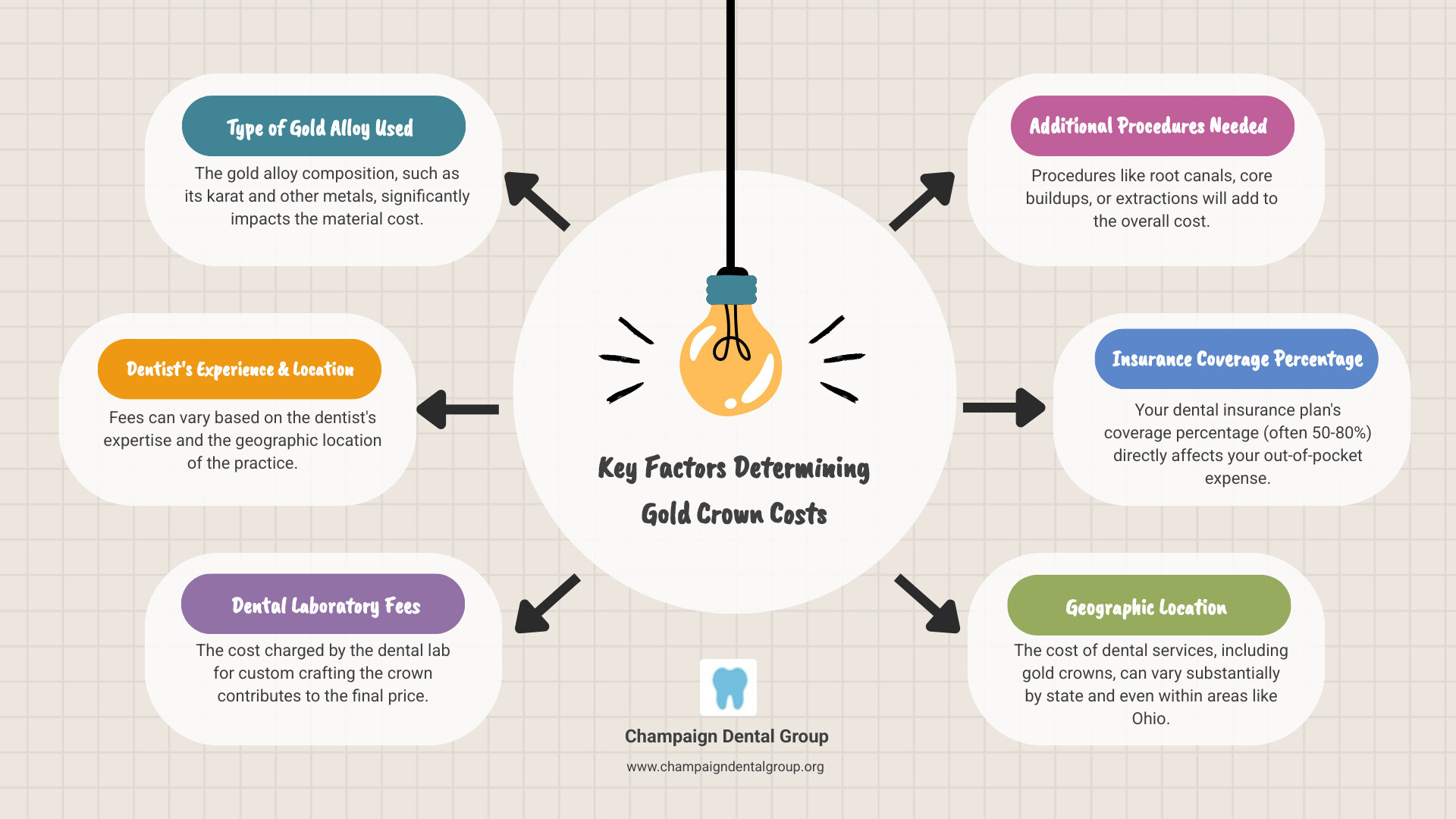
The final cost of a gold crown tooth is rarely a fixed number. Instead, it's a dynamic figure influenced by a combination of crucial elements:
- Gold Alloy vs. Pure Gold: Most "gold crowns" are actually made from gold alloys, not pure gold. Pure gold is too soft for dental restorations. These alloys combine gold with other metals like palladium, platinum, or silver to increase strength and durability. The specific composition and percentage of gold in the alloy directly impact the material cost. Crowns with a higher gold content (and thus higher karat) will generally be more expensive.
- Karat of Gold: Just like jewelry, gold alloys are measured in karats. A higher karat indicates a greater proportion of gold. While 24-karat is pure gold, dental alloys typically use 16-karat or 18-karat gold, mixed with other metals. The higher the karat, the higher the material cost will likely be.
- Dentist's Experience and Specialization: The expertise and training of your dentist play a role. A prosthodontist, for instance, has specialized training in complex restorative procedures, and their fees might reflect this advanced skill set. At Champaign Dental Group, our experienced team provides high-quality patient care, ensuring precision and comfort throughout your treatment.
- Geographic Location: Dental costs can fluctuate based on the region and even within a state. In areas like Urbana OH and Champaign County OH, costs reflect local economic factors, including the cost of living and operating a dental practice. Urban areas might have slightly different pricing compared to smaller towns.
- Dental Laboratory Fees: Once your tooth is prepared and an impression is taken, the crown is custom-fabricated in a dental laboratory. These labs employ skilled technicians who carefully craft each crown to ensure a perfect fit and bite. The complexity of the crown's design, the materials used, and the lab's technology all contribute to their fees, which are part of your overall cost.
- Additional Procedures: Sometimes, a crown isn't the only treatment needed. If your tooth requires a root canal due to extensive decay or infection before the crown can be placed, or if a core buildup is necessary to provide adequate structure for the crown, these additional procedures will add to the total cost. Our team will thoroughly assess your oral health and discuss any necessary preliminary treatments during your consultation.
- State-of-the-Art Technology: Modern dental practices, like Champaign Dental Group, invest in advanced technology to ensure precise diagnostics and efficient, comfortable treatment. While these technologies contribute to the overall quality of care, they can also factor into the cost. However, they often lead to better outcomes and a more streamlined patient experience.
Gold vs. The Alternatives: A Cost and Feature Comparison
Choosing a dental crown isn't a one-size-fits-all decision. The best crown for you depends on a variety of factors, including the tooth's location, your aesthetic preferences, your budget, and the biting forces it will endure. Understanding how gold crowns compare to other popular materials can help clarify your options. We strive to help you select the Best Crowns for Teeth for your unique situation.
Here's a comparison of gold crowns with some common alternatives:
Crown TypeCost Range (General)DurabilityAestheticsBest LocationGold Alloy$800 – $2,500Excellent (very strong, long-lasting, rarely chips)Metallic (not tooth-colored)Molars (back teeth) where strength is key and not visiblePorcelain/Ceramic$800 – $3,000Good (can chip/fracture, especially with heavy bite)Excellent (matches natural tooth color)Front teeth or visible areas where aesthetics are primaryPorcelain-Fused-to-Metal (PFM)$800 – $2,000Very Good (strong, but porcelain can chip)Good (tooth-colored, but metal margin can show)Back teeth or less visible areas; good balance of strength/aestheticsZirconia$1,200 – $3,000Excellent (very strong, resistant to fracture)Very Good (can be tooth-colored and translucent)Both front and back teeth, especially molars needing high strength
Porcelain and Ceramic Crowns
Porcelain and all-ceramic crowns are the champions of aesthetics. They are crafted to perfectly match the color, shape, and size of your natural teeth, making them virtually indistinguishable from your existing smile.
- Natural Appearance: This is their standout feature. They are ideal for front teeth or any visible tooth where cosmetic appeal is a top priority. Many people prefer porcelain for their natural look.
- Suitability for Front Teeth: Because of their lifelike translucency and ability to blend seamlessly, porcelain crowns are often the go-to choice for restoring anterior teeth.
- Cost Comparison: The cost of a gold crown tooth can be comparable to or even slightly less than that of an all-ceramic crown, which can range higher due to advanced material science and aesthetic customization.
- Durability Concerns: While modern ceramics are quite strong, they can be more brittle than gold. They are more prone to chipping or fracturing under heavy biting forces, especially for individuals who grind their teeth (bruxism). This makes them less ideal for molars that endure significant chewing pressure.
Porcelain-Fused-to-Metal (PFM) Crowns
PFM crowns offer a smart compromise, combining the best of both worlds: the strength of a metal base with the natural look of porcelain. They have a long and successful history in dentistry, having been used effectively for over 50 years.
- Hybrid Option: These crowns feature a metal alloy substructure (which can include gold) that is bonded to a layer of tooth-colored porcelain. This provides a robust foundation.
- Strength and Aesthetics Balance: PFM crowns are stronger than all-ceramic crowns due to their metal core, making them durable enough for both front and back teeth. The porcelain layer provides a good aesthetic, masking the metallic base.
- Potential for Gray Line at Gums: One consideration for PFM crowns is the possibility of a dark or gray line appearing at the gumline over time, especially if gums recede. This can be an aesthetic concern for some.
- Cost-Effectiveness: PFM crowns often fall into a mid-range price bracket, making them a cost-effective option that balances durability and aesthetics. The cost of a gold crown tooth might be similar, depending on the specific alloy used in the PFM crown.
Zirconia Crowns
Zirconia crowns are a newer, increasingly popular option that represents a significant advancement in dental materials. They are made from zirconium dioxide, a highly durable ceramic material.
- Modern Material: Zirconia is celebrated for its incredible strength and biocompatibility. Its solid form can pose challenges when it comes to adjustments, as noted by Solid Zirconia.
- High Strength: Zirconia is exceptionally strong and resistant to fracture, making it an excellent choice for molars and for patients with strong bites or a history of breaking other crown types.
- Good Aesthetics: While early zirconia crowns were opaque, advancements in technology now allow for more translucent, natural-looking zirconia that can rival the aesthetics of porcelain, making them suitable for visible teeth as well.
- Cost Comparison: Zirconia crowns are often in a similar or higher price range compared to gold crowns, reflecting their advanced material properties and manufacturing process.
Making Gold Crowns Affordable: Insurance and Payment Options
We understand that the cost of a gold crown tooth can be a significant consideration for families in Urbana OH and Champaign County OH. At Champaign Dental Group, we believe that financial considerations shouldn't prevent you from receiving the quality dental care you need to maintain a healthy, beautiful smile. That's why we're committed to helping you steer the financial aspects of your treatment through careful financial planning and exploring various payment options. We encourage you to review relevant Scientific research on dental crowns to further understand the value of this investment.
Does Dental Insurance Cover Gold Crowns?
One of the first steps in budgeting for a gold crown is to understand your dental insurance coverage.
- Medically Necessary vs. Cosmetic: Most dental insurance plans provide partial coverage for crowns that are considered medically necessary. This means the crown is needed to restore tooth function, protect a damaged tooth (e.g., after a root canal or due to extensive decay), or support a dental bridge. If the primary reason for a gold crown is purely cosmetic, insurance coverage may be limited or denied. Gold crowns, often chosen for their durability in less visible areas, are typically viewed as medically necessary restorative procedures.
- Typical Coverage Percentage: For medically necessary crowns, dental insurance plans often cover between 50% and 80% of the cost. However, this can vary greatly depending on your specific plan.
- Annual Maximums: Most dental insurance plans have an annual maximum, which is the most your insurance will pay for dental care in a given year. If you've had other dental procedures, you might have less coverage remaining for a crown.
- Deductibles: You'll typically need to pay an annual deductible out-of-pocket before your insurance coverage kicks in.
- Pre-authorization: We highly recommend contacting your insurance provider directly or allowing our compassionate team at Champaign Dental Group to help you obtain a pre-authorization. This will give you a clear understanding of your out-of-pocket expenses before beginning treatment.
Ways to Save on Your Dental Crown
Even with insurance, there might be a remaining balance. Here are some ways to make a gold crown more affordable:
- Champaign Dental's Smile Protection Plan: We are proud to offer our own Smile Protection Plan designed to make quality dental care more accessible for our patients. This plan provides discounted services, including crowns, for a low annual fee, without the hassles of deductibles, annual maximums, or waiting periods. It's an excellent option for individuals and families without traditional dental insurance or for those whose insurance coverage is limited. Ask our team for more details!
- Health Savings Accounts (HSAs) and Flexible Spending Accounts (FSAs): If you have an HSA or FSA through your employer, you can use these pre-tax dollars to pay for qualified medical and dental expenses, including dental crowns. This can significantly reduce your out-of-pocket costs.
- Dental School Clinics: While not directly affiliated with Champaign Dental Group, some universities with dental schools offer lower-cost dental care, as students provide services under the close supervision of experienced faculty. This can be an option if budget is a primary concern.
- Payment Plans: At Champaign Dental Group, we understand that upfront costs can be challenging. We offer flexible payment plans to help you manage the cost of a gold crown tooth by breaking it down into manageable monthly installments. Our goal is to ensure you receive the care you need without financial stress.
Frequently Asked Questions about Gold Crowns
We know you might have more questions about gold crowns, and we're here to provide clear, helpful answers.
How long do gold crowns last?
This is one of the most compelling advantages of choosing a gold crown! With excellent oral hygiene and regular dental check-ups, gold crowns are known for their exceptional longevity. They can last for 15-20 years or more, and it's not uncommon for them to last for several decades, even an entire lifetime. This superior lifespan makes them a truly long-term investment in your oral health.
The impact of consistent oral hygiene cannot be overstated. Brushing twice a day, flossing daily, and maintaining your routine visits to Champaign Dental Group for professional cleanings will significantly contribute to the longevity of your gold crown. When considering the cost of a gold crown tooth, its extended lifespan often translates to greater value over time compared to crowns that may need more frequent replacement. For more insights into the durability of dental restorations, you might find our article on Exploring the Lifespan and Care of Dental Veneers and Crowns helpful.
Are gold crowns better for back teeth?
Yes, absolutely! Gold crowns are particularly well-suited for back teeth, such as molars and premolars. Here's why:
- Molars and Biting Forces: The molars in the back of your mouth endure the most intense biting and chewing forces. Gold's exceptional strength and resistance to fracture make it an ideal material to withstand these pressures without chipping or breaking.
- Durability Advantage: Unlike porcelain, which can be prone to chipping, gold offers best durability in high-stress areas. This means your gold crown will likely outlast other materials in these demanding locations.
- Aesthetic Compromise: Since back teeth are generally not visible when you smile or speak, the metallic appearance of a gold crown is less of an aesthetic concern. This allows you to reap the functional benefits of gold without compromising your smile's appearance.
- Dentist Recommendations: Our experienced dentists at Champaign Dental Group will often recommend gold crowns for molars due to these superior functional advantages, ensuring your restoration provides maximum strength and longevity where it's needed most.
Is the gold in a dental crown valuable?
While gold crowns contain gold, it's important to understand that they are typically made from gold alloys, not pure gold. As we discussed earlier, pure gold is too soft for dental restorations. The alloy content usually includes a mix of gold with other metals like palladium, platinum, or nickel to improve strength and reduce cost.
Therefore, while there is some intrinsic value to the gold content, it's generally not considered "pure" investment gold. The focus of a gold crown is its dental function – its ability to restore and protect your tooth for many years. Any scrap value of an old gold crown would depend on the specific alloy composition and the fluctuating market price of gold, but this is usually a secondary consideration. The primary value lies in its exceptional performance as a dental restoration.
Your Path to a Restored Smile
Choosing the right dental crown is a significant decision for your oral health. The cost of a gold crown tooth reflects its unique benefits: unparalleled durability, exceptional longevity, minimal wear on opposing teeth, and superior corrosion resistance. While the initial investment might be a consideration, its long-term value often makes it a wise and economical choice for many patients, particularly for those important back teeth.
At Champaign Dental Group, we are dedicated to providing comprehensive family dental care using state-of-the-art technology. We believe in compassionate care and personalized treatment plans custom to your unique needs and budget. Our experienced team in Urbana OH and Champaign County OH is here to guide you through every step, from understanding your options to ensuring your comfort and satisfaction. We pride ourselves on the high quality of patient care provided by our staff, treating every patient like family. We've been serving our community since 1997, and we look forward to welcoming you.
Don't let questions about the cost of a gold crown tooth deter you from achieving a healthy, functional, and confident smile. We're here to help you explore all your options, including our convenient payment plans and Champaign Dental's Smile Protection Plan.
Ready to discuss your dental crown options with a team that truly cares? Schedule your consultation for crowns and bridges today at Champaign Dental Group. We're excited to help you start on your journey to a restored smile!