.jpg)
Step-by-Step Guide to Cover Damaged Tooth
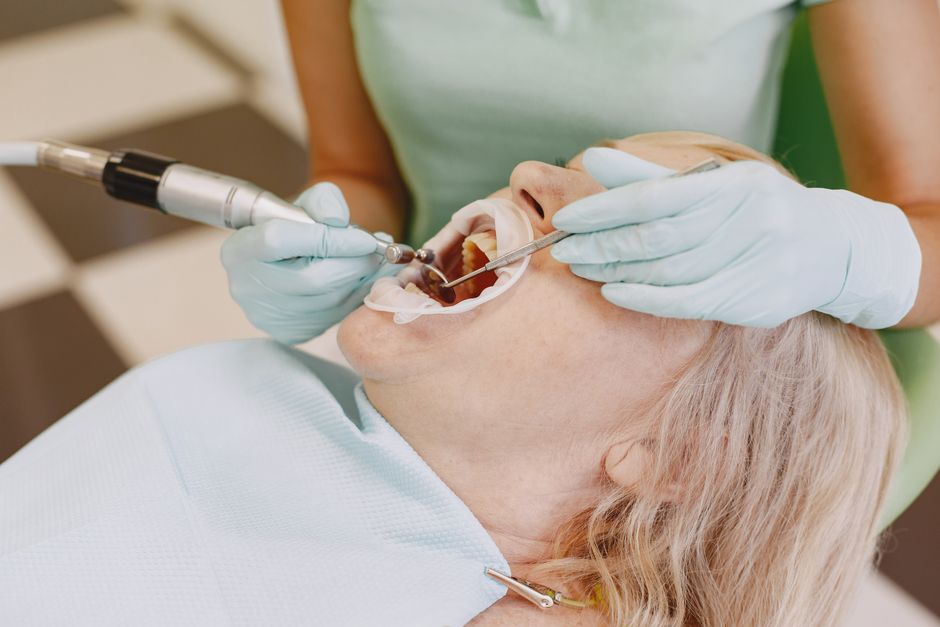
What to Do When You Need to Cover a Damaged Tooth
Covering a damaged tooth quickly is one of the most important things you can do to protect your oral health after a chip, crack, or break. Here is a fast overview of your main options:
- Dental bonding - A tooth-colored resin applied directly to minor chips, usually in one visit
- Dental crown - A full cap that covers and protects a severely damaged tooth
- Porcelain veneer - A thin shell bonded to the front of a tooth, ideal for visible damage
- Root canal + crown - Needed when damage reaches the inner nerve of the tooth
- Temporary home cover - Dental wax or over-the-counter repair kits for short-term protection until you see a dentist
You're biting into something and suddenly feel something hard that isn't food. Your stomach drops. You realize a piece of your tooth just broke off.
It happens more often than you might think, and the good news is that it's almost always fixable.
Whether it's a small chip on a front tooth or a molar that cracked under pressure, modern dentistry has a solution for nearly every type of tooth damage. The key is knowing what to do right away and getting to a dentist as soon as you can.
At Champaign Dental Group, we've been helping families across Urbana and Champaign County handle exactly these situations since 1997. This guide walks you through everything, from the moment a tooth breaks to the long-term repair options that can restore your smile.
Cover damaged tooth helpful reading:
Common Causes of Tooth Damage and How to Spot an Emergency

Teeth are incredibly strong, but they are not indestructible. In fact, tooth enamel is the hardest substance in the human body, yet physical forces and daily wear can still take a toll.
Some of the most common reasons teeth chip, crack, or break include:
- Tooth decay: Cavities weaken the internal structure of the tooth, making the outer enamel highly susceptible to collapsing under normal chewing pressure.
- Physical trauma: Accidental falls, sports injuries, or biting down on hard objects like ice, hard candy, or unpopped popcorn kernels can cause sudden fractures.
- Bruxism: Chronic teeth clenching or grinding slowly wears down the enamel and creates microscopic fractures over time.
- Molar-Incisor Hypomineralization (MIH): This developmental condition affects the enamel of permanent first molars and incisors. With a worldwide prevalence of approximately 13.5%, MIH is a significant public health concern because it leaves teeth weak, chalky, and prone to breaking during normal eating. To learn more about how dentists address this condition, you can read the Aesthetic protective coverage on molars with MIH: Case report - Journal of Case Reports and Images in Dentistry .
Knowing whether your broken tooth requires immediate, same-day attention or a standard scheduled appointment is crucial. A dental emergency generally involves throbbing pain, visible bleeding, swelling in your gums or face, or a completely knocked-out tooth. If you are experiencing these symptoms, you need same-day emergency dental care to save the tooth and prevent a serious infection.
For less severe cases, like a minor chip that doesn't hurt, you should still schedule a visit promptly to prevent decay. You can read about your options in our guide on Cracked Tooth Solutions.
Immediate First-Aid Steps for a Broken Tooth
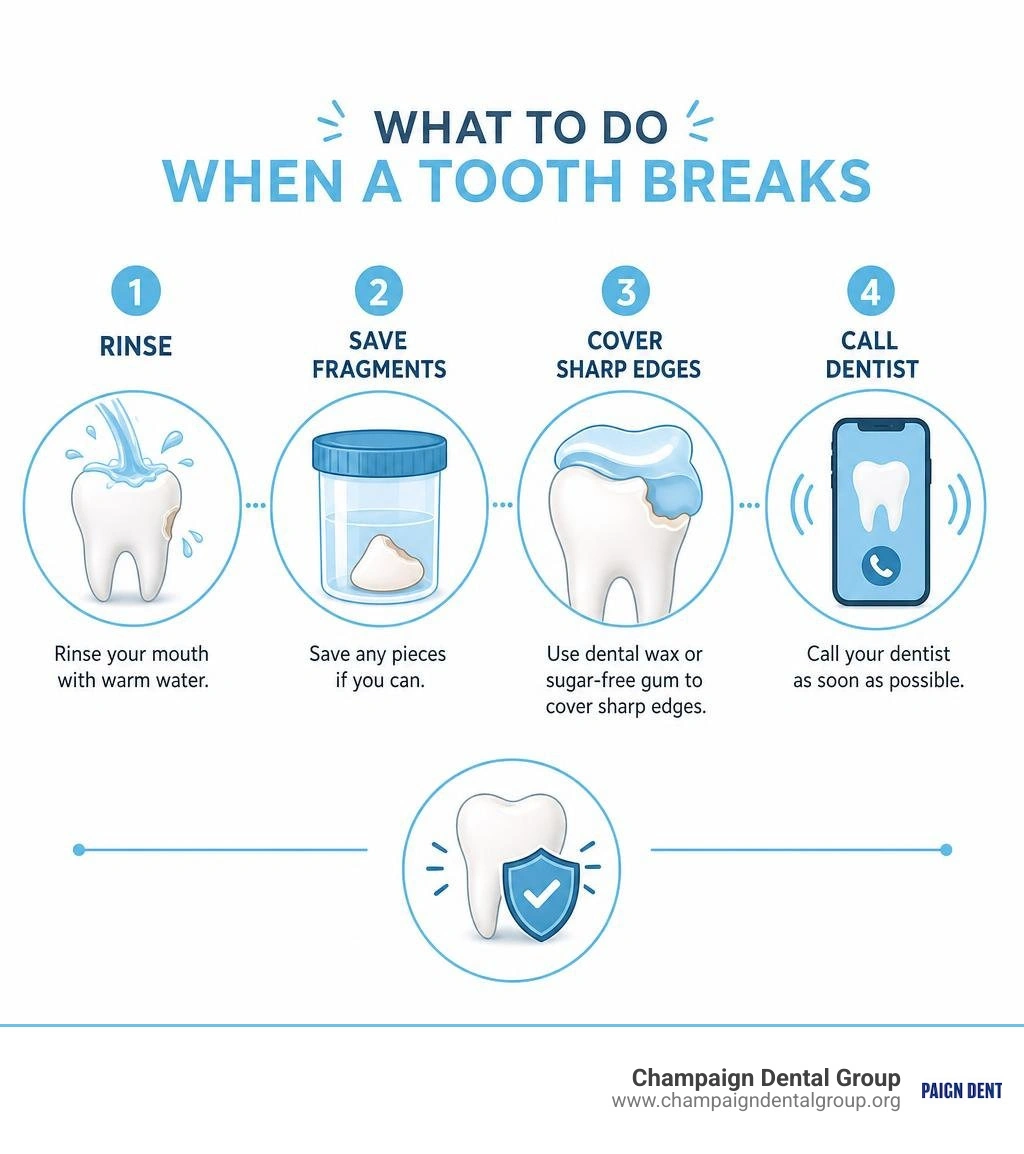
If you break a tooth, taking the right steps at home can protect your mouth and make a big difference in the success of your repair:
- Save the fragments: If a clean piece of the tooth has broken off, try to find it. Rinse it gently in warm water and store it in a small container of milk or your own saliva. In cases where a permanent tooth is completely knocked out, getting to the dentist to have it reimplanted within 30 minutes offers the highest chance of successful reimplantation.
- Rinse your mouth: Gently swirl warm saltwater (about half a teaspoon of salt in a glass of warm water) to clean the area and reduce the risk of bacterial infection.
- Manage pain and swelling: Over-the-counter pain relievers like ibuprofen can help ease discomfort. Applying a cold compress to the outside of your cheek for 20 minutes at a time can also keep swelling down.
- Protect your soft tissues: If the broken tooth has a sharp or jagged edge that is scraping your tongue or cheek, cover it with a small piece of sugarless chewing gum or dental wax to prevent painful cuts.
Professional Treatments to Cover Damaged Tooth
When you visit us, we will perform a thorough evaluation, which may include digital X-rays, to assess the health of the tooth root and surrounding bone. Our goal is always to preserve as much of your natural tooth structure as possible using modern, biocompatible, and mercury-free materials that blend beautifully with your smile.
To explore our full range of solutions, take a look at our Restorative Dentistry Services Guide or visit our Services Restorative Dentistry page.
For a comprehensive overview of how dental professionals approach these repairs, you can also consult How Dentists Fix A Broken Tooth: Complete Guide .
Dental Bonding: A Quick Way to Cover Damaged Tooth
For minor chips or small fractures, dental bonding is often the quickest and most affordable solution. We use a composite resin, which is a tooth-colored mixture of plastic and glass, to carefully rebuild the missing portion of your tooth.
The process is simple: we roughen the surface of the tooth, apply a conditioning liquid, shape the resin to match your natural tooth, and use a special curing light to harden it. Bonding is usually completed in a single visit and requires very little preparation. If you want to learn more about this conservative approach, read our article on Tooth Surface Repair.
Dental Crowns: The Strongest Option to Cover Damaged Tooth
When a tooth has a large break, a deep crack, or has been weakened by a large cavity, a dental crown is the ideal choice. A crown is a custom-made cap that fits entirely over the remaining structure of the tooth, restoring its original size, shape, and strength.
Modern dental crowns are made from highly durable, biocompatible materials like zirconia and advanced dental ceramics. These materials are metal-free, meaning you won't have to worry about a dark gray line showing near your gums. To understand what to expect during this procedure, read about Dental Crown Prep. You can also compare your material choices in our articles on the Best Crowns for Teeth and Crown All Porcelain.
Porcelain Veneers and Other Restorations
If the damage is purely cosmetic and located on your front teeth, porcelain veneers are an excellent alternative. Veneers are ultra-thin, custom-crafted shells of dental ceramic that are permanently bonded to the front surfaces of your teeth. They are perfect for covering chips, cracks, or severe discoloration while creating a uniform, natural-looking smile. To see if this option is right for you, check out our comparison of Crown vs Veneer.
Root Canals and Tooth Replacements
Sometimes, a deep crack or break exposes the delicate inner pulp of the tooth, where the nerves and blood vessels live. When this happens, bacteria can enter and cause a painful infection. To save the tooth, we perform a gentle root canal therapy to remove the damaged tissue, clean the canal, and seal it. Afterward, we cover the tooth with a custom crown to restore its strength.
In situations where a tooth is fractured below the gumline, it may not be possible to save it. If an extraction is necessary, we can replace the missing tooth to keep your bite aligned. We offer custom options to fill the gap, which you can read about in our Bridge vs Implant comparison and our Missing Tooth Replacement Guide.
At-Home Temporary Relief and Prevention Tips
If you cannot see a dentist immediately, you can find temporary relief at your local pharmacy. Over-the-counter products like the DenTek® Advanced Repair kit or the Temptooth Tooth Repair Kit – Quick Tooth Fix can help cover sharp edges or temporarily seal a lost filling. These products use temporary dental cements to protect your tooth from air and hot or cold foods, but they are only short-term fixes and should not replace a professional evaluation.
Preventing future damage is always the best strategy. Here are a few simple habits to protect your smile:
- Wear a night guard: If you clench or grind your teeth at night, a custom-fitted night guard can cushion the pressure and prevent fractures.
- Use a sports mouthguard: Always wear a protective mouthguard during contact sports or recreational activities with a risk of falling.
- Avoid using teeth as tools: Never use your teeth to open packaging, rip tape, or crack nutshells.
- Schedule regular check-ups: Routine dental visits allow us to spot tiny structural weaknesses or early decay before they turn into major breaks.
Frequently Asked Questions About Damaged Teeth
How much does it cost to repair a broken tooth?
The cost of repairing a broken tooth depends entirely on the severity of the damage and the type of treatment required. A simple dental bonding procedure is generally the most budget-friendly option, while custom porcelain crowns or root canals require a higher investment.
Many dental insurance plans cover restorative procedures like crowns and root canals when they are medically necessary to protect your health. For our uninsured patients in the Urbana area, we offer our in-house Smile Protection Savings Plan to help make quality family dental care affordable. You can read more about managing these costs in our articles on Dental Crown Cost Ohio and Dental Crown Options Cost.
How long do different tooth repairs typically last?
With proper care and good oral hygiene, modern restorations can last for many years:
- Dental bonding typically lasts between 3 to 10 years before it may need to be touched up or replaced.
- Porcelain veneers generally last 10 to 15 years.
- Dental crowns are highly durable and often last 10 to 20 years, and in many cases, they can last a lifetime with excellent care.
Can a cracked tooth heal on its own?
No. Unlike broken bones, teeth do not have a blood supply to their hard outer layers, meaning enamel cannot regenerate or heal itself. Even if a small crack doesn't hurt right now, chewing puts constant pressure on the tooth, which will cause the crack to spread deeper over time. Getting a professional evaluation early is the best way to save the tooth and avoid more complex treatments later.
Conclusion
If you need to cover a damaged tooth, acting quickly is the best way to protect your smile and avoid unnecessary discomfort. At Champaign Dental Group, we have been serving families in Urbana, Ohio, and surrounding communities like Mechanicsburg, Springfield, West Liberty, and Tremont City since 1997.
We understand that a broken tooth can be stressful, which is why we focus on compassionate, relationship-based care. We offer full in-house services, including oral surgery and sedation options for those who experience dental anxiety, as well as our Smile Protection Savings Plan for those without insurance.
If you have a chipped, cracked, or broken tooth, let our family take care of yours. Please visit our page to Request an Appointment and let us help restore your comfort and confidence.