.jpg)
A Deep Dive Into Deep Root Cleaning

Is Your Mouth Trying to Tell You Something? A Guide to Deep Gum Cleaning
Deep gum cleaning (also called scaling and root planing) is a professional dental procedure that removes plaque, tartar, and bacteria from below the gum line — all the way down to the tooth roots.
Here's a quick summary of what you need to know:
QuestionQuick AnswerWhat is it?A two-part procedure: scaling (removing buildup) and root planing (smoothing tooth roots)Who needs it?People with gum pockets deeper than 4-5 mm or signs of gum diseaseIs it painful?Local anesthetic is used — most patients feel minimal discomfortHow long does it take?Usually 1-2 visits, about 45-60 minutes per sessionWhat happens after?Some soreness and sensitivity for a few days; full healing within 1-2 weeksIs it covered?Often yes, when medically necessary — ask about Champaign Dental's Smile Protection Plan
Most people assume their regular six-month cleaning covers everything. It doesn't — not when gum disease is involved.
Gum disease is sometimes called the "silent killer" of dental conditions. It's often painless in its early stages. By the time you notice something feels wrong, the damage may already be progressing beneath the surface.
In fact, a 2003 Health Promotion Board survey found that 85% of adults examined had some form of gum disease — most of them unaware of it.
The good news? Deep gum cleaning is a well-established, non-surgical treatment that can stop gum disease in its tracks — and the caring team at Champaign Dental Group is here to walk you through every step.
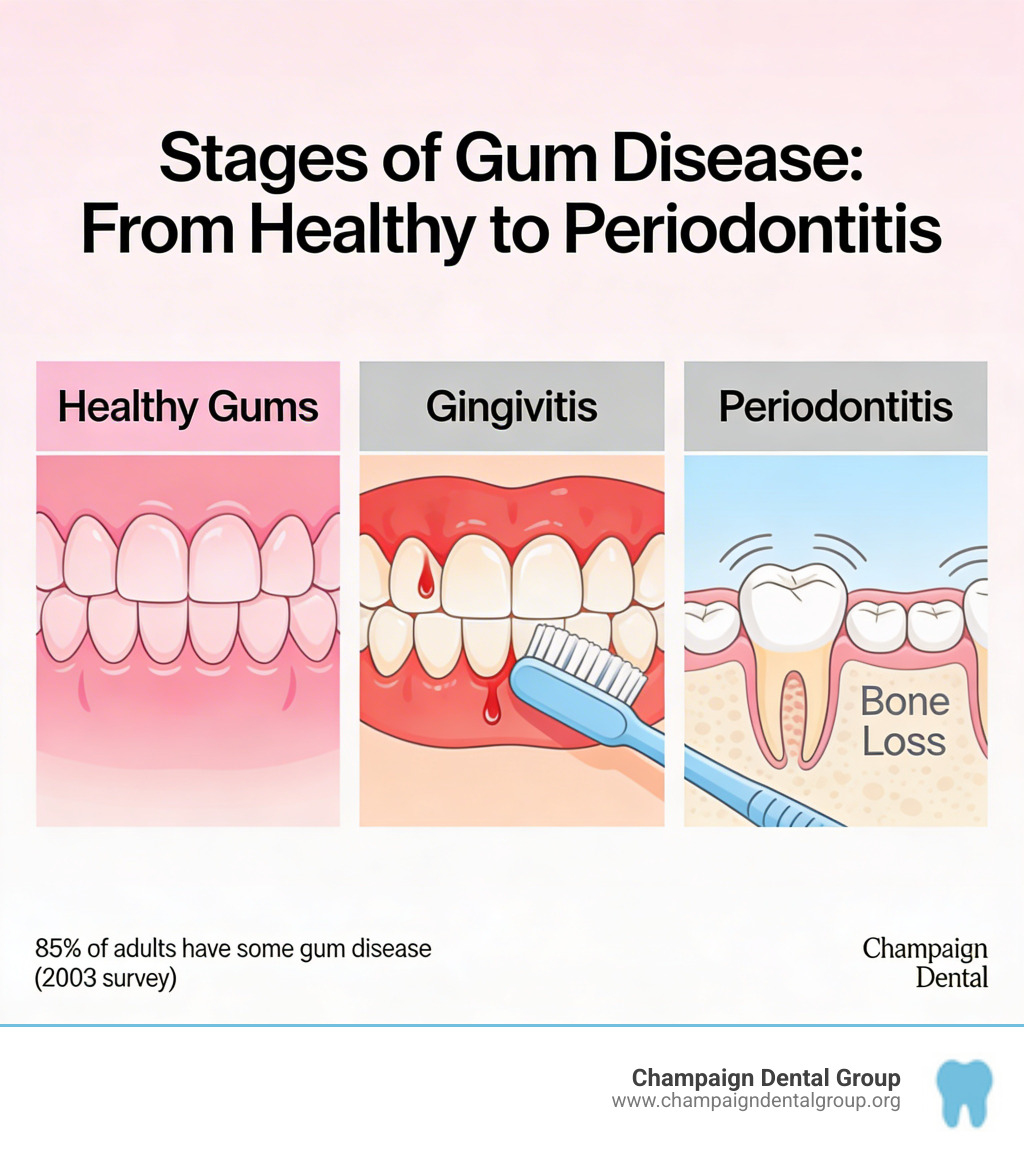
Deep gum cleaning terms simplified:
What is Deep Gum Cleaning?
While a standard dental cleaning (prophylaxis) focuses on the surfaces of the teeth above the gum line, a deep gum cleaning is a therapeutic intervention designed to treat active infection. Known clinically as periodontal scaling and root planning, this procedure is the gold standard for managing gum disease.
The process is divided into two main stages:
- Scaling: We use specialized manual instruments or ultrasonic vibrating tools to meticulously remove plaque and tartar (calculus) from the tooth surfaces and the pockets that have formed between the teeth and gums.
- Root Planing: This is the "deep" part of the cleaning. We smooth out the rough spots on the roots of your teeth. Why? Because bacteria love to hide in those rough patches. By smoothing the root, we make it much harder for bacteria to re-adhere, allowing your gum tissue to heal and reattach snugly to the tooth.
At Champaign Dental Group, we view deep cleaning teeth as more than just a chore—it is a strategic way to preserve your smile for a lifetime.
Comparing Regular vs. Deep Cleaning
FeatureRegular Cleaning (Prophylaxis)Deep Cleaning (Scaling & Root Planing)PurposePrevention and maintenanceTreatment of gum disease/infectionArea TargetedAbove the gum lineAbove and below the gum lineAnestheticUsually not requiredLocal anesthetic typically usedPocket DepthHealthy pockets (1-3 mm)Diseased pockets (4 mm or deeper)FrequencyEvery 6 monthsAs needed; followed by maintenance
Signs and Symptoms of Periodontal Disease
Because gum disease is so quiet, it’s important to know the physical markers that suggest you might need a plaque and tartar removal session.
According to The American Academy of Periodontology, your gum tissue and bone should fit snugly around your teeth like a turtleneck sweater. When you have periodontal disease, this tissue is destroyed, and "pockets" form.
Common symptoms include:
- Bleeding Gums: If you see "pink in the sink" when brushing or flossing, your gums are likely inflamed.
- Swollen or Tender Tissue: Gums that appear puffy or dark red instead of a healthy light pink.
- Persistent Bad Breath: This isn't just "garlic breath"; it’s a constant foul taste or odor caused by sulfur-producing bacteria deep in the pockets.
- Receding Gums: Your teeth may start to look "longer" as the gum line pulls away.
- Loose Teeth: In advanced stages, the loss of bone and ligament support makes teeth feel unstable.
Who is at Risk for Needing Deep Gum Cleaning?
While anyone can develop gum disease, certain factors significantly increase your risk. Understanding these can help you stay proactive with your dental hygiene.
- Smoking and Tobacco Use: Tobacco is one of the most significant risk factors. It interferes with the normal function of gum tissue cells and slows down healing.
- Diabetes: People with diabetes are more susceptible to infections, including periodontal disease.
- Genetics: Some of us are simply more prone to gum disease due to our DNA, even with good habits.
- Hormonal Changes: Pregnancy, menopause, and even puberty can make gums more sensitive and susceptible to gingivitis.
- Poor Oral Hygiene: Missing those hard-to-reach areas allows plaque to harden into tartar. For those looking for the right tools, our plaque cleaning device complete guide can help you choose the best home-care options.
The Procedure: What to Expect During Treatment
We know that "deep cleaning" sounds a bit intense, but our team at Champaign Dental Group is dedicated to providing the most compassionate care in Urbana and Champaign County. We use state-of-the-art technology to ensure the process is as smooth as possible.
The procedure is often performed in quadrants. This means we might treat one-half of your mouth (top and bottom on one side) in one visit, and the other half in a second visit. This prevents your entire mouth from being numb at once and allows us to be extremely thorough.
We start by using manual scaling tools and ultrasonic scalers. These ultrasonic tools use high-frequency vibrations and a cooling water spray to break up large deposits of tartar. Once the heavy lifting is done, we use hand instruments to meticulously smooth the root surfaces.
While patients often worry about the scaling and root planing cost, it is a vital investment that prevents much more expensive surgical procedures down the road.
Pain Management and Procedure Duration
Your comfort is our top priority. To ensure you don't feel a thing during the procedure, we typically apply a numbing gel followed by a local anesthetic. This keeps the area completely comfortable while we work below the gum line.
A typical session for one or two quadrants takes about 45 to 60 minutes. If you have widespread gum disease, you can expect to visit us twice to complete the full treatment. During this time, our staff focuses on creating a relaxing environment—we want your teeth cleaning experience to be stress-free.
Aftercare and Managing Side Effects
Once the anesthetic wears off, it’s normal to feel some minor side effects. These are signs that your body is beginning the healing process.
Common side effects include:
- Tooth Sensitivity: Your roots were previously covered by tartar; now that they are clean, they may be sensitive to hot and cold for a few days.
- Minor Bleeding: You might notice a small amount of blood when brushing for the first 24–48 hours.
- Soreness: Your gums may feel tender or appear slightly swollen.
To manage these, we recommend a simple saltwater rinse (half a teaspoon of salt in eight ounces of warm water) several times a day. This keeps the area clean and soothes the tissue. You should continue with gentle brushing using a soft-bristled toothbrush to keep new plaque from forming while the gums are vulnerable. Maintaining excellent dental hygiene is the key to making the results of your deep cleaning last.
Post-Procedure Instructions for Healing
To speed up your recovery and ensure the best results from the best dental cleaning you've ever had, follow these tips:
- Dietary Choices: Stick to a soft food diet for the first 48 hours. Think yogurt, pasta, scrambled eggs, and smoothies. Avoid crunchy, spicy, or highly acidic foods that could irritate your healing gums.
- Avoid Smoking: Please refrain from smoking for at least 24 to 72 hours. Smoking hinders blood flow to the gums and significantly slows down the healing process.
- Antimicrobial Mouthwash: We may prescribe or recommend a specific mouthwash to help kill bacteria and prevent infection during the initial healing phase.
- Desensitizing Toothpaste: If cold drinks are bothersome, switching to a toothpaste for sensitive teeth can provide significant relief.
Long-Term Health and Maintenance
The benefits of a deep gum cleaning extend far beyond your mouth. There is a well-documented "oral-systemic link," meaning the health of your gums affects your entire body. Chronic inflammation in the mouth has been linked to:
- Heart Disease: Bacteria from the mouth can enter the bloodstream and contribute to arterial plaque.
- Diabetes: It’s a two-way street—diabetes makes gum disease worse, and gum disease makes it harder to control blood sugar.
- Systemic Inflammation: Keeping your gums healthy reduces the overall inflammatory load on your body.
After your initial treatment, we will schedule a dental cleaning check up about 4 to 6 weeks later. We will measure your pockets again to see how well the tissue has healed. Most patients who have had a deep cleaning will transition to "periodontal maintenance" visits every 3 to 4 months rather than the standard 6 months. This ensures we catch any recurring bacteria before they can cause new damage.
The Effectiveness of Deep Gum Cleaning
How do we know it worked? The proof is in the numbers. A successful deep cleaning leads to:
- Pocket Reduction: Those 5 mm pockets might shrink back to a healthy 3 mm.
- Gum Reattachment: The tissue firms up and grips the tooth root tightly again.
- Halting Bone Loss: By removing the infection, we stop the body from "attacking" the jawbone.
- Preventing Tooth Loss: This is the ultimate goal. Keeping your natural teeth is always better than needing extractions and implants.
While you might wonder how much is dental cleaning, the cost of not getting treated is much higher—both financially and physically.
Insurance Coverage and the Smile Protection Plan
Many patients are concerned about dental coverage for these procedures. Because scaling and root planing is considered a medical necessity to treat an active infection, most insurance plans do cover a significant portion of the cost.
For our neighbors in Urbana and Champaign County who may not have traditional insurance, we are proud to offer the Champaign Dental's Smile Protection Plan. This plan is designed to provide affordable dental care to our community, ensuring that high-quality treatment is accessible to everyone. We believe that financial constraints should never stand in the way of a healthy smile.
Frequently Asked Questions about Deep Cleaning
Is deep gum cleaning painful?
With the local anesthetics we use at Champaign Dental Group, the procedure itself is typically not painful. Most patients describe it as a feeling of pressure or a "scraping" sensation. Any post-procedure tenderness is usually mild and manageable with over-the-counter pain relievers.
How many visits are required for a full deep cleaning?
Typically, it takes two visits. We usually treat one side of the mouth at a time to ensure patient comfort. However, if the gum disease is very localized to just a few teeth, it might be completed in a single, slightly longer appointment.
What happens if gum disease is left untreated?
If left alone, gingivitis progresses into periodontitis. The infection will continue to eat away at the bone and ligaments that hold your teeth in place. Eventually, teeth become loose and fall out or require extraction. Furthermore, the chronic infection can complicate other health issues like heart disease and diabetes.
Conclusion
At Champaign Dental Group, we’ve been serving the Urbana and Champaign County communities since 1997 with a focus on compassionate, high-quality patient care. We combine state-of-the-art technology with a warm, community-focused approach to ensure that every patient feels like family.
If you’ve noticed bleeding gums, persistent bad breath, or it’s simply been a while since your last check-up, don’t wait for the "silent killer" to progress. Our expert team is ready to help you reclaim your oral health through personalized care and advanced treatments.