.jpg)
A Practical Guide to Dental Implant Insurance Coverage
Understanding Your Dental Implant Insurance Options
Understanding Dental Implant Insurance can be frustrating. You know you need an implant to replace a missing tooth, but figuring out what your plan covers versus your out-of-pocket costs is often a complex puzzle.
Quick Answer: Does Insurance Cover Dental Implants?
- Coverage varies widely - Most plans offer partial coverage (typically 40-50%) if they cover implants at all
- Classified as major procedures - Subject to annual maximums, deductibles, and waiting periods
- Medical necessity matters - Implants from accidents or medical conditions may qualify for medical insurance
- Not all plans include them - Many traditional dental insurance plans exclude implants entirely
- Expect to pay a portion - Even with insurance, you'll likely have significant out-of-pocket costs
Dental implants are a highly effective, long-term solution for missing teeth, but they are also a significant investment. The multi-step process and cost can be surprising.
As one parent shared: "After learning of the cost of dental implants, many patients have a single question: Are they covered by my insurance?"
At Champaign Dental Group, our compassionate team understands these concerns. We help families steer insurance complexities daily, explaining your benefits clearly and finding solutions that fit your budget so you know exactly what to expect.
This guide breaks down dental implant insurance, from typical coverage to payment options, helping you make informed decisions for your oral health.
Understanding Dental Implants and Their Costs
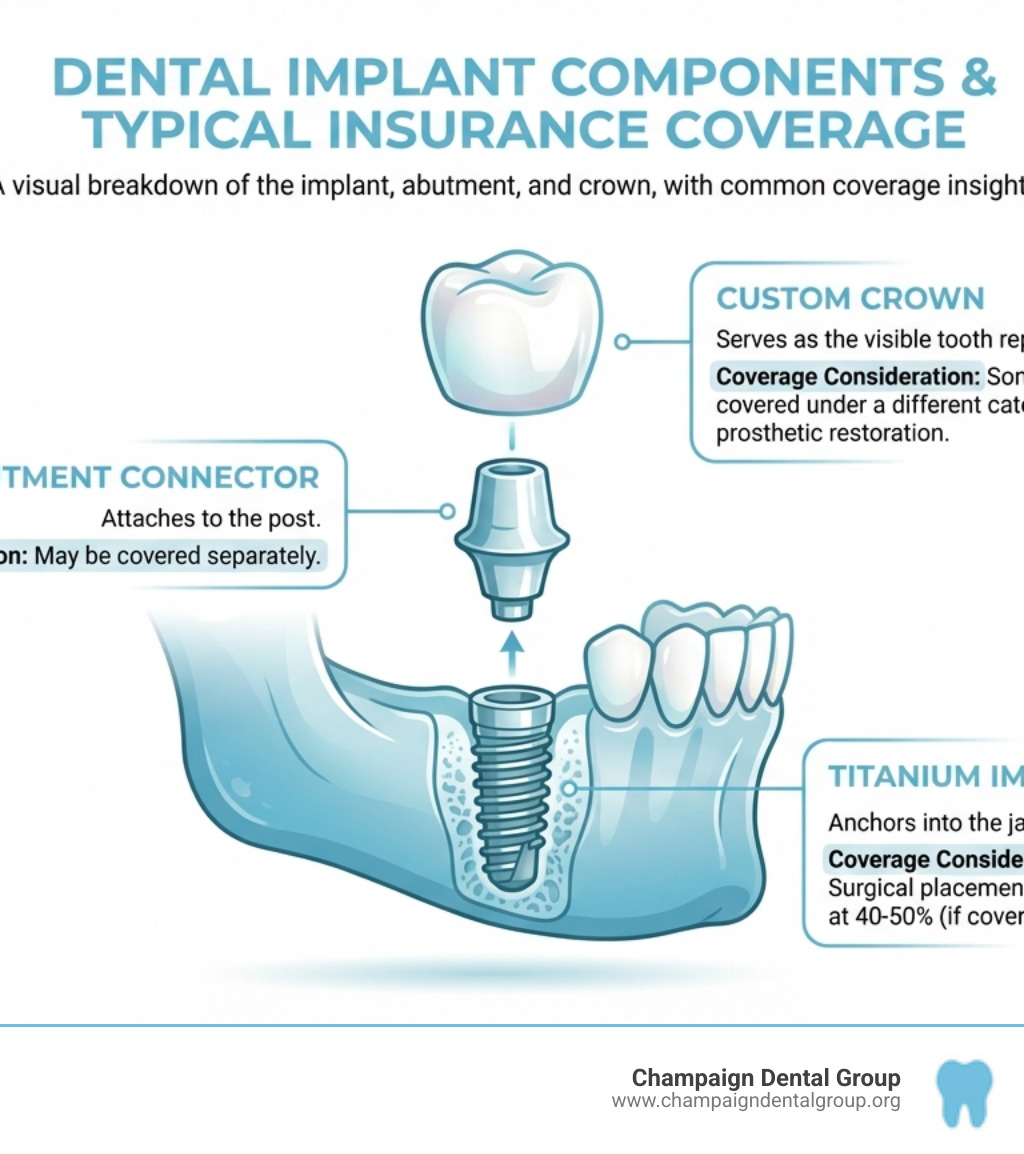
A dental implant is a high-tech artificial tooth root, typically made of titanium, that is surgically placed into your jawbone. Through a process called osseointegration, the implant fuses with your bone, creating a solid foundation for a replacement tooth. Implants are permanent tooth replacements that restore full dental function and preserve jawbone health, which protects your facial structure. Our Benefits of Dental Implants page explores these advantages further.
The cost of a dental implant typically ranges from $3,000 to $7,000 per tooth, varying based on provider experience, geographic location, case complexity, and materials used. At Champaign Dental Group, our compassionate team provides a clear cost breakdown during your consultation, so there are no surprises.
The Dental Implant Process and Timeline
Getting a dental implant is a multi-step journey guided by our expert team at Champaign Dental Group. Our high-quality patient care ensures you are comfortable and informed at every stage.
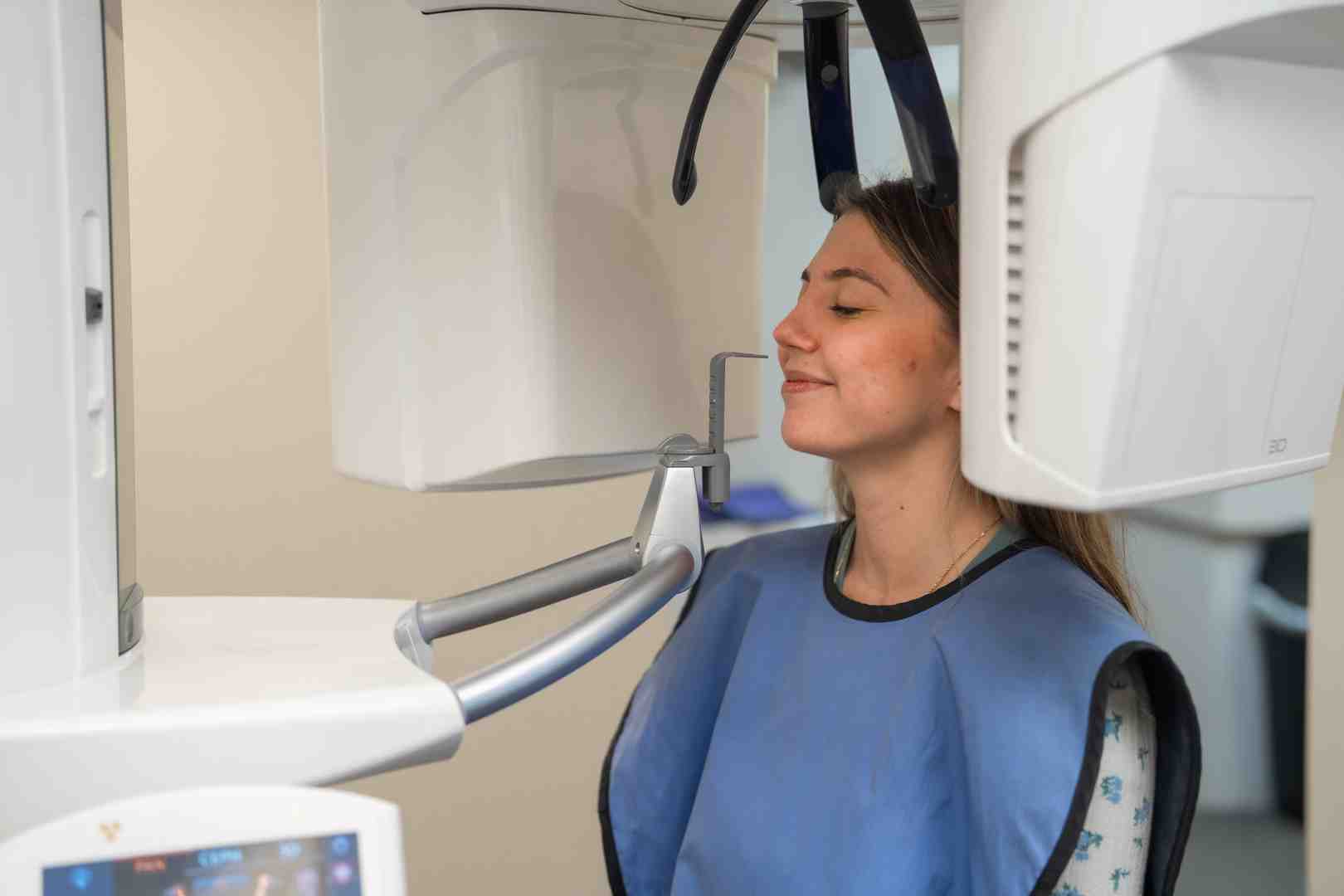
- Initial Consultation: We conduct a thorough oral exam with X-rays to assess your jawbone health and determine if you're a good candidate.
- Preparatory Procedures (If Needed): If your jawbone lacks density, a bone grafting procedure may be required to create a stable foundation. This adds time and cost but is vital for success.
- Implant Placement & Healing: The titanium implant is surgically placed into the jawbone. The osseointegration healing period, where the bone fuses to the implant, follows. This critical phase can take several months.
- Final Restoration: Once healed, we attach a connector piece (the abutment) and place the final custom-crafted crown.
Explore our Dental Implant Options Your Guide for Replacing Missing Teeth page for more details.
Types of Implants and How Long They Last
Several types of implants exist, but Endosteal implants are the most common type. Placed directly into the jawbone, they are the standard for patients with sufficient bone density. Other, less common types like Subperiosteal and Zygomatic implants are used in specific cases of significant bone loss.
The most remarkable feature of implants is their longevity. With proper care, the implant post itself can last a lifetime, as it becomes a permanent part of your jaw. The attached crown or bridge has a different lifespan, typically lasting around 15 years before needing replacement due to normal wear. This durability makes implants an excellent long-term value. Our Crowns and Implants Dentistry page offers more care insights.
Navigating Dental Implant Insurance Coverage
Decoding Dental Implant Insurance can be overwhelming. Coverage for implants varies dramatically, and it's extremely rare for a plan to cover 100% of the cost. "Full coverage" plans typically offer benefits across various services but do not mean everything is free.
Insurers classify implants as a major restorative procedure, which subjects them to several limitations:
- Annual Maximums: Most plans cap yearly payouts, often between $1,000 and $2,000. A single implant can easily exceed this limit.
- Deductibles: This is the amount you must pay out-of-pocket before your insurance contributes.
- Waiting Periods: Many plans require you to be enrolled for six to twelve months before covering major procedures like implants.
At Champaign Dental Group, our dedicated team in Urbana, OH, helps patients steer these complexities. We verify your benefits and explain them in plain English, ensuring you feel confident about your treatment plan and financial commitment. Learn more on our Dental Implants and Insurance page.
What to Look for in a Dental Implant Insurance Plan
When evaluating an insurance plan, be proactive. Review your plan's summary of benefits and look for these key details:
- Specific Exclusions: Some plans explicitly state implants are not covered. If they aren't mentioned, they are likely excluded.
- Coverage Percentage: If covered, plans typically pay between 40% and 50% of the cost, but only up to your annual maximum.
- Pre-authorization: Many insurers require your dentist to submit the treatment plan for approval before work begins. This step is beneficial as it clarifies your expected costs upfront.
- In-Network vs. Out-of-Network: Seeing an in-network provider usually results in lower costs. Champaign Dental Group works with numerous providers to help you maximize your benefits.
For more guidance, the American Association of Oral and Maxillofacial Surgeons offers helpful information: Does Insurance Cover Dental Implants? | AAOMS.
When Implants May Be Covered by Medical Insurance
In certain situations, your medical insurance may cover dental implants if they are deemed medically necessary. This can occur when:
- Tooth loss is due to an accident or trauma, and the implant is part of facial reconstruction.
- A medical condition or its treatment (e.g., chemotherapy) causes tooth loss.
- Teeth are congenitally missing, and implants are needed to restore proper function.
- Implants are required to address jawbone health issues, such as preventing further deterioration. See our Jaw Bone Health Ultimate Guide.
Even with clear medical necessity, coverage depends on your specific policy. Our experienced team at Champaign Dental Group helps patients gather the required documentation and submit claims to both medical and dental insurers to explore every avenue for reducing your costs.
Paying for Implants When Insurance Falls Short
Even with a good Dental Implant Insurance plan, out-of-pocket expenses are likely. At Champaign Dental Group, we believe financial limitations shouldn't prevent you from achieving a healthy smile. Our compassionate team helps families in Urbana, OH, and Champaign County, OH, find practical solutions to make implants affordable. Breaking down the investment into manageable monthly payments can make treatment surprisingly accessible. You can explore options on our Financing Dental Procedures page.
Alternative Payment and Financing Solutions
When insurance isn't enough, several financing options can help.
- Health Savings Accounts (HSA) and Flexible Spending Accounts (FSA): These accounts allow you to use pre-tax dollars for qualified dental expenses like implants, reducing your overall cost.
- Third-Party Financing: We partner with companies like CareCredit, which offer payment plans designed for healthcare expenses. Some plans include no-interest promotional periods, allowing you to spread payments over months or years. Our staff can help you with the simple application process. For more information, visit our Dental Loans for Implants page.
- Smile Protection Savings Plan: For patients without insurance or seeking more savings, Champaign Dental Group offers its own in-house savings plan. This is not insurance but our commitment to accessible care. It provides significant discounts on services with no waiting periods, claim forms, or annual maximums. Ask our team how it can help you.
Lower-Cost Alternatives to Dental Implants
While dental implants are the premier solution for tooth replacement, we understand they aren't right for everyone. Our dentists at Champaign Dental Group will honestly discuss all your options.
- Dental Bridges: These bridge the gap of a missing tooth by anchoring an artificial tooth to adjacent natural teeth. They are less invasive than implants but require altering healthy teeth. Learn more on our Bridge or Implant page.
- Removable Dentures (Partial or Full): Dentures are a practical and affordable option for replacing one or more teeth. Modern dentures are comfortable and natural-looking, restoring your ability to eat and smile with confidence.
Here's how these options compare:
| Feature | Dental Implants | Dental Bridges | Dentures (Partial/Full) |
|---|---|---|---|
| Longevity | Implant post can last a lifetime; crown around 15 years | Typically 5-15 years | Typically 5-7 years |
| Jawbone Preservation | Stimulates bone, prevents bone loss | Does not prevent bone loss in missing tooth area | Does not prevent bone loss; can accelerate it |
| Stability/Function | Excellent, feels like natural teeth | Good, but relies on adjacent teeth | Varies, can shift; may require adhesives |
| Impact on Adjacent Teeth | None, stands alone | Requires reshaping of adjacent healthy teeth | None for partials, but clasps can strain teeth |
| Maintenance | Brush and floss like natural teeth; regular dental visits | Requires careful cleaning around and under bridge | Daily cleaning and soaking; may need relining or rebasing |
At Champaign Dental Group, our priority is finding the solution that fits your health needs, lifestyle, and budget. This patient-centered approach is the core of our compassionate care.
The Value of Dental Insurance Even Without Implant Coverage
Even if your plan has limited or no coverage for implants, Dental Implant Insurance is still valuable. At Champaign Dental Group, we emphasize that insurance is a key partner in prevention. Most plans are designed to prevent problems before they start, which is why services like check-ups, cleanings, and X-rays are often covered at 80-100%.
This coverage encourages you to attend regular appointments, which are your best defense against serious dental issues. Regular check-ups allow our dentists to catch small problems, like a tiny cavity, before they become complex and expensive. Insurance also reduces costs for basic procedures like fillings, making it easier to address issues promptly.
During these visits, we also screen for gum disease and oral cancer, safeguarding your overall health. Consistent preventive care, made affordable by insurance, can reduce the need for major treatments later. For patients without traditional insurance, our Smile Protection Savings Plan offers an excellent alternative with discounts on preventive care.
In short, your dental insurance is an investment in maintaining the teeth you have. Learn more about The Importance of Regular Dental Check Ups Beyond Cleaning.
Frequently Asked Questions about Dental Implant Insurance
Our team at Champaign Dental Group hears these questions every day, and we want to provide you with honest, helpful answers that make sense.
How much do dental implants cost with insurance?
The exact out-of-pocket cost depends entirely on your plan. If implants are covered, it's often around 50% of the cost after your deductible is met. However, this is limited by your plan's annual maximum. Once that cap is reached, you are responsible for the rest. To avoid surprises, our caring staff at Champaign Dental Group will request a pre-treatment estimate from your insurer. This provides a clear breakdown of what insurance will pay and what you will owe before treatment begins.
Are there dental insurance plans with no waiting period for implants?
Waiting periods for major procedures like implants are standard. Most plans require a 6- to 12-month enrollment period before benefits apply. While some employer-sponsored plans may have shorter waiting periods, these are rare. It's crucial to read your plan details carefully if you know you'll need an implant soon. Our knowledgeable team can help you understand your specific plan's rules.
How do I get my insurance to approve dental implants?
Getting approval requires proper documentation, a process our team at Champaign Dental Group manages for you.
- Pre-Treatment Estimate: We submit a comprehensive plan with the correct dental codes, detailed X-rays, and clinical notes explaining the medical necessity for the implant.
- Documentation: If the implant is needed due to an accident or medical condition, we highlight this to strengthen the case for both dental and medical insurance.
- Follow-Up: We follow up with the insurer and walk you through their response, so you have a clear financial picture before starting.
- Appeals: If a claim is denied, it's not always the final word. We can help you steer the appeals process, providing additional information to support your case.
Our dedicated staff will advocate for you every step of the way to maximize your benefits. We're committed to helping you achieve the healthy, confident smile you deserve.
Your Next Steps to a Restored Smile
You've learned a lot about Dental Implant Insurance, and we hope you feel more confident. Dental implants are a valuable investment in your health and confidence. While navigating insurance requires research, restoring your smile is achievable with the right support and financing options.
At Champaign Dental Group, we've been proudly serving families in Urbana, OH, and throughout Champaign County, OH, since 1997. What sets us apart is the compassionate, personalized care our team provides. We understand this is a big decision, and our experienced, caring staff is dedicated to walking with you every step of the way.
From the initial consultation to explaining your benefits and exploring financing like our Smile Protection Savings Plan, we are committed to a smooth, stress-free experience. We treat you like family, using state-of-the-art technology in a warm, welcoming atmosphere.
Ready to take the first step? Learn more about our Dental Implant services and schedule a consultation today. We look forward to welcoming you to our dental family and helping you achieve the smile you deserve!