.jpg)
The Comfort Zone: Managing Pain After Your Dental Implant Surgery
What You Actually Need to Know About Dental Implant Pain Management
Dental implant pain management is simpler than most people expect. Here is a quick summary so you know what you are dealing with right away:
Quick answers:
- During surgery: You will feel pressure or vibration, but no pain. Local anesthesia keeps you comfortable throughout.
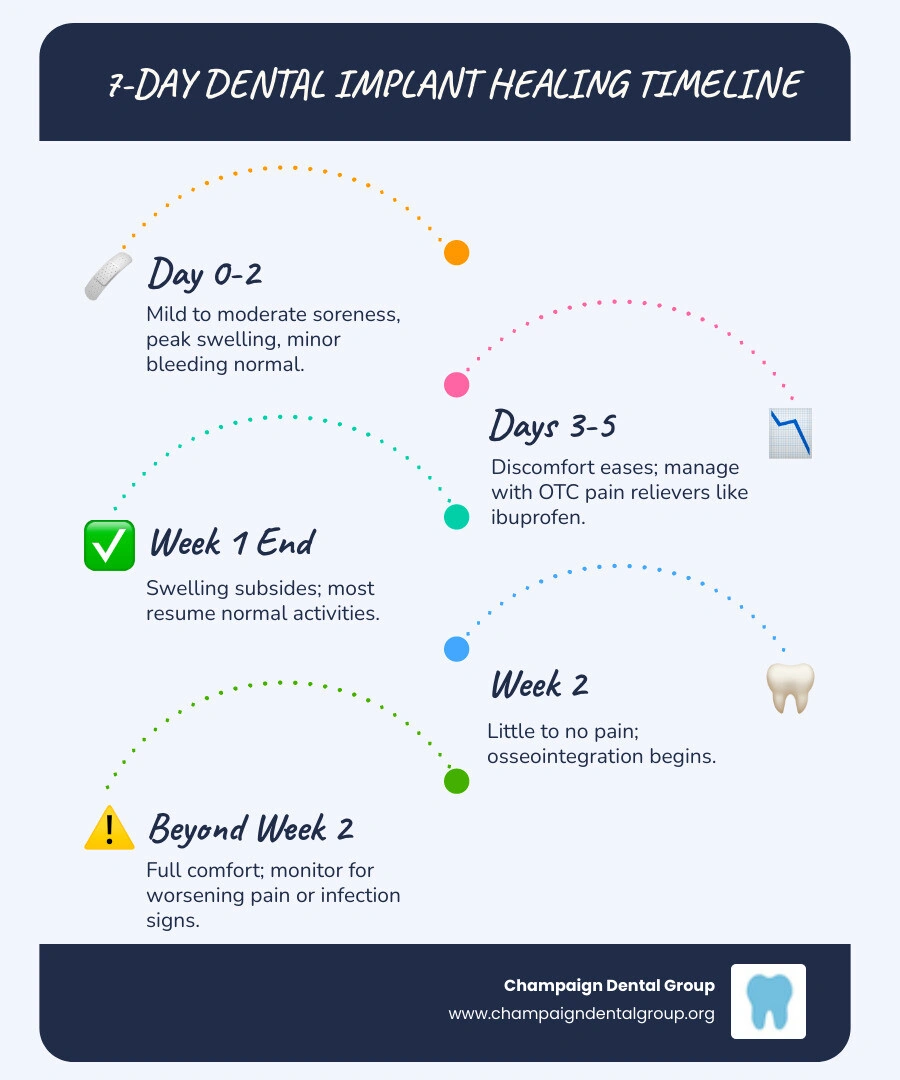
- First 24-48 hours: Mild to moderate soreness, some swelling, and minor bleeding are all normal.
- Days 3-5: Discomfort starts to ease. Most patients manage well with over-the-counter ibuprofen or acetaminophen.
- By week 2: Most people feel little to no pain at all.
- When to call your dentist: If pain gets worse after day 3, or if you notice fever, pus, or a loose implant, contact your provider right away.
Here is something most people are surprised to hear: over 95% of dental implant patients say the discomfort was far less than they expected, and well worth the long-term results.
Fear of pain is one of the biggest reasons people put off getting implants. But the reality is, modern techniques and anesthesia have made this one of the most predictable and manageable procedures in dentistry.
At Champaign Dental Group, we have been helping families right here in Champaign County through procedures like this since 1997. We know the anxiety is real, and we want you to feel informed and at ease before you ever sit in the chair.
This guide walks you through exactly what to expect, what works for relief, and when to reach out for help.
Important Dental implant pain management terms:
What to Expect: Your Dental Implant Healing Timeline
When you are planning for a new smile in Urbana, knowing the schedule of your recovery can take a lot of the mystery out of the process. Healing is not a straight line, but it follows a very predictable pattern for most of our patients.
The most important thing to remember is that your body is working hard to welcome that new titanium post. This process, called osseointegration, is where your jawbone actually bonds with the implant. While that sounds like it might be painful, the bone itself has very few pain receptors. Most of the sensations you feel come from the surrounding gum tissue.
According to typical recovery expectations, most patients experience only mild discomfort for the first three to five days, with things looking much brighter by the end of the first week.
Immediate Post-Op Sensations
Right after the procedure, you will still be under the effects of local anesthesia. At Champaign Dental Group, we make sure the area is completely numb before we begin. You might remember feeling some pressure or a bit of vibration during the appointment, but you should not feel any sharp pain.
As the numbness wears off, you might feel a dull ache or a sensation of tightness. This is perfectly normal. It is actually a great sign that the Benefits of Dental Implants are already underway, as your body begins the natural inflammatory response needed for healing.
The First Week of Healing
The first 24 to 48 hours are usually when you will notice the most swelling and tenderness. Think of it like a sports injury; the second day is often when you feel the "peak" of the discomfort. By day three or four, that tissue inflammation starts to go down.
Most people find that by day five, they are back to their normal routine, perhaps just being a little careful when they chew. If you are ever worried during this week, Dental Implants are designed to be a permanent, comfortable solution, and this short week of "taking it easy" is the gateway to years of confident smiling.
Effective Dental implant pain management at Home
You do not need a hospital pharmacy to manage your recovery. In fact, most of the best tools for Dental implant pain management are already in your kitchen or medicine cabinet.
Research shows that staying ahead of the discomfort is much more effective than trying to "catch up" once it starts. Many of our neighbors in Urbana find that taking their first dose of pain relief before the office anesthesia completely wears off makes a world of difference.
Scientific research on analgesic efficacy confirms that nonsteroidal anti-inflammatory drugs (NSAIDs) like ibuprofen are highly effective for this type of recovery because they target the swelling itself, not just the pain signals.
Over-the-Counter Dental implant pain management
For most cases, a combination of ibuprofen (Advil or Motrin) and acetaminophen (Tylenol) works wonders. These two medications work through different pathways in your body, providing a more complete "shield" against soreness.
- Ibuprofen: Great for reducing inflammation and swelling.
- Acetaminophen: Excellent for blocking pain signals.
Always follow the specific dosage instructions we provide at our office. Following the right timing ensures there are no "gaps" in your comfort. For more detailed tips on what to do after a procedure, you can check out our Dental Advice After Extraction.
Non-Medication Dental implant pain management Techniques
Sometimes the best medicine is not a pill at all. We often recommend these simple home remedies to our patients:
- Ice Packs: Apply a cold compress to your cheek for 15-20 minutes at a time during the first 48 hours. This constricts blood vessels and keeps swelling to a minimum.
- Head Elevation: Sleep with an extra pillow or two for the first few nights. Keeping your head above your heart reduces the blood pressure in your jaw, which can significantly decrease throbbing.
- Rest: Your body heals faster when it is not busy doing other things. Take a day off from the gym and enjoy some quiet time.
If you notice minor spotting or bleeding, biting down gently on a piece of clean gauze can help. We have more tips on this in our guide on How to Stop Bleeding After Tooth Extraction.
Daily Habits for a Smooth Recovery
What you do (and eat) during the first week can either speed up your healing or slow it down. We want you back to eating your favorite local foods as soon as possible, but for the first few days, your menu should look a little different.
For the first few days, stick with soft, gentle foods like mashed potatoes, yogurt, smoothies, and scrambled eggs. Choose lukewarm or cool options, such as mild soups or protein shakes.
Avoid crunchy, hard, or sharp foods like chips, nuts, crusty bread, and popcorn. Skip very hot drinks, spicy peppers, acidic citrus, and vinegar until your mouth feels better.
Nutrition and Hydration
Staying hydrated is key to keeping your tissues healthy. However, there is one big rule: No straws. The sucking motion created by a straw can create a vacuum in your mouth that might disturb the surgical site or dislodge a healing blood clot. Drink straight from the glass or use a spoon.
Focus on nutrient-dense soft foods. Greek yogurt, protein shakes, and well-mashed avocados provide the vitamins your body needs to rebuild tissue without requiring you to chew near the implant site.
Protecting the Implant Site
One of the most important things you can do for Dental implant pain management is to avoid smoking. We recommend stopping for at least 72 hours, though longer is always better for your oral health. Smoking reduces blood flow to the gums and can significantly delay healing, leading to more pain and a higher risk of the implant not taking.
Keeping the area clean is also vital, but you have to be gentle. After the first 24 hours, you can start using warm salt water rinses (about half a teaspoon of salt in a glass of warm water) several times a day. This keeps bacteria away without the harshness of some commercial mouthwashes. For a deeper look at protecting your smile after a procedure, see our Tooth Extractions Complete Guide.
Comparing Implant Discomfort to Other Procedures
Many people assume that because an implant involves "surgery," it must be more painful than a standard filling or an extraction. Surprisingly, it is often the opposite.
Why Implants Often Hurt Less
There are a few scientific reasons why Dental implant pain management is usually easier than people expect:
- Fewer Nerve Receptors: The jawbone where the implant is placed actually has very few pain-sensing nerves compared to the "pulp" inside a natural tooth. This is why a root canal or a bad toothache often feels much more intense than an implant recovery.
- Precision: Modern dental technology allows us to plan the exact placement of the implant before we even begin, minimizing the impact on the surrounding tissue.
- Sedation Options: At Champaign Dental Group, we offer sedation dentistry for those who feel extra nervous. This helps you stay relaxed, and when you are relaxed, your body actually processes pain signals more effectively.
Whether you are looking at Dental Implant Options for a single tooth or a full bridge, the recovery is remarkably predictable.
When to Reach Out for Extra Help
While most recoveries go off without a hitch, we always want our Champaign County patients to know when it is time to give us a call. We would much rather you call us with a question than sit at home worrying!
Identifying Normal vs. Abnormal Signs
It is normal to feel a dull ache, see some minor bruising, or have a bit of swelling that peaks at 48 hours. However, keep an eye out for these "red flags":
- Throbbing Pain that Gets Worse: If your pain is significantly worse on day four than it was on day two, that is a sign we should take a look.
- Fever or Chills: These can be signs of a developing infection.
- Pus or Unusual Discharge: While a little redness is normal, pus is not.
- A Loose Implant: The implant should feel like a solid part of your jaw. If it feels like it is wiggling, call us immediately.
- Persistent Numbness: If your lip or chin still feels tingly or numb more than 24 hours after surgery, let us know.
We want your results to look like Natural Looking Dental Implants, and that starts with a healthy, complication-free recovery.
Frequently Asked Questions about Dental Implant Pain
How long does the discomfort usually last?
Most patients feel "back to themselves" within 3 to 7 days. Any lingering tenderness usually vanishes completely by the end of the second week.
Can I go back to work the next day?
Many of our patients do! If your job is not physically demanding, you can usually return the next day. However, if your work involves heavy lifting or lots of talking, you might want to take one extra day to rest and keep the swelling down.
What if my pain gets worse after the third day?
This is the most important rule of thumb: pain should trend downward after the second day. If it starts to spike on day three, four, or five, it could indicate an issue like an opening in the incision or a minor infection. Give us a call right away so we can help.
Conclusion
At Champaign Dental Group, we believe that a healthy smile is the foundation of a happy life. Since 1997, we have treated our Urbana neighbors like family, ensuring that every step of your dental care, from the first consultation to your final recovery, is handled with compassion and expertise.
Dental implant pain management does not have to be a scary prospect. With the right preparation, a little bit of ice, and our team by your side, you can look forward to a comfortable recovery and a lifetime of confident smiles.
If you have been waiting to restore your smile because of dental anxiety or concerns about the recovery process, we invite you to come chat with us. We offer in-house oral surgery and sedation options to make sure you are always in your "comfort zone."
Ready to take the next step toward a permanent, beautiful smile? Request an appointment with our friendly team today. We look forward to welcoming you into our dental family!