.jpg)
Don't Let Your Smile Fade with These Maintenance Tips

Why Denture Maintenance Tips Matter for Your Smile
Denture maintenance tips every denture wearer should know:
- Rinse dentures after every meal under warm water
- Brush daily with a soft-bristled denture brush and a non-abrasive cleanser
- Soak overnight in cool water or a denture-soaking solution to prevent warping
- Handle with care over a folded towel or water-filled sink to avoid breakage
- Clean your mouth too by brushing your gums, tongue, and any remaining teeth daily
- See your dentist at least twice a year, and right away if your dentures feel loose or cause soreness
More than 36 million Americans have lost all of their teeth, and roughly 120 million are missing at least one. For many people, dentures are a lifeline back to eating, speaking, and smiling with confidence.
But here is something a lot of people do not realize: dentures need just as much daily care as natural teeth do.
Without proper cleaning, dentures can build up plaque, develop stains, and harbor bacteria that irritate your gums. And without the right handling and storage habits, they can warp, crack, or stop fitting properly long before their time.
The good news? Caring for your dentures does not have to be complicated. With the right routine, a well-made set of dentures can last anywhere from 7 to 10 years. This guide walks you through everything you need to know to protect your investment and keep your smile feeling great.
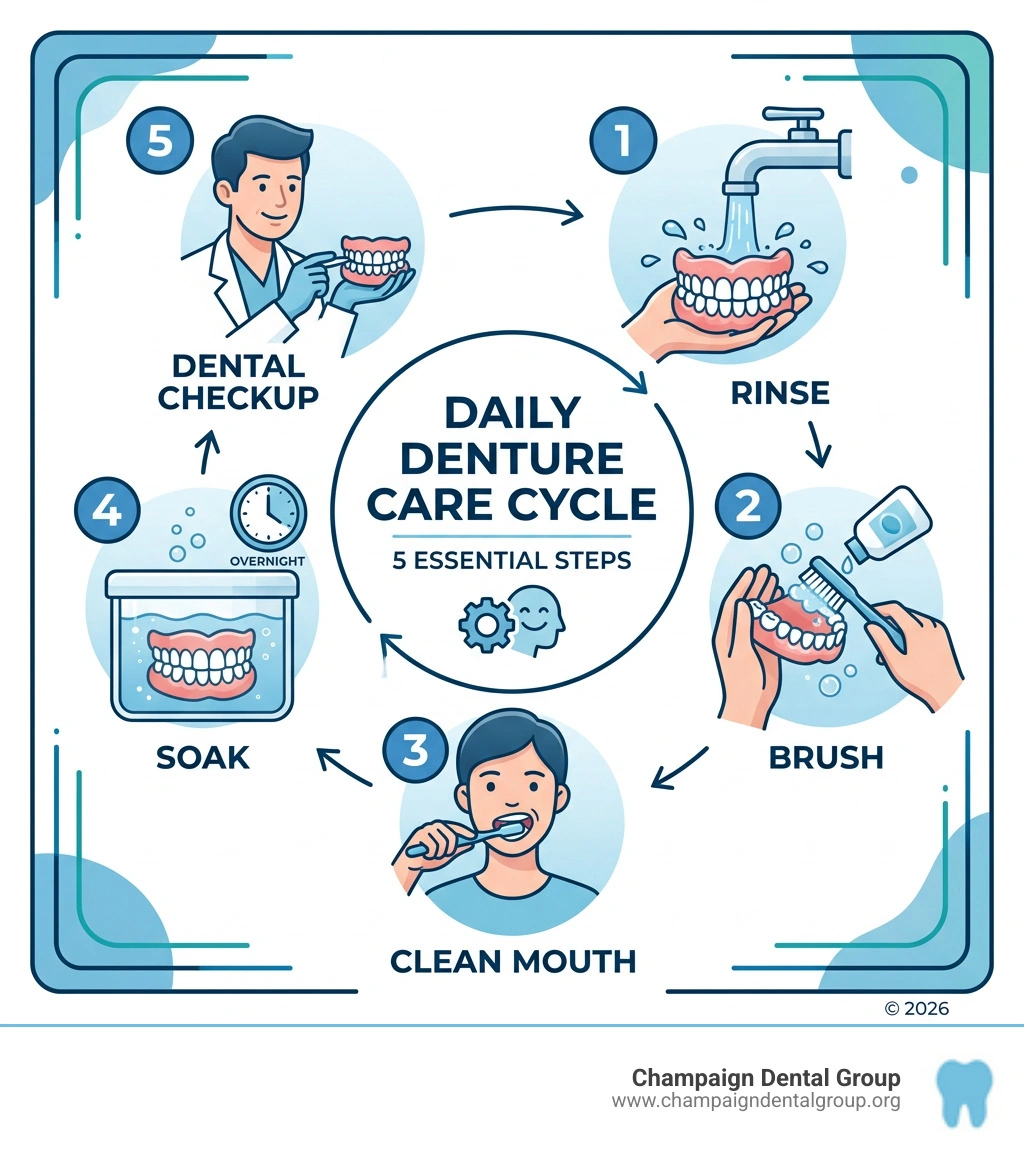
Essential Denture Maintenance Tips for a Healthy Smile
When you first get your dentures, it can feel like a big change. Whether you are in Urbana, West Liberty, or Mechanicsburg, our goal at Champaign Dental Group is to make sure you feel supported every step of the way. Proper care starts with understanding that your dentures are a precision-crafted medical device. They are designed to look and function like natural teeth, but the materials used to make them require specific handling.
The very first rule of thumb is consistency. Just as you wouldn't go days without washing your face, your dentures need a daily "spa day" to stay fresh.
Daily Denture Maintenance Tips for Cleaning
Cleaning your dentures is a multi-step process that goes beyond a quick splash of water. One of the most important Denture maintenance tips we share with our neighbors is to rinse your dentures after every single meal. This helps clear away loose food particles before they have a chance to harden into plaque or cause bad breath.
When it comes to deep cleaning, you should brush your dentures at least once a day, ideally twice. Use a brush specifically designed for dentures. These brushes usually have two heads: a larger, flat one for the smooth surfaces and a smaller, tapered one for the nooks and crannies where the denture meets your gums.
Be sure to use a non-abrasive cleanser. Regular toothpaste might seem like a good idea, but it is actually too harsh. It can create microscopic scratches on the surface of the denture. These tiny scratches are the perfect hiding spots for bacteria and food stains. Instead, use a mild dish soap or a specialized denture paste.
Research shows that using commercial cleansers is highly effective because they often contain antimicrobial ingredients that kill bacteria and remove stubborn stains that a brush might miss. If you are just starting out with your new smile, check out our New Denture Tips for more advice on getting through those first few weeks.
Removing Adhesive Residue
If you use denture adhesive, you know it can be a bit stubborn. Part of your daily routine should involve gently cleaning any remaining adhesive from both the denture and your gums. Leaving old adhesive on the denture can lead to a buildup that prevents a snug fit the next day. It can also trap bacteria against your gum tissue, leading to irritation or even infections like denture stomatitis.
To remove it, we recommend using a soft brush or a clean piece of gauze. If the adhesive is particularly sticky, rinsing with warm water or a mild mouthwash can help loosen the bond. For more pointers on handling the daily ups and downs of life with dentures, our Denture Tips and Tricks guide is a great resource.
Handling Your Dentures with Care
One of the most common reasons patients come to see us for repairs is because they dropped their dentures. Accidents happen, but when a denture hits a hard porcelain sink or a tile floor, it can easily crack or lose a tooth.
To prevent this, we suggest a simple "safety net" approach:
- Fill the sink with water: If the denture falls, the water will cushion the impact.
- Use a soft towel: Lay a folded hand towel over the counter and across the bottom of the sink. This provides a soft landing spot.
- Use both hands: Especially when removing or inserting them, take your time and use both hands to ensure a steady grip.
Even a small chip can change how your denture fits or irritate your mouth. If you are using a Removable Teeth Set, treating them with a gentle touch will save you a lot of frustration (and extra trips to the office) in the long run.
Choosing the Right Products and What to Avoid
Not all cleaning products are created equal. In fact, some things you use every day for your natural teeth can be downright dangerous for your dentures. Here is a quick breakdown of what to reach for and what to leave on the shelf.
What to Use vs. What to Avoid
Choose soft-bristled denture brushes instead of hard-bristled brushes or wire brushes, which can scratch the surface. For cleaning, stick with mild dish soap, denture paste, or ADA-approved cleansers. Avoid whitening toothpaste and abrasive powders, since they can wear down denture materials.
When soaking dentures, use cool or lukewarm water or a mild soaking solution. Never use boiling water, bleach, or chlorine, as these can damage, warp, or weaken your dentures. Ultrasonic cleaners may be helpful occasionally, but skip toothpicks, metal scrapers, and DIY repair kits.
The Danger of Whitening Toothpaste and Bleach
We all want a bright, white smile, but whitening toothpaste is not the answer for dentures. These products often contain abrasive particles like silica that "sand down" the acrylic material of your dentures. Over time, this makes the denture look dull and makes it more likely to pick up stains.
Similarly, never use bleach or products containing chlorine. While bleach is a powerful disinfectant, it can tarnish the metal parts of a partial denture and turn the pink, gum-colored acrylic a ghostly white. It also makes the material brittle, which leads to cracks. For safe, effective product recommendations, always look for the Denture Care and Maintenance seal from the American Dental Association.
Why Hot Water is a No-Go
It might be tempting to use hot water to "sanitize" your dentures, but this is a big mistake. The acrylic used in dentures is thermoplastic, which means it can change shape when exposed to high heat. Hot or boiling water can warp your dentures, meaning they will no longer fit the unique contours of your mouth. Once a denture is warped, it usually cannot be "un-warped" and will likely need to be replaced. Always use cool or lukewarm water for rinsing and soaking.
The Importance of Nightly Soaking and Oral Hygiene
Your mouth needs a break! One of the most vital Denture maintenance tips is to remove your dentures every night before you go to sleep. This gives your gum tissues a chance to breathe and recover from the pressure of holding the dentures in place all day.
Maintaining Shape and Preventing Warping
Most types of dentures need to stay moist to keep their shape. If they dry out, the material can become brittle and warp. When you take them out at night, place them in a container with cool water or a mild denture-soaking solution. This keeps the acrylic hydrated and ensures they are ready to go when you wake up in the morning.
If your dentures have metal attachments, be sure to ask us about the best soaking solution. Some cleansers can cause metal components to tarnish if left submerged for too long.
Cleaning Your Gums and Tongue
Just because you have dentures doesn't mean you can stop worrying about oral hygiene. In fact, keeping your mouth clean is essential for preventing bad breath and gum irritation.
Before you put your dentures back in every morning, use a soft-bristled toothbrush or a clean, damp washcloth to gently clean your gums, the roof of your mouth, and your tongue. This stimulates blood flow to the tissues and removes any plaque that may have formed overnight. If you still have some natural teeth, brush them with fluoride toothpaste as you normally would. This holistic approach to Dentures and Tooth Replacement ensures your whole mouth stays healthy.
Professional Maintenance and When to See a Dentist
Even with the best home care, your mouth will change over time. The bony ridges in your jaw that support your dentures naturally shrink as the years go by. This means that a denture that fit perfectly two years ago might start to feel a little loose today.
Professional Denture Maintenance Tips: Relining and Replacement
We recommend coming in to see us at Champaign Dental Group in Urbana at least twice a year for a checkup. During these visits, we don't just look at the dentures; we examine your gums and oral tissues for any signs of irritation or illness.
If your dentures feel loose, we may suggest a "reline." This is a process where we add new material to the underside of the denture to reshape it to your changing gums. It is a great way to restore comfort and stability without needing a whole new set.
However, dentures are not meant to last forever. On average, they should be replaced every 5 to 10 years. If your dentures are consistently uncomfortable, cracked, or if you find yourself using more and more adhesive just to get through a meal, it is time to talk about new Dentures.
Warning Signs to Watch For
Please don't wait for your six-month checkup if you notice any of the following:
- Sore spots or bleeding gums: This often means the denture is rubbing or shifting too much.
- A "clicking" sound when you talk: This is a sign that the dentures are loose.
- Difficulty chewing foods you used to enjoy: Your dentures might be worn down or out of alignment.
- Persistent bad breath or a bad taste: This could indicate a buildup of bacteria or a yeast infection under the denture.
Understanding Denture Adhesives and Proper Application
Denture adhesives can be a wonderful tool for providing an extra sense of security, especially for lower dentures which tend to move more than uppers. However, it is important to remember that adhesive is not a substitute for well-fitting dentures. If you have to use a lot of it to keep your teeth in place, it is a sign that you need an adjustment.
Proper Application of Adhesive
A little goes a long way! Using too much adhesive can cause it to ooze out, which is messy and can be unpleasant to swallow.
- Start with clean, dry dentures: Adhesive sticks best to a clean surface.
- Apply in small dots or strips: Use three or four pea-sized dollops on the surface that touches your gums. Stay away from the very edges of the denture.
- Press firmly into place: Insert the denture and hold it firmly for a few seconds.
Zinc-Free Options
Some older denture adhesives contained zinc. While zinc is an essential mineral, excessive intake over a long period can lead to health issues. Most modern adhesives are now zinc-free, but it is always a good idea to check the label. The Denture Adhesives guidelines from the FDA recommend using these products sparingly and following the instructions on the package closely. A standard 2.4-ounce tube should last you about seven to eight weeks if you are using it for both upper and lower dentures.
Frequently Asked Questions about Denture Care
We hear a lot of questions from our patients in Champaign County, and we love answering them! Here are a few of the most common ones.
Can I sleep in my dentures?
Generally, we recommend that you do not sleep in your dentures. Your gums need time to rest and recover from the pressure of the dentures. Sleeping in them can increase the risk of developing mouth sores or fungal infections like thrush. It also gives bacteria a warm, dark place to grow undisturbed for eight hours. Unless we specifically tell you to wear them overnight (sometimes we do this immediately after extractions), it is best to let them soak while you sleep.
How long do dentures usually last?
With great care and regular Denture maintenance tips put into practice, dentures typically last between 7 and 10 years. Over time, the acrylic teeth can wear down, and the base may no longer match the shape of your mouth. Regular checkups help us stay ahead of these changes so you never have to deal with a sudden break or a smile that doesn't feel like "you" anymore.
What should I do if my dentures break?
If your dentures crack, chip, or a tooth falls out, call us right away! Please do not try to fix them yourself with superglue or a drugstore repair kit. These glues often contain chemicals that aren't safe for your mouth, and if you glue a piece back on even slightly crooked, it can ruin the fit of the denture and cause painful sores. We offer professional repair services and can often get you back to smiling the same day or shortly after.
Conclusion
At Champaign Dental Group, we have been a part of the Urbana community since 1997. We don't just see you as a patient; we see you as a neighbor. Whether you are coming from Springfield or just down the street in Champaign County, we want you to feel like family from the moment you walk through our doors.
Caring for your dentures is about more than just maintenance; it is about maintaining your quality of life. By following these Denture maintenance tips, you are ensuring that you can continue to enjoy your favorite meals at local spots, speak clearly with your friends, and smile brightly for every family photo.
If you have questions about your dentures, need an adjustment, or are thinking about a new smile, we are here to help. We offer a full range of services, including oral surgery and sedation dentistry, and our Smile Protection Savings Plan makes quality care accessible even if you don't have insurance.
Ready to make sure your smile stays in tip-top shape? We would love to see you!
Request an Appointment or give us a call today. We look forward to seeing you soon!