.jpg)
The A to Z of Direct Composite Bonding: Everything You Need to Know

Understanding Direct Composite Bonding: Your Path to a Better Smile
Direct composite bonding is a minimally invasive dental procedure that uses tooth-colored resin material to repair or improve your teeth in a single visit. The dentist applies, sculpts, and hardens the composite directly onto your tooth surface to fix cosmetic imperfections like chips, gaps, stains, or irregular shapes.
Key Facts About Direct Composite Bonding:
- Procedure Time: 30-60 minutes per tooth
- Visits Required: Usually just one appointment
- Longevity: Typically 3-10 years with proper care
- Recovery: Zero downtime - resume normal activities immediately
- Reversible: Can be removed or modified without permanent tooth alteration
- Pain Level: Generally painless, no anesthesia needed for cosmetic applications
If you're a busy parent juggling family schedules, direct composite bonding offers the perfect solution. You can walk into Champaign Dental Group during your lunch break and leave with a transformed smile - no multiple appointments, no waiting for lab work, and no extensive tooth preparation.
For more than 40 years, dentists worldwide have used this technique to restore damaged teeth and create stunning smile makeovers. What makes it special? The procedure preserves your natural tooth structure while delivering immediate, beautiful results at a fraction of the cost of veneers or crowns.
At Champaign Dental Group, our skilled team treats every bonding procedure as both a science and an art form. We carefully match the composite resin to your natural tooth color and sculpt it to blend seamlessly with your smile. Our compassionate staff understands that your time is valuable, which is why we offer convenient online scheduling and efficient, comprehensive care for your whole family.
What is Direct Composite Bonding and How Does It Work?
Direct composite bonding, often simply called dental bonding, is a popular and versatile dental treatment that addresses a range of cosmetic and restorative concerns. At its core, it involves the application of a tooth-colored resin material directly to your teeth. This dental resin is a putty-like substance that our dentists skillfully sculpt and mold to achieve the desired shape and appearance. Once applied, a high-intensity light is used to harden, or "cure," the resin, bonding it firmly to your natural tooth structure.
The beauty of direct composite bonding lies in its direct application and efficiency. Unlike some other dental restorations that require impressions and off-site lab fabrication, this procedure is typically completed in a single visit to our office in Urbana or Champaign County, OH. This means you can often walk in with a dental concern and leave with a beautifully restored smile, all within one appointment. It’s a fantastic example of modern Cosmetic Dentistry that prioritizes both aesthetics and convenience.
This method is considered a form of Restorative Dentistry Services Guide because it restores the function and integrity of a tooth, while also delivering significant cosmetic improvements. The materials we use are carefully selected to match the natural shade of your teeth, ensuring a seamless and natural-looking result. Our goal is always to improve your smile in a way that looks and feels completely natural.
How It Differs from Veneers and Crowns
While direct composite bonding is incredibly effective, understand how it differs from other dental restoration methods like veneers and crowns. The primary distinction lies in the process and the extent of tooth alteration.
Dental VeneersVeneers, particularly porcelain veneers, are thin, custom-made shells that cover the front surface of your teeth. They are considered an "indirect" restoration because they are fabricated in a dental laboratory based on impressions of your teeth. This process typically requires two or more appointments: one for preparation and impressions, and a subsequent appointment for bonding the custom-made veneers. While veneers offer exceptional durability and stain resistance, their placement often involves more significant enamel removal, making them a more permanent alteration to your natural teeth. Our article on Teeth Bonding vs Veneers digs deeper into this comparison.
Dental CrownsDental crowns are even more extensive restorations. A crown is a tooth-shaped "cap" that is placed over the entire tooth, restoring its shape, size, strength, and appearance. Crowns are typically used for teeth with significant damage, extensive decay, or after a root canal. Like porcelain veneers, crowns are also indirect restorations, often requiring lab fabrication and multiple appointments. The preparation for a crown involves removing a substantial amount of the tooth's outer structure to make room for the cap.
Direct Composite Bonding's Unique AdvantagesIn contrast, direct composite bonding is a minimally invasive procedure that requires very little, if any, tooth preparation. This means we preserve more of your natural tooth structure, which is always our priority. The procedure doesn't involve drilling away healthy enamel for cosmetic purposes, making it reversible if ever needed. The materials are applied directly by our skilled dentists, sculpted freehand, and cured on the spot. This eliminates the need for lab fabrication, saving you time and often making it a more budget-friendly option. Its ultra-conservative nature and single-visit completion make it an appealing choice for many patients seeking immediate smile improvements.
Is Direct Composite Bonding the Right Choice for Your Smile?
Choosing the right dental treatment is a personal journey, and at Champaign Dental Group, we're here to guide you every step of the way. Direct composite bonding offers a fantastic solution for many individuals looking to improve their smile without undergoing more invasive procedures. It's a versatile treatment that can address a variety of cosmetic imperfections, helping you achieve your smile goals with confidence.
We always begin with a thorough dental health assessment to determine if direct composite bonding is the ideal choice for you. Our team will discuss your aesthetic desires and evaluate your oral health to ensure the best possible outcome. For a glimpse of the changes we can achieve, you might enjoy seeing some Teeth Bonding Before and After examples.
Signs You're a Good Candidate
You might be an excellent candidate for direct composite bonding if you have:
- Chipped or cracked teeth: Minor chips or cracks can be seamlessly repaired, restoring the tooth's original form and strength.
- Gaps between teeth (diastema): We can gently widen individual teeth with composite resin to close small to moderate spaces, creating a more uniform smile. Minor gaps, usually around 0.5-1 mm, are ideal for this treatment.
- Tooth discoloration: While professional whitening is often the first step for generalized staining, bonding can cover intrinsic stains or discolored areas that don't respond to bleaching, providing a brighter, more even shade.
- Misshapen or short teeth: If you have teeth that are uneven, too short, or have an irregular shape, bonding can reshape and lengthen them to create a harmonious smile line.
- Exposed tooth roots: For minor gum recession, composite can be applied to cover and protect exposed roots, reducing sensitivity and improving aesthetics.
- A desire for a conservative tooth surface repair: If you prefer a treatment that preserves as much of your natural tooth structure as possible, bonding is an outstanding choice. It's also a great option for people with slight crookedness where minor adjustments can make a big difference.
Key Benefits of Direct Composite Bonding
The popularity of direct composite bonding stems from its numerous advantages:
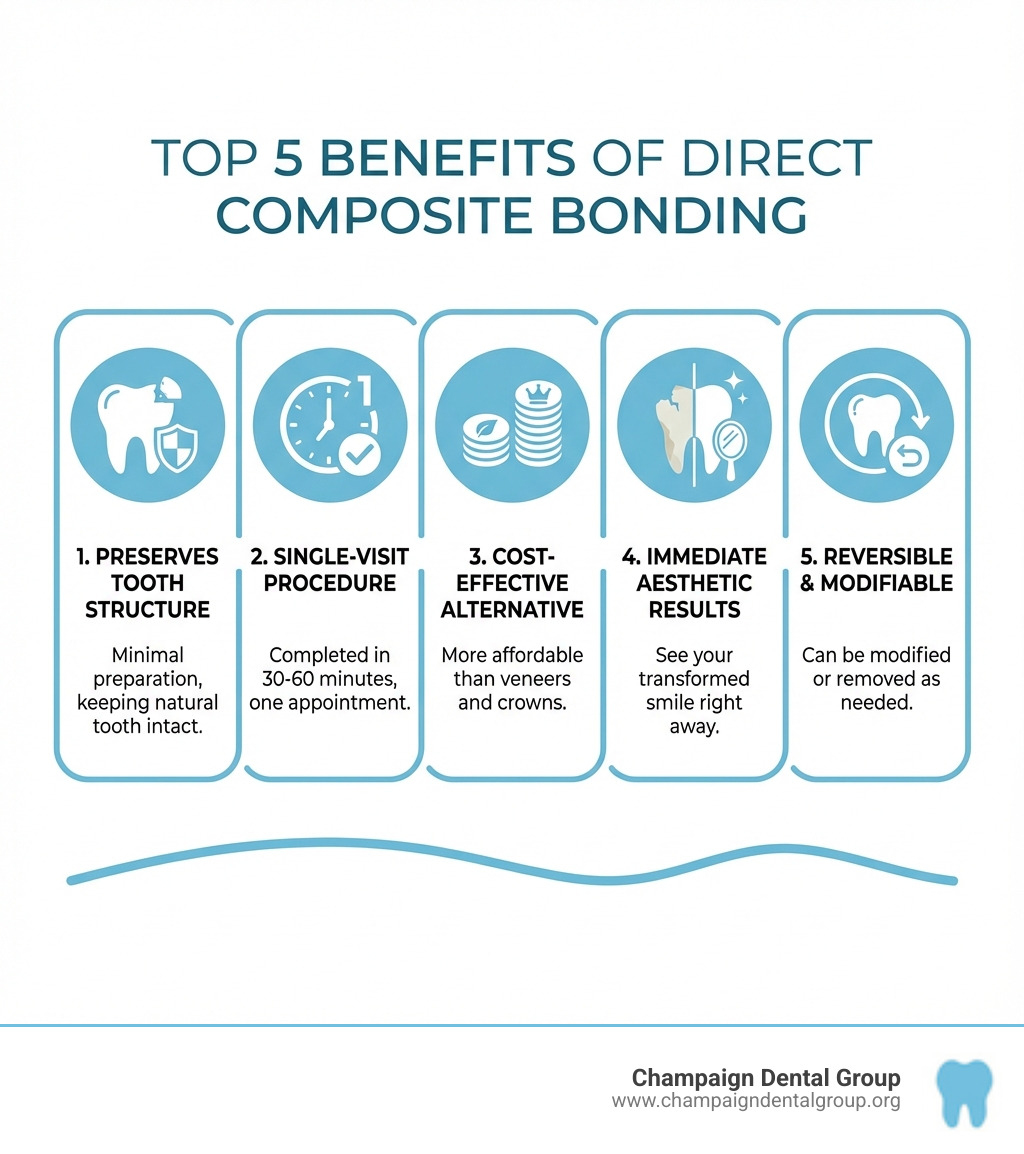
- Minimally Invasive: This is perhaps its most significant benefit. Unlike veneers or crowns, bonding requires minimal to no removal of healthy tooth enamel. We aim to preserve your natural tooth structure whenever possible.
- Preserves Natural Tooth Structure: By adding to the tooth rather than significantly reducing it, bonding maintains the integrity and strength of your natural teeth. The ultra-conservative nature of direct composite bonding appeals to many since it does not involve drilling.
- Quick Procedure (30-60 minutes per tooth): Most bonding procedures are completed in a single visit, making it incredibly convenient for busy schedules. You can achieve a noticeable smile change in a relatively short amount of time.
- Cost-Effective: Direct composite bonding is generally less expensive than indirect restorations like porcelain veneers or crowns. This makes it an accessible option for many patients seeking cosmetic improvements.
- Aesthetically Pleasing Results: Modern composite resins come in a wide range of shades that can be precisely matched to your natural tooth color. Our skilled dentists use their artistic eye to sculpt the material for a beautiful, natural-looking finish.
- Reversible Treatment: Because bonding involves minimal enamel removal, it can often be reversed or modified if needed, offering flexibility that more permanent solutions do not.
Limitations and Comparison
While direct composite bonding offers many advantages, it's also important to understand its limitations and how it compares to other cosmetic dental procedures.
FeatureDirect Composite BondingComposite VeneersPorcelain CrownsDurabilityGood, but less durable than porcelain. Can chip or wear.Good, but still composite, so generally less durable than porcelain.Excellent. Designed for maximum strength and protection.Stain ResistanceModerate. Can stain over time from coffee, tea, etc.Moderate. Similar to direct bonding, can stain.Excellent. Highly resistant to staining.LongevityTypically 3-10 years (some sources say 5-15 for anterior).Typically 5-7 years for composite veneers.10-15+ years.Tooth PreparationMinimal to none. Preserves natural tooth structure.Minimal to moderate enamel removal.Significant tooth reduction. Covers the entire tooth.Procedure TimeSingle visit.Typically 1-2 visits (direct composite veneers can be one, indirect composite veneers are multiple).2+ visits.CostMost affordable.More expensive than direct bonding, less than porcelain veneers.Most expensive.ReversibilityOften reversible.Direct composite veneers are often reversible, indirect composite veneers are not.Not reversible.Ideal ForMinor chips, gaps, stains, misshapen teeth.More extensive cosmetic changes than bonding, but less invasive than porcelain veneers, or if budget is a concern.Severely damaged, decayed, or weakened teeth; post-root canal; significant aesthetic changes.
One primary limitation of direct composite bonding is its durability and stain resistance compared to porcelain. While strong, composite resins are not as resistant to chipping, wear, or staining as ceramic materials. This means bonded teeth may require touch-ups or replacement sooner than porcelain restorations, typically lasting three to ten years. Oral habits like chewing ice, biting pens, or nail-biting can weaken or chip the material.
Additionally, direct composite bonding is best suited for minor to moderate imperfections. It may not be the ideal solution for severe damage, extensive decay, or significant bite problems that require more comprehensive structural reinforcement. For those situations, we might recommend options like crowns, or perhaps veneers. Our article, Cosmetic Dental Surgery: How to Choose Between Veneers vs Crowns, can provide further insights.
However, for many patients in Urbana and Champaign County, OH, seeking a beautiful, conservative, and affordable smile improvement, direct composite bonding is an excellent choice. It offers a wonderful balance of aesthetics, speed, and cost-effectiveness.
The Procedure: A Step-by-Step Guide to Direct Composite Bonding
At Champaign Dental Group, we combine clinical excellence with an artistic touch for procedures like direct composite bonding. Our dentists approach each case with meticulous attention to detail, knowing successful restorations require both technical precision and an artistic eye. Patient comfort is paramount, and our compassionate team ensures a relaxed, positive experience. We take clinical considerations for successful restorations very seriously, striving for optimal outcomes. You can learn more from resources like Clinical considerations in the application of direct composite for tooth wear.
Step 1: Consultation and Preparation
Your journey to a transformed smile begins with a personalized consultation. During this initial visit, our dentists will:
- Discuss Your Smile Goals: We'll listen carefully to your concerns and what you hope to achieve with direct composite bonding.
- Comprehensive Examination: We'll thoroughly examine your teeth and gums to ensure your oral health is optimal for the procedure. X-rays may be taken if necessary.
- Shade Selection: This is a critical artistic step. We will use a shade guide to carefully match the composite resin to the natural color of your existing teeth. If you're considering teeth whitening, we recommend doing so before bonding, as the composite material cannot be whitened later. We'd then wait 14-21 days after whitening before proceeding with bonding to allow your tooth color to stabilize.
- Tooth Surface Preparation: For most cosmetic bonding cases, minimal tooth preparation is needed. We might gently roughen the tooth's surface using an etching solution, typically a mild phosphoric acid gel. This creates microscopic pores in the enamel, allowing the bonding agent to adhere more securely. In many cases, especially for purely cosmetic improvements, anesthesia is not required, making the procedure even more comfortable and efficient.
Step 2: The Art of Application
This is where the magic truly happens, blending science with artistry.
- Applying Bonding Agent: After the tooth surface is prepared, we apply a liquid bonding agent (a type of adhesive) to the etched enamel. This agent acts as a primer, creating a strong, durable link between your tooth and the composite resin.
- Layering the Composite Resin: Once the bonding agent is in place, our dentist begins applying the tooth-colored composite resin. This putty-like material is applied in small, incremental layers. The layering technique is crucial for achieving a natural look and ensuring the strength of the restoration. Our dentists are experts in this technique, sculpting the material to precisely match the contours and characteristics of your natural teeth. For more on the detailed techniques, you might find Direct anterior composites: a practical guide insightful.
- Sculpting Material to Desired Shape: With each layer, the composite is carefully molded and sculpted to achieve the desired shape, length, and symmetry. This requires a high degree of skill and an artistic eye to create a result that blends seamlessly with your smile. We consider factors like the natural anatomy of your teeth, how light reflects off them, and how they interact with your lips and face.
- Curing with High-Intensity Light: After each layer of composite is sculpted, a special high-intensity curing light (often a blue LED light) is used to rapidly harden the resin. This light activates a chemical reaction within the composite, causing it to solidify and bond firmly to the tooth. This process is repeated until the desired shape and thickness are achieved.
Step 3: Finishing and Polishing
The final steps are crucial for the aesthetics, comfort, and longevity of your new restoration.
- Final Shaping and Contouring: Once all the composite layers are cured, our dentist will carefully refine the shape of the bonded tooth. This involves using specialized instruments to carve and contour the resin, creating natural tooth anatomy, including subtle grooves and ridges that mimic your surrounding teeth. We pay close attention to ensuring the bonded tooth feels comfortable and harmonious with your bite.
- Polishing for a Seamless, Glossy Finish: The composite is then polished to a smooth, high-gloss finish. This step is vital for two reasons: a smooth surface helps prevent staining and plaque accumulation, and a glossy finish reflects light naturally, making the bonded tooth indistinguishable from your natural teeth.
- Checking the Bite: Finally, we’ll check your bite (occlusion) to ensure that the bonded tooth doesn’t interfere with how your upper and lower teeth come together. Any necessary adjustments are made to ensure comfort and proper function.
Our dentists' artistic skill and technical precision are key considerations in achieving outstanding aesthetic results with direct composite bonding. From precise shade matching to meticulous sculpting and polishing, every step is performed with the goal of creating a beautiful, natural, and long-lasting smile for you.
Aftercare, Longevity, and Cost
One of the great advantages of direct composite bonding is the minimal disruption to your daily life. There's virtually zero downtime after the procedure, meaning you can typically resume your normal activities immediately after leaving our office in Urbana or Champaign County, OH. Your new smile is ready to go!
How to Make Your Bonding Last
While direct composite bonding offers fantastic immediate results, its longevity largely depends on how well you care for it. Typically, bonding material lasts between three and ten years before needing to be touched up or replaced. Some studies suggest anterior restorations can last even longer, potentially five to fifteen years. However, several factors influence this lifespan:
- Oral Habits: Certain habits can significantly reduce the longevity of your bonded teeth. We strongly advise against chewing on hard objects like ice, pens, or fingernails, as these can chip or weaken the composite material. Using your teeth to open packages is also a no-go!
- Oral Hygiene Practices: Just like your natural teeth, bonded teeth require diligent oral hygiene. Brushing at least twice a day, flossing at least once a day, and using an antimicrobial mouthwash will help prevent plaque buildup and staining, keeping your bonded teeth looking their best.
- Diet: While composite is more stain-resistant than natural enamel, it can still absorb pigments from dark-colored foods and beverages over time. Limiting consumption of coffee, tea, red wine, and berries, or rinsing your mouth with water after consuming them, can help maintain the brightness of your bonded teeth.
- Regular Dental Check-ups: Routine visits to Champaign Dental Group are crucial. During these appointments, we can professionally clean your teeth, polish your bonded areas to remove surface stains, and check for any signs of wear or damage that might require a touch-up. For more comprehensive Information on dental bonding aftercare, we encourage you to consult our resources or ask our team.
By following these simple guidelines, you can significantly extend the life of your direct composite bonding and enjoy your beautiful smile for many years to come.
Understanding the Cost of Direct Composite Bonding
When considering any dental procedure, understanding the financial aspects is important. Direct composite bonding is often lauded as a more affordable cosmetic solution compared to alternatives like porcelain veneers or crowns. While we don't provide specific pricing information here, the typical cost for bonding can vary.
Several factors influence the overall cost of direct composite bonding:
- Geographic Location: Dental fees can differ based on the region. Our practice in Urbana and Champaign County, OH, strives to provide exceptional value for our community.
- Case Complexity: The extent of the repair or improvement needed plays a role. A small chip repair will naturally be less involved than reshaping multiple teeth or closing larger gaps.
- Dentist's Experience and Skill: The artistic skill and precision required for high-quality bonding can also influence cost. Our experienced dentists at Champaign Dental Group are dedicated to delivering beautiful, long-lasting results.
- Number of Teeth Treated: The total cost will reflect the number of teeth that undergo the bonding procedure.
For detailed information on Dental Bonding Cost and to understand how insurance might apply, you can refer to our article Does Insurance Cover Bonding. Since direct composite bonding is often considered a cosmetic procedure, insurance coverage can vary. However, if the bonding is done to restore a decayed or fractured tooth, it may be partially covered.
At Champaign Dental Group, we believe that everyone deserves a healthy, confident smile. We offer various financial options, including our convenient Smile Protection Plan, to help make quality dental care accessible and affordable for our patients in Urbana and Champaign County, OH. We encourage you to discuss these options with our friendly administrative team during your consultation.
Frequently Asked Questions about Dental Bonding
We know you might have more questions about direct composite bonding, and we're here to provide clear, simple answers.
Is the dental bonding procedure painful?
For most patients, direct composite bonding is a painless procedure. For cosmetic improvements where only the tooth surface is altered, local anesthesia is usually not needed. You might feel slight pressure, but discomfort is minimal. If bonding is used to fill a cavity or repair a deeper fracture, a local anesthetic may be used to ensure your comfort. It's normal to experience mild sensitivity to hot and cold right after, but this usually subsides within a few days. Our compassionate team at Champaign Dental Group always prioritizes your comfort and ensures you have a pleasant experience.
Can you whiten bonded teeth?
This is an excellent question and an important consideration. The composite resin material used in direct composite bonding does not respond to teeth whitening treatments. This means that if you try to whiten your teeth after bonding, your natural teeth will lighten, but the bonded areas will remain their original shade, potentially creating an uneven appearance.
For this reason, if you are considering both teeth whitening and direct composite bonding, we generally recommend whitening your natural teeth first. Once your teeth have reached your desired shade and the color has stabilized (usually 14-21 days), we can then select a composite resin that perfectly matches your newly whitened smile. This ensures a seamless and uniformly bright result.
What happens if a bonded tooth chips?
Despite its durability, direct composite bonding can chip or wear down, especially with habits like chewing on hard foods or objects. The good news is that if a bonded tooth does chip, it can often be easily repaired. Unlike porcelain restorations, which typically require a full replacement if damaged, a chipped bonded tooth can frequently be "touched up" by adding more composite resin to the affected area.
This repair process is usually quick and straightforward, similar to the initial bonding procedure. Our dentists can re-etch the area, apply new composite, sculpt it, and cure it, restoring the tooth's appearance and function without needing to redo the entire restoration. This repairability is another reason why direct composite bonding is considered a conservative and cost-effective option, offering flexibility and easier modifications if needed. It's a great example of how direct composite bonding can be reversed or modified to maintain your beautiful smile.
Conclusion: Transform Your Smile with Confidence
Direct composite bonding stands out as a remarkable solution in modern dentistry, offering a conservative, fast, and affordable path to enhancing your smile. Whether you're looking to fix minor chips, close small gaps, brighten discolored areas, or simply refine the shape of your teeth, this versatile procedure provides immediate, aesthetically pleasing results. It's a testament to how far cosmetic and restorative dentistry has come, allowing us to preserve your natural tooth structure while achieving stunning changes.
At Champaign Dental Group, we believe that everyone deserves a smile they can be proud of. Our dedicated team of dentists in Urbana and Champaign County, OH, combines extensive experience with an artistic touch, ensuring that every direct composite bonding procedure is performed with precision and care. We're passionate about creating beautiful, natural-looking results that blend seamlessly with your existing smile, boosting your confidence and improving your overall well-being. Our commitment to compassionate care means we'll listen to your concerns, answer all your questions, and tailor a treatment plan that's just right for you.
If you're ready to explore the possibilities of a brighter, more confident smile, we invite you to connect with us. Find how our state-of-the-art technology and personalized approach can help you achieve the smile you've always dreamed of, all within the comfort and convenience of your local Champaign Dental Group office.
Ready to explore your options for a perfect smile? Schedule a consultation for dental bonding today!