.jpg)
Keep the Whole Crew Smiling: A Guide to the Best Dentist Offices

Why Every Family Deserves a Healthy Smile
Family oral health covers the dental and gum care of every person in your household — from babies cutting their first teeth to grandparents keeping their smiles strong.
Here's a quick snapshot of what good family oral health looks like:
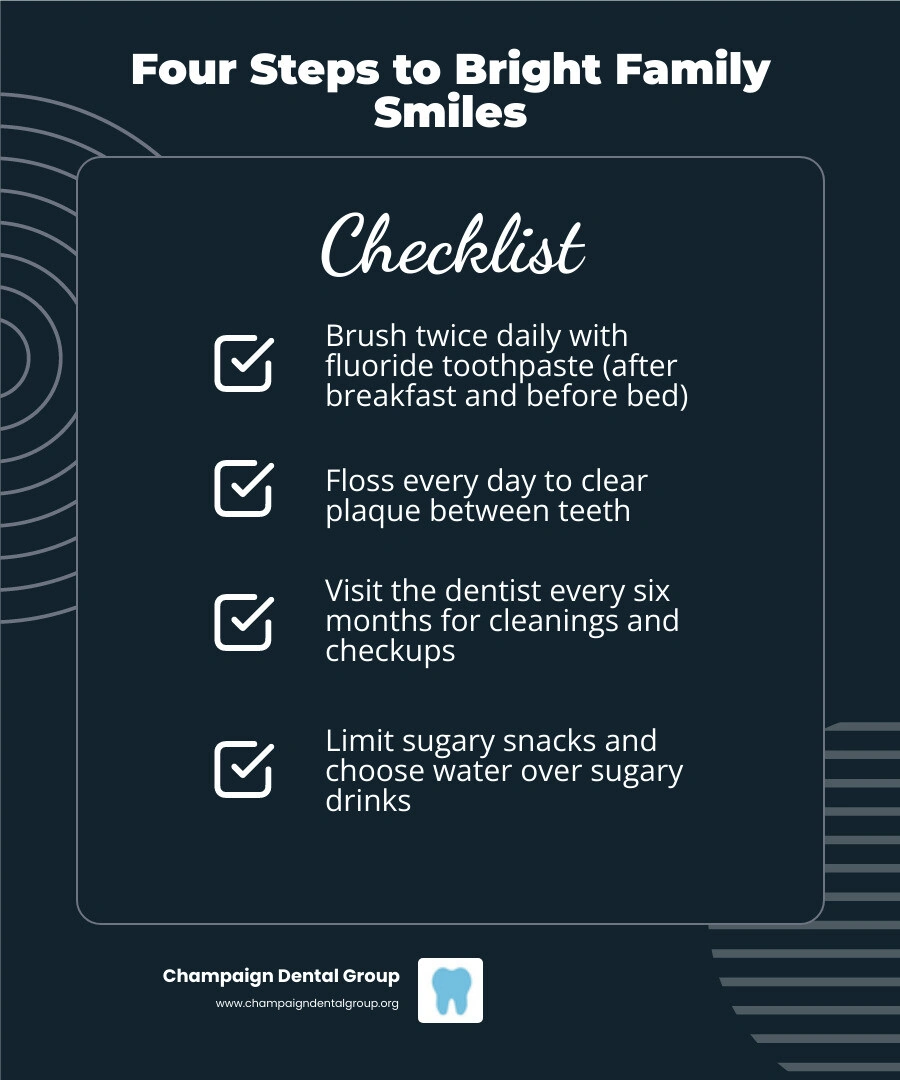
- Brush twice daily with fluoride toothpaste (after breakfast and before bed)
- Floss every day to clear plaque between teeth
- Visit the dentist every six months for cleanings and checkups
- Limit sugary snacks and choose water over sugary drinks
- Start dental visits early — by age one, or when the first tooth appears
- Watch for warning signs like crowding, bleeding gums, or jaw pain
The numbers tell a striking story. Dental caries (cavities) is the most common childhood disease in the United States, affecting nearly 46% of children aged 2–19. And it's not just kids — close to 47% of adults over 30 have some form of gum disease, according to the CDC.
Yet most of these problems are entirely preventable.
The good news? Small, consistent habits — a regular bedtime routine, family dinners, limiting screen time, and seeing a trusted dental team — make a measurable difference. Research shows that children with consistent bedtime routines (which include toothbrushing) have 32% lower odds of developing cavities than those without.
At Champaign Dental Group, our team is committed to making that kind of care simple, welcoming, and accessible for your whole family — kids, parents, and everyone in between.
Know your family oral health terms:
Why Family Oral Health is the Foundation of Wellness
When we talk about family oral health, we aren't just talking about shiny white teeth. We are talking about the gateway to your entire body’s well-being. Modern medicine has shown us that the mouth is a mirror of our systemic health. Bacteria that build up in the gums don't always stay there; they can enter the bloodstream and contribute to serious conditions like heart disease and diabetes.
According to the CDC, nearly 47% of adults aged 30 and older have some form of gum disease. This is a startling statistic because gum disease is often "silent" until it becomes severe. By prioritizing comprehensive oral health care, families can catch these issues before they impact overall wellness.
Recent scientific research on family routines and oral health suggests that the environment we create at home is one of the strongest predictors of a child's future dental success. When parents prioritize their own checkups and hygiene, they aren't just cleaning their teeth—they are setting a blueprint for their children to follow.
Socioeconomic Factors and Access
We understand that every family faces different challenges. Statistics show that children from low-income families are five times more likely to have untreated tooth decay. This often stems from a lack of access to preventive education or perceived costs of care.
In Champaign County OH, we believe that high-quality care should be accessible. If you are worried about the cost of keeping your crew healthy, we offer the Smile Protection Plan to ensure affordable family dentistry is a reality, not a luxury. Neighborhood environments and community support play huge roles in how we view health, and we are proud to be a supportive pillar for families in Urbana and the surrounding areas.
The Role of Genetics vs. Habits
A common question we hear is, "I have soft teeth; is it just my genetics?" While genetics can influence enamel strength and how your jaw develops, your habits are the real captain of the ship.
Bacteria that cause cavities can actually be transmitted between family members—for example, by sharing spoons or cleaning a pacifier with your own mouth. This is why teeth care tips emphasize that "bacterial sharing" is a real thing! Parental modeling is the most powerful tool in your kit. If your kids see you brushing and flossing with a smile, they’re much more likely to view it as a normal, positive part of their day rather than a chore.
Establishing Winning Routines: From Bedtime to Mealtimes
Consistency is the "secret sauce" of family oral health. Our mouths are under constant attack from plaque acid, which is produced when bacteria feast on the sugars in our food. These "acid attacks" can last for 20 minutes after you finish eating.
Establishing a good oral hygiene routine is especially critical at night. During sleep, our saliva production drops. Since saliva is our mouth's natural way of neutralizing acid and washing away food, going to bed with "dirty" teeth is like leaving a car in the rain with the windows down—damage is inevitable.
Research published in Frontiers in Oral Health asks, May family routines impact oral health? The answer is a resounding yes. Children with regular bedtimes have significantly lower rates of caries because those routines usually include the "big three": brush, book, and bed.
The Impact of Diet on Family Oral Health
It isn't just what you eat, but how often you eat it. Every time you snack on something starchy or sugary, you trigger a fresh 20-minute acid attack. If your family "grazes" all day, your teeth never get a chance to recover.
Here are some quick dental care tips for the kitchen:
- Group your snacks: Eat that cookie with lunch rather than an hour later.
- Choose calcium-rich dairy: Cheese and yogurt help remineralize enamel.
- Water is king: Encourage everyone to drink water between meals to wash away debris.
- Crunchy veggies: Carrots and apples act like "nature’s toothbrushes" by stimulating saliva.
Screen Time and Dental Neglect
It might seem strange to link iPads to cavities, but a scientific study on screen time and cariogenic intake found a clear connection. Increased screen time often leads to "mindless snacking" on processed, sugary foods.
Furthermore, excessive screen time can disrupt sleep patterns. When children (or adults!) stay up too late, they are more likely to skip their nighttime brushing routine out of sheer exhaustion. Setting weekday limits on devices helps ensure there is plenty of time for a thorough 2-minute brush before the lights go out.
Preventive Care and Orthodontics for All Ages
Prevention is always easier (and more affordable) than a cure. For our younger patients, we highly recommend dental sealants. These are thin, protective coatings applied to the chewing surfaces of the back teeth (molars) to "seal out" food and bacteria.
Combined with professional fluoride treatments, sealants can reduce the risk of decay in molars by nearly 80%. We focus on paediatric and preventive dentistry to ensure that your child's permanent teeth have the best possible start.
Orthodontics is another major piece of the family oral health puzzle. While many people think of braces as a "teenager thing," the American Association of Orthodontists (AAO) recommends an initial evaluation by age 7. This allows us to spot developmental issues early, which can often make future treatment much shorter and simpler. You can find more details in this comprehensive guide to family orthodontic health.
Recognizing Signs for Family Oral Health Care
How do you know if your child or even yourself might need an orthodontic evaluation? Keep an eye out for these signs:
- Crowding: Teeth that are overlapping or "bunched up."
- Mouth Breathing: This can actually affect how the jaw and face develop.
- Jaw Alignment: An overbite, underbite, or crossbite.
- Speech Issues: Difficulty pronouncing certain sounds can sometimes be linked to tooth position.
We provide family dentistry essential oral health tips for all ages to help parents stay ahead of these changes.
Managing Common Dental Problems
Even with the best routines, problems can pop up. Cavities remain the most common issue, but gum disease is a close second. Gum disease starts as gingivitis (red, swollen gums) and can progress to periodontitis, which involves bone loss.
Check out our gum care tips to learn how to spot the early warning signs. If an emergency happens—like a knocked-out tooth or a severe toothache—knowing your protocol is key. Always call us immediately. For a knocked-out tooth, keep it moist (in milk or a tooth preservation kit) and try to get to the office within an hour.
Choosing the Right Practice and Managing Costs
Finding a dental home is a big decision. Many people wonder about the difference between a general dentist and a "family dentist." While both are highly skilled, family dentists are specifically trained to handle patients of all ages—from the very first baby tooth to senior dental needs—all under one roof.
Feature: General Dentistry vs. Family Dentistry
Age range: General dentistry typically focuses on adults and teens. Family dentistry cares for all ages, from infants to seniors.
Atmosphere: General dentistry often feels more clinical and professional. Family dentistry is usually warmer and more family-oriented.
Convenience: General dentistry may require separate individual appointments. Family dentistry often makes it easier to schedule visits for multiple family members.
Education: General dentistry usually emphasizes adult-focused hygiene. Family dentistry offers age-appropriate guidance for kids, teens, adults, and older adults.
At Champaign Dental Group, we pride ourselves on our state-of-the-art technology and high quality of patient care. Our staff is dedicated to making every visit comfortable. For those concerned about the budget, our Smile Protection Plan is designed to keep care within reach. You can learn more in our guide on how to choose the best family dentist.
Preparing for the First Visit
The "Age One" milestone is the gold standard for a child's first visit. This visit isn't usually about "drilling and filling"—it's about getting the child used to the sights and sounds of the office.
To reduce anxiety, we recommend "talking up" the visit. Read books about the dentist and avoid using scary words like "shot" or "pain." We specialize in dental care for children and know exactly how to make the experience fun (and maybe even something they look forward to!).
Essential Services for Family Oral Health
As your family grows, their needs change. We offer a full spectrum of services to keep everyone's smile looking its best:
- Teeth Whitening: For parents and teens looking to brighten their look.
- Dental Implants: A permanent, high-tech solution for missing teeth.
- Restorative Crowns: To save and strengthen teeth that have been damaged.
- Orthodontics: Invisalign and traditional options for all ages.
Stay up to date with the latest in care by checking out our dental hygiene guide 2025.
Frequently Asked Questions about Family Dental Care
How often should my family visit the dentist?
We recommend biannual checkups (every six months) for most patients. These visits are vital for professional scaling—which removes the hard tartar that your toothbrush can't touch—and early detection of problems. Catching a tiny cavity today is much easier than dealing with a root canal next year! Here are 3 important ways to maintain your long-term dental hygiene.
What are the best ways to encourage kids to brush?
Make it a game! Use character toothbrushes, let them pick out their favorite "flavor" of toothpaste, and use music timers. There are even apps that let kids "fight sugar bugs" while they brush. For more ideas, see our flossing tips for kids.
Is fluoride safe for my children?
Yes, when used as directed, fluoride is a superhero for teeth. It works through "remineralization," which essentially repairs the enamel before a cavity can form. The ADA recommends fluoride toothpaste for all ages (just a "smear" for those under 3). We provide expert dentistry for children and can discuss the right amount of fluoride for your child's specific needs.
Conclusion
Building a foundation of family oral health is one of the best gifts you can give your loved ones. From the first tooth to the golden years, consistent habits and a partnership with a trusted dental team make all the difference.
At Champaign Dental Group, we have been serving the Urbana and Champaign County OH communities since 1997. Our mission is to provide compassionate care and high-quality patient experiences using the latest technology. Whether you need a simple cleaning, a complete smile makeover, or a plan to keep your kids' teeth cavity-free, we are here for you.
Ready to join our dental family? Learn more about our family dentistry services and schedule your visit today. We can’t wait to see your smile!