.jpg)
Bridging the Gap: Everything You Need to Know About Fixed Dental Bridges

Understanding Your Tooth Replacement Options
A Fixed dental bridge is a permanent dental restoration that replaces one or more missing teeth by anchoring artificial teeth (called pontics) to the natural teeth on either side of the gap. Unlike removable dentures, a fixed bridge is cemented in place and can only be removed by a dentist.
Quick Facts About Fixed Dental Bridges:
- What it does: Fills gaps from missing teeth and prevents remaining teeth from shifting
- How it works: Crowns are placed on teeth adjacent to the gap, supporting the artificial tooth in between
- Types available: Traditional (tooth-supported), cantilever (one-sided), Maryland (resin-bonded), and implant-supported
- Typical lifespan: 5-15 years with proper care, potentially over 25 years with excellent maintenance
- Success rate: 72% over 15 years according to clinical studies
Missing even one tooth can create a ripple effect throughout your mouth. Your remaining teeth may shift or drift into the empty space. Your bite alignment can change. You might struggle with chewing certain foods or feel self-conscious about your smile.
That's where fixed dental bridges come in.
For busy parents juggling family schedules and dental appointments, understanding your options for tooth replacement is crucial. Whether you're dealing with your own missing tooth or helping a family member explore their choices, a fixed dental bridge offers a time-tested solution that restores both function and appearance.
At Champaign Dental Group, our experienced team uses state-of-the-art technology to create custom bridges that blend seamlessly with your natural teeth. We understand that your time is valuable, which is why we're committed to making the process as efficient and comfortable as possible.
In this comprehensive guide, we'll walk you through everything you need to know about fixed dental bridges—from the different types available to what you can expect during the procedure, plus how to care for your bridge so it lasts as long as possible.
What is a Fixed Dental Bridge?
When we talk about a Fixed dental bridge, we're referring to a non-removable dental prosthesis designed to literally "bridge" the gap left by one or more missing teeth. It’s a permanent solution, meaning that once it's placed, it stays in your mouth and can only be removed by a dental professional. This differs significantly from removable dentures, which you can take out for cleaning.
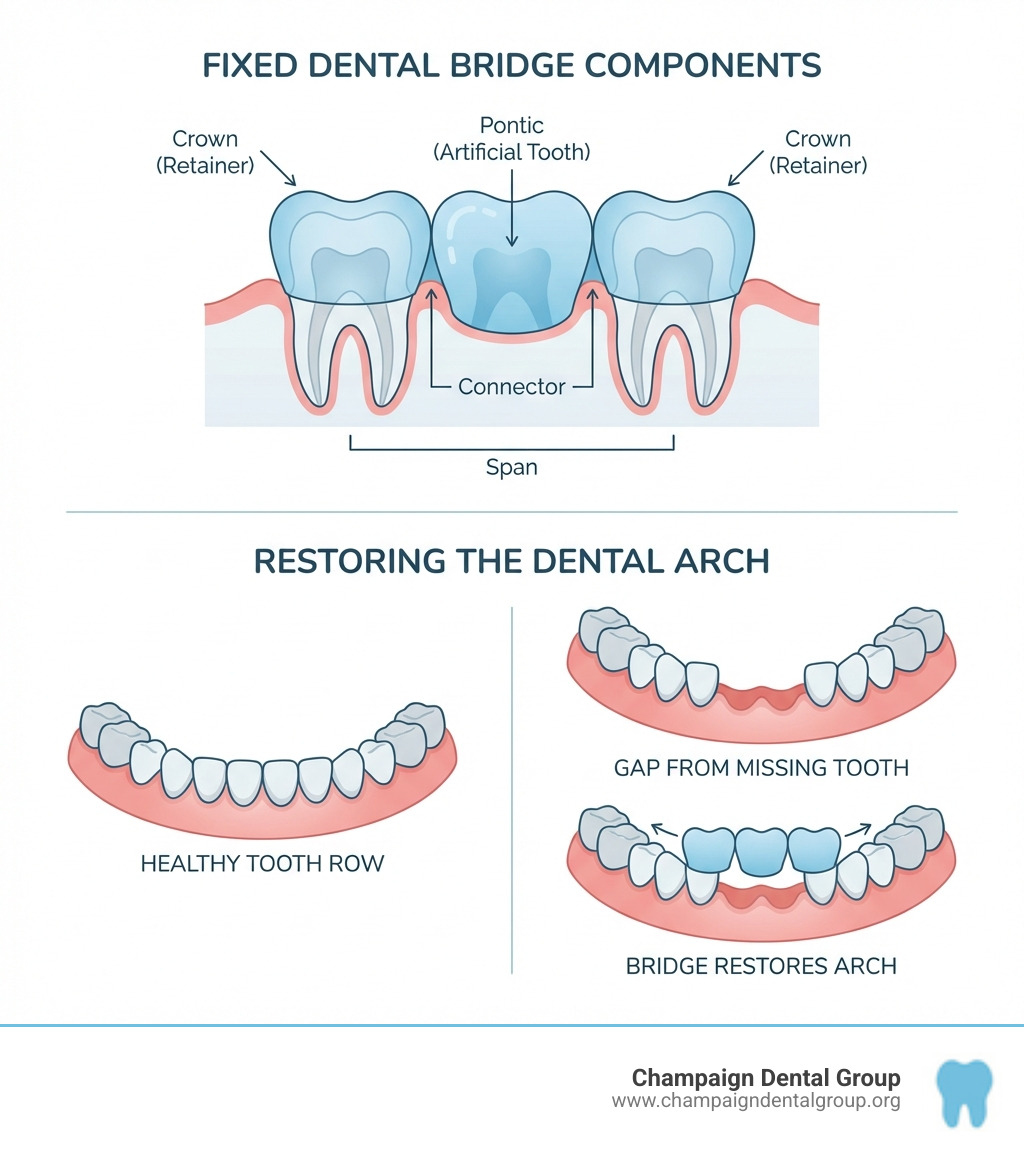
A dental bridge typically consists of a few key components:
- Abutment Teeth: These are the natural teeth (or dental implants) on either side of the gap. They serve as anchors, providing the necessary support for the bridge. To prepare them for the bridge, our dentists will carefully reshape these teeth to ensure the crowns fit securely over them.
- Pontics: This is the artificial tooth or teeth that fill the space where your natural teeth are missing. The pontics are custom-made to match the color, shape, and size of your surrounding teeth, ensuring a natural-looking smile.
- Crowns (Retainers): These are the caps that are placed over the abutment teeth. They hold the pontics in place, forming a single, strong unit.
The entire structure, comprising the crowns and pontics, is then cemented onto your prepared abutment teeth, creating a stable and functional dental restoration. This fixed nature means you won't have to worry about your bridge slipping or moving while you eat, speak, or smile. For more detailed information on how bridges and crowns work together, you can explore our guide on bridge and crown teeth. The goal of a fixed dental bridge is to restore not just the aesthetics of your smile, but also your ability to chew and speak comfortably, while preventing other teeth from shifting out of alignment. You can learn more about the general concept of a bridge in dentistry through resources like Wikipedia's entry on Bridge (dentistry)#:~:text=Fixed%20bridge%3A%20A%20dental%20prosthesis,replaces%20a%20missing%20natural%20tooth.).
Exploring the Different Types of Bridges
When considering tooth replacement, we offer various restorative options, and the type of Fixed dental bridge recommended will depend on your specific needs, the location of the missing tooth or teeth, and the health of your surrounding oral structures. Common materials used for these bridges include porcelain, zirconia, and gold alloys, often chosen for their durability and aesthetic appeal. To understand the broader scope of restorative dentistry services we provide, you can visit our Restorative Dentistry Services Guide.
Traditional Fixed Dental Bridge
The traditional fixed dental bridge is arguably the most common type. It's often recommended when you have healthy natural teeth on both sides of the gap created by one or more missing teeth. This type of bridge involves:
- Preparation of Abutment Teeth: The natural teeth adjacent to the gap are carefully reshaped to accommodate crowns. This preparation ensures that the crowns fit snugly and provide a strong foundation for the entire bridge.
- Pontic (Artificial Tooth): The artificial tooth or teeth are placed in the gap, fused between the two crowns.
- Materials: Traditional bridges are frequently made from durable materials like porcelain fused to metal (PFM), which offers excellent strength and a natural appearance, or all-ceramic materials for superior aesthetics, particularly for front teeth.
These bridges are a reliable way to restore your smile and chewing function. You can find more general information about different types of dental bridges from reputable sources like MouthHealthy.org.
Cantilever and Maryland Bridges
Sometimes, a traditional bridge isn't the best fit. That's where cantilever and Maryland bridges come into play, offering specialized solutions for unique situations.
- Cantilever Bridges: A cantilever bridge is used when there's only one natural tooth available on one side of the gap to act as an abutment. Instead of two supporting crowns, it relies on a single crown on one side to hold the pontic in place. While effective in certain scenarios, we generally don't recommend cantilever bridges for the back of the mouth, as the chewing forces there can be quite strong and put excessive strain on the single supporting tooth. For a deeper dive into this specific type, check out our article on cantilever bridge dental.
- Maryland Bridges (Resin-Bonded Bridges): Maryland bridges are a more conservative option, often used to replace a single missing front tooth. Unlike traditional bridges, they don't require extensive preparation of the adjacent teeth. Instead, a metal or porcelain framework is bonded to the back surface of the neighboring teeth with a resin cement. The pontic is attached to this framework. This type of bridge is ideal when the adjacent teeth are healthy and don't require crowns themselves, preserving more of your natural tooth structure. However, they are generally not as strong as traditional bridges and are best suited for areas with lower chewing pressure.
Implant-Supported Fixed Dental Bridge
For many patients, an implant-supported Fixed dental bridge offers an exceptional blend of stability, longevity, and preservation of jawbone health. This option is particularly beneficial when you have multiple missing teeth or if the adjacent natural teeth are not strong enough to support a traditional bridge.
- Titanium Posts: Instead of relying on natural teeth, an implant-supported bridge uses titanium dental implants that are surgically placed into your jawbone. These implants act as artificial tooth roots.
- Osseointegration: Over a period of 3-6 months, these titanium posts fuse with your jawbone in a process called osseointegration. This creates an incredibly strong and stable foundation, much like natural tooth roots.
- Multi-Tooth Replacement: Once the implants have integrated, we attach the bridge to them. This allows us to replace several missing teeth without impacting your remaining natural teeth. A significant advantage is that implant-supported bridges help stimulate the jawbone, preventing bone loss that often occurs after tooth loss. This contributes to maintaining your facial structure and overall oral health.
An implant-supported bridge is considered one of the strongest and most stable tooth replacement options available. You can learn more about how these bridges work in our guide to implant bridges.
The Step-by-Step Procedure for Placement
Getting a Fixed dental bridge is a precise process that typically involves two visits to our Champaign Dental Group office. Our compassionate team ensures your comfort every step of the way, utilizing state-of-the-art technology for the best possible outcome.
First Appointment: Preparation and Impressions
- Initial Consultation and Assessment: Your journey begins with a thorough examination. Our dentists will assess your oral health, including the condition of your remaining teeth, gums, and jawbone, to determine if a fixed bridge is the right solution for you. We'll discuss your goals and answer any questions you may have.
- Tooth Reshaping (Preparation): If you're receiving a traditional bridge, the natural abutment teeth on either side of the gap will need to be prepared. This involves carefully removing a small amount of enamel from these teeth. This reshaping creates space for the crowns that will eventually anchor your bridge. Don't worry, we use local anesthesia to ensure this part of the procedure is completely comfortable. You can find more details on this preparation process in our article about dental crown prep.
- Impressions: Once your teeth are prepared, we take precise impressions of your mouth. These impressions serve as a blueprint for the dental laboratory, where your custom-made bridge will be fabricated. These impressions ensure your new bridge will fit perfectly and blend seamlessly with your natural smile.
- Temporary Bridge Placement: While your permanent bridge is being crafted, we'll place a temporary bridge. This protects your prepared teeth, maintains the space, and allows you to eat and speak normally in the interim. It also helps your gums get used to the new shape.
Second Appointment: Final Placement
- Try-In and Adjustment: When your custom Fixed dental bridge arrives from the dental laboratory, you'll return for your second appointment. We will carefully try on the bridge to ensure the fit, bite, and aesthetics are perfect. We'll make any necessary minor adjustments to achieve an ideal result.
- Permanent Cementation: Once we're all satisfied with the fit and appearance, the bridge is permanently cemented onto your prepared abutment teeth. This creates a strong, durable, and non-removable restoration that will serve you for many years. We may occasionally use temporary cementation first to allow you to adapt to the new bridge before final permanent placement.
For implant-supported bridges, the process is slightly more involved. It includes a surgical phase for implant placement, followed by a healing period of 3-6 months to allow for osseointegration before the bridge can be attached. Our team will guide you through each step, ensuring you understand the timeline and what to expect.
The Advantages and Risks of a Fixed Dental Bridge
Choosing a Fixed dental bridge is a significant decision, and we believe in providing you with all the information you need to make an informed choice. It's important to understand both the benefits and potential drawbacks compared to other tooth replacement options like dentures or dental implants. For a detailed comparison between dental implants and bridges, we invite you to read our article on dental implants versus bridges.
Advantages of Fixed Dental Bridges
Fixed dental bridges offer numerous benefits that can significantly improve your oral health and quality of life:
- Restores Your Smile: Perhaps the most immediate benefit, a bridge fills the gap left by missing teeth, restoring the natural beauty of your smile and boosting your confidence.
- Restores Chewing and Speaking Ability: Missing teeth can make it difficult to chew certain foods or to speak clearly. A bridge restores full chewing function and helps you articulate words properly.
- Maintains Facial Shape: When teeth are missing, the jawbone can begin to resorb, which can lead to changes in your facial structure over time. Bridges help maintain the shape of your face by supporting the surrounding structures.
- Prevents Tooth Shifting: The teeth adjacent to a gap tend to drift or tilt into the empty space. A bridge prevents this movement, maintaining proper bite alignment and protecting the integrity of your remaining teeth.
- Distributes Bite Forces: By replacing missing teeth, a bridge helps distribute the forces of your bite evenly across your mouth, alleviating stress on your remaining natural teeth.
- Faster Treatment Time: Compared to dental implants, which require a healing period for osseointegration, traditional fixed bridges can often be completed in just two dental appointments over a few weeks.
- Permanent and Non-Removable: Unlike removable partial dentures, a fixed bridge stays securely in your mouth, offering a sense of stability and convenience.
Potential Drawbacks and Risks
While highly effective, fixed dental bridges do come with certain considerations:
- Abutment Tooth Preparation: For traditional bridges, the healthy teeth adjacent to the gap must be reshaped to accommodate the crowns. This involves removing some of their natural enamel, which is an irreversible process.
- Risk to Abutment Teeth: The abutment teeth take on additional stress as they support the bridge. If these teeth are not strong or healthy, they can be susceptible to problems like tooth fracture or secondary caries (decay) beneath the crowns.
- Increased Possibility of Decay: Although the crowns protect the abutment teeth, maintaining meticulous oral hygiene around the bridge is crucial. Poor cleaning can lead to plaque buildup and decay at the margins of the crowns, potentially compromising the bridge and the supporting teeth.
- Gingival Inflammation: Studies have shown that the surfaces around fixed bridges can be more plaque retentive compared to single crowns, potentially causing gingival inflammation if not cleaned thoroughly. This emphasizes the need for diligent oral hygiene.
- Mechanical Failure: Like any dental restoration, bridges can experience mechanical issues such as loss of retention (the bridge coming loose) or fracture, especially in all-ceramic bridges where fracture in connectors at the gingival side is a common finding.
- Biomechanical Stress: The length of the bridge span significantly impacts its durability. For instance, the amount of deflection (flexing) is 8 times greater when a bridge replaces two missing teeth compared to one, and 27 times greater for three missing teeth. This increased stress can contribute to failure over time, especially if abutment teeth are weak.
We will work closely with you to assess your individual situation, discuss the pros and cons, and help you determine the best tooth replacement option for your long-term oral health goals.
Longevity and Maintenance for Your Smile
A Fixed dental bridge is a significant investment in your oral health, and with proper care, it can provide many years of comfortable function and a beautiful smile. The typical lifespan of a bridge can vary, but with diligent maintenance, it can last for about 10 years or longer. In fact, some studies indicate a good success rate of 72% over 15 years, and with exceptional care, these restorations can even last over 25 years.
Factors Influencing Lifespan
Several factors contribute to how long your fixed dental bridge will last:
- Oral Hygiene: This is perhaps the most critical factor. Consistent and thorough cleaning is essential to prevent decay in the abutment teeth and gum disease around the bridge.
- Bridge Type and Materials: The type of bridge (traditional, Maryland, implant-supported) and the materials used (e.g., PFM, zirconia) can influence its durability.
- Health of Abutment Teeth: The strength and health of the natural teeth supporting the bridge are paramount. Problems like tooth fracture, secondary caries, or periodontal disease in these teeth can lead to bridge failure.
- Bite Forces: Excessive biting forces or habits like grinding and clenching can put undue stress on the bridge and its supporting structures.
- Span Length: The number of missing teeth the bridge replaces affects its mechanical stability. Longer spans are subject to greater deflection and stress, which can impact longevity.
Essential Care for Your Fixed Dental Bridge
Maintaining your fixed bridge is similar to caring for your natural teeth, with a few extra steps to ensure its longevity:
- Brush Daily: Brush your teeth and bridge at least twice a day with a fluoride toothpaste. Pay close attention to the areas where the crowns meet your natural gums.
- Floss Thoroughly: Regular flossing is crucial to remove plaque and food particles from around and under your bridge. Traditional floss can be challenging to use under a bridge, so we recommend specialized tools:
- Floss Threaders: These small, flexible loops allow you to thread regular dental floss under the pontic and between the abutment teeth, cleaning effectively.
- Superfloss: This specialized floss has a stiff end for threading, a spongy section for cleaning around the bridge, and a regular floss section.
- Regular Dental Check-ups: Schedule routine dental visits and professional cleanings with us at Champaign Dental Group. Our team can carefully clean areas you might miss and check for any signs of wear, decay, or gum issues that could affect your bridge. We also recommend yearly dental X-rays to monitor the health of your abutment teeth and surrounding bone.
- Mind Your Diet: Avoid very hard, sticky, or chewy foods that could potentially damage your bridge or dislodge it. Examples include hard candies, sticky caramels, tough nuts, and popcorn kernels.
- Avoid Destructive Habits: Do not chew on ice, pens, or other non-food items, as these can put excessive stress on your bridge and natural teeth.
By following these best practices, you can significantly extend the life of your Fixed dental bridge and keep your smile healthy and radiant for many years to come. For more insights into maintaining dental restorations, you might find our guide on exploring the lifespan and care of dental veneers and crowns helpful.
Frequently Asked Questions
We understand you likely have many questions when considering a Fixed dental bridge. Here, we address some of the most common inquiries our patients have.
How much does a fixed dental bridge cost?
The cost of a Fixed dental bridge can vary significantly depending on several factors. These include the type of bridge chosen (traditional, Maryland, cantilever, or implant-supported), the materials used (e.g., porcelain, zirconia, or metal alloys), the number of teeth being replaced, and the overall complexity of your case. Your geographic location, such as here in Urbana OH or Champaign County OH, can also play a role.
At Champaign Dental Group, we believe in transparent discussions about your treatment plan, including any associated costs. We recommend contacting your dental insurance provider to understand your specific coverage for dental bridges, as policies often cover a percentage of the fee. To help make quality dental care more accessible and affordable, we also offer our Smile Protection Plan, which can provide significant savings on various treatments, including fixed dental bridges. We're happy to discuss all your options during a consultation.
Is the procedure for a fixed dental bridge painful?
We understand that dental procedures can sometimes cause anxiety, but we want to assure you that getting a Fixed dental bridge should not be a painful experience. Our primary goal at Champaign Dental Group is your comfort.
Before we begin any tooth preparation, we will administer a local anesthetic to thoroughly numb the area. This ensures you won't feel any pain during the reshaping of your abutment teeth or the placement of the bridge. For patients who experience dental anxiety, we also offer various sedation options to help you relax and have a more comfortable experience.
After the procedure, it's normal to experience some mild post-operative sensitivity or soreness in the gums, but this is usually manageable with over-the-counter pain relievers and typically subsides within a few days. We will provide you with detailed aftercare instructions to minimize discomfort and ensure a smooth recovery. Our compassionate team is always available to answer any questions and address concerns you may have before, during, and after your treatment.
What are the signs that a bridge is failing?
While fixed dental bridges are designed for durability, it's important to be aware of signs that might indicate a problem or that your bridge needs attention. Promptly addressing these issues can prevent further complications and help us preserve your oral health. You should contact us at Champaign Dental Group if you notice any of the following:
- Loose Fit or Movement: If your bridge feels loose, wobbly, or shifts when you bite or chew, this is a clear sign it might be failing. A loose fit can allow bacteria to seep underneath, leading to decay.
- Increased Sensitivity: Persistent sensitivity to hot, cold, or pressure in the abutment teeth or under the bridge could indicate decay, an exposed nerve, or a problem with the fit.
- Gum Inflammation, Swelling, or Bleeding: Healthy gums around your bridge are crucial. If you notice redness, swelling, tenderness, or bleeding around the bridge, it could be a sign of gum disease or an ill-fitting bridge that's irritating your gum tissue.
- Persistent Bad Breath or Odor: A persistent foul odor or bad taste that doesn't go away with brushing and flossing can indicate trapped food particles or bacterial buildup underneath a failing bridge.
- Visible Cracks or Chips: Any visible damage to the porcelain or metal components of your bridge, such as cracks, chips, or fractures, means its structural integrity is compromised and it needs repair or replacement.
- Pain When Chewing: If you experience pain or discomfort when biting down or chewing, it could signal issues with the abutment teeth, underlying decay, or a problem with your bite alignment.
- Abutment Tooth Problems: Issues with the supporting teeth, such as secondary caries (decay), tooth fracture, or periodontal disease, will directly impact the stability and success of your bridge.
If you experience any of these symptoms, please don't hesitate to contact us. Our team can assess the situation and recommend the appropriate course of action to protect your smile.
Conclusion
A Fixed dental bridge offers a robust and aesthetically pleasing solution for replacing missing teeth, restoring your ability to eat and speak with confidence, and maintaining the structural integrity of your smile. It's a permanent restoration that, with proper care, can serve you well for many years, helping to prevent other teeth from shifting and preserving your facial contours.
At Champaign Dental Group, we are deeply committed to providing compassionate patient care and use state-of-the-art technology to ensure every fixed dental bridge is crafted and placed with precision and artistry. We understand that every smile is unique, and our experienced team in Urbana OH and Champaign County OH is here to guide you through every step of the process, ensuring your comfort and satisfaction.
Whether you're exploring your options for tooth replacement or seeking to maintain the health and longevity of an existing bridge, we are dedicated to helping you achieve and maintain a healthy, beautiful smile. Don't let missing teeth compromise your oral health or your confidence any longer. If you're concerned about the cost, remember to ask us about our Smile Protection Plan designed to make quality dental care more accessible.
We invite you to experience the difference that personalized, high-quality dental care can make. Ready to discuss how a fixed dental bridge can transform your smile? Request an appointment for crowns and bridges with us today.