.jpg)
Why Your Dentist Wants to See You Before It Hurts
Why Preventive Dentistry Is the Smartest Thing You Can Do for Your Smile
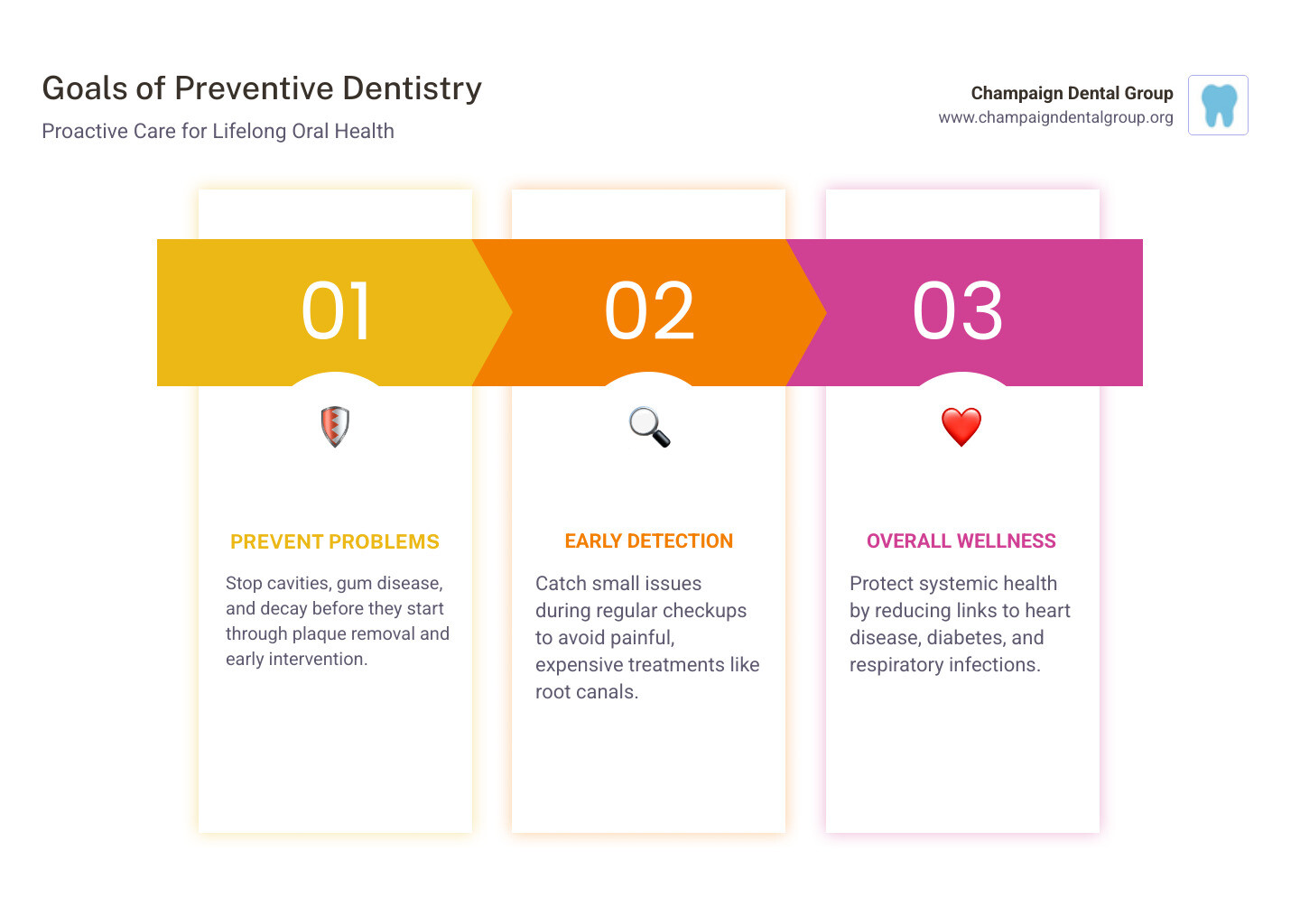
What is the goal of preventive dentistry? In short, it's this:
- Stop dental problems before they start
- Catch small issues early, before they become painful and expensive
- Keep your teeth and gums healthy for life
- Protect your overall health, not just your mouth
Most people only think about the dentist when something hurts. But by then, a small cavity may have become a root canal. A little gum irritation may have turned into gum disease.
Preventive dentistry flips that script entirely.
It's a proactive approach — built on regular checkups, professional cleanings, and good daily habits — that helps you and your family avoid the kind of dental work nobody wants. And the research backs it up: 91% of adults will experience at least one cavity in their permanent teeth, yet many of those cases are entirely preventable.
As a busy parent, you're already juggling a lot. The good news is that a consistent preventive care routine — at home and at the dentist — takes far less time than dealing with the problems it prevents.
At Champaign Dental Group, our team is deeply committed to providing high-quality, compassionate care that keeps your whole family healthy between visits, not just when something goes wrong.
What is the goal of preventive dentistry further reading:
What is the Goal of Preventive Dentistry?
When we talk about the critical role of preventive dentistry in maintaining long-term oral health, we are looking at a foundational strategy for your life. The core objective is simple: to prevent the onset, progression, and recurrence of dental diseases. We aren't just looking for holes in your teeth; we are looking at your mouth as a gateway to your body.
By focusing on preventative dentistry services, we aim to preserve your natural tooth enamel and maintain a healthy smile that lasts a lifetime. This proactive stance significantly improves your quality of life, allowing you to eat, speak, and smile with confidence. Most importantly, it helps you avoid invasive, complex, and often uncomfortable procedures down the road.
The primary goal of preventive dentistry: Stopping issues before they start
If we had to pick a "North Star" for our practice, it would be stopping dental decay and gum disease in their tracks. Every time you visit us for a check-up, we are working toward several specific sub-goals:
- Plaque and Tartar Removal: Even the most diligent brushers can miss spots. Over time, soft plaque hardens into tartar (calculus), which only a professional can remove.
- Cavity Prevention: By catching "soft spots" in enamel early, we can often reverse the damage with fluoride before a physical hole (cavity) forms.
- Gum Disease Monitoring: We check for signs of gingivitis (inflamed gums) before they progress to periodontitis, a leading cause of tooth loss in adults.
There are at least 7 benefits of having a regular dental check-up, and nearly all of them center on the idea that "an ounce of prevention is worth a pound of cure."
How the goal of preventive dentistry supports your overall health
Your mouth is not an island. It is a window to your overall health. Research has shown that the bacteria associated with poor oral health can travel through the bloodstream, potentially contributing to serious systemic issues.
For instance, chronic inflammation in the gums has been linked to heart disease and an increased risk of stroke. Patients with diabetes often find that managing their gum disease helps them better control their blood sugar levels. Furthermore, poor oral hygiene has been associated with respiratory infections and even systemic consequences in chronic kidney disease patients. By following a comprehensive oral health care guide, you aren't just saving your teeth—you're protecting your heart, lungs, and kidneys.
Key Components of a Preventive Care Routine
Preventive dentistry is a team sport. It requires a combination of what we do in our Urbana and Champaign County offices and what you do every morning and night at your bathroom sink.
The clinical side of the equation includes several essential services:
- Professional Cleanings: Also known as oral prophylaxis, these sessions remove the "gunk" you can't reach.
- Comprehensive Exams: We look for decay, evaluate existing dental work, and check your bite.
- Fluoride Treatments: These strengthen the enamel, making it more resistant to acid attacks.
- Dental Sealants: These act as a barrier, "sealing out" sugar bugs from the deep grooves of your molars.
- Oral Cancer Screenings: A quick, painless check that can quite literally be life-saving.
- X-rays: These allow us to see what’s happening beneath the surface, such as bone loss or cavities between teeth.
Professional Clinical Interventions
During a comprehensive dental examination, our highly trained staff uses state-of-the-art technology to assess your health. We follow the guideline on periodicity of dental services to ensure you receive the right care at the right time.
For our younger patients, we might use space maintainers if a baby tooth is lost too early, ensuring the permanent tooth has room to grow in correctly. We also provide specialized dental hygiene services like scaling and polishing. In some cases, we perform enameloplasty, which involves recontouring the enamel to remove shallow pits that are prone to decay.
Essential At-Home Practices
While we love seeing you, the most important work happens at home. To support what is the goal of preventive dentistry, you should focus on these 3 important ways to maintain your long-term dental hygiene:
- Brush Twice Daily: Use a soft-bristled brush and fluoride toothpaste for at least two minutes. Don't forget to brush your tongue—it's a playground for bacteria!
- Floss Once a Day: Brushing only cleans about 60% of your tooth surfaces. Flossing reaches the other 40% where most cavities start.
- Watch Your Diet: A balanced diet high in vitamins and low in sugar is vital. Limit acidic drinks like soda and juice, which can soften your enamel.
Using an antibacterial mouthwash can also help kill the bacteria that cause plaque and bad breath, providing an extra layer of protection.
Preventive vs. Restorative Dentistry: Understanding the Difference
It helps to think of preventive dentistry as the "maintenance" for your car, like oil changes and tire rotations. Restorative dentistry is the "repair" work that happens after a breakdown.
FeaturePreventive DentistryRestorative DentistryApproachProactive (Before the problem)Reactive (After the problem)GoalMaintain health and avoid diseaseRepair damage and restore functionCommon ServicesCleanings, Exams, Sealants, FluorideFillings, Crowns, Bridges, ImplantsCostLow (Often covered 100% by insurance)Higher (Varies by complexity)TimeShort, routine visitsMay require multiple, longer appointments
While we offer excellent preventive and comprehensive dental services, our goal is always to keep you in the "Preventive" column. Restorative treatments like root canals or tooth extractions are necessary when prevention fails, but they are more invasive and time-consuming.
Frequently Asked Questions about Preventive Dentistry
At Champaign Dental Group, we believe that an educated patient is a healthy patient. Our staff takes the time to answer every question with the high-quality care and patience you deserve.
How often should I visit the dentist for preventive care?
The American Dental Association generally recommends visiting the dentist twice a year (every six months) for cleanings and exams. However, this isn't a one-size-fits-all rule.
There are significant benefits of regular dental visits tailored to your specific needs. If you are a high-risk patient—perhaps you have a history of gum disease, are pregnant, or have a chronic condition like diabetes—we may suggest coming in every three or four months to stay ahead of potential issues.
Who benefits from preventive dentistry?
The short answer: Everyone.
- Children: Starting dental care with the first tooth helps establish lifelong habits and ensures permanent teeth develop correctly.
- Adults: Regular care prevents the "slow creep" of gum disease and keeps natural teeth strong.
- Seniors: As we age, dry mouth and gum recession become more common; preventive care helps seniors keep their natural teeth longer.
- Pregnant Individuals: Hormonal changes can increase the risk of "pregnancy gingivitis," making oral health care during pregnancy vital for both mom and baby.
- Edentulous Patients: Even if you have no natural teeth, you still need exams to check for oral cancer and ensure dentures fit properly.
Is preventive dentistry affordable?
Yes! In fact, it is the most cost-effective way to manage your oral health. Most dental insurance plans cover preventive services like cleanings and exams at 100%, meaning you have little to no out-of-pocket cost.
For our neighbors in Urbana and Champaign County who do not have insurance, we are proud to offer Champaign Dental's Smile Protection Plan. This plan is designed to make high-quality care accessible and affordable, providing significant savings on preventive visits and discounts on other treatments. We never want a lack of insurance to stand between you and a healthy smile.
Conclusion
Since 1997, Champaign Dental Group has been more than just a dental office; we are a part of this community. Our USP is simple: we combine state-of-the-art technology with deeply compassionate, high-quality patient care. Whether you are coming in for a routine cleaning or considering orthodontics or dental implants, you will be treated like family.
What is the goal of preventive dentistry? It is to give you the peace of mind that comes with a healthy mouth and a vibrant smile. Don't wait for a toothache to remind you to take care of yourself.
Take the first step toward a lifetime of dental wellness. Request an appointment today and experience the difference that truly personalized, community-focused care can make. We look forward to seeing you soon!