.jpg)
Dental Bridge Types 101
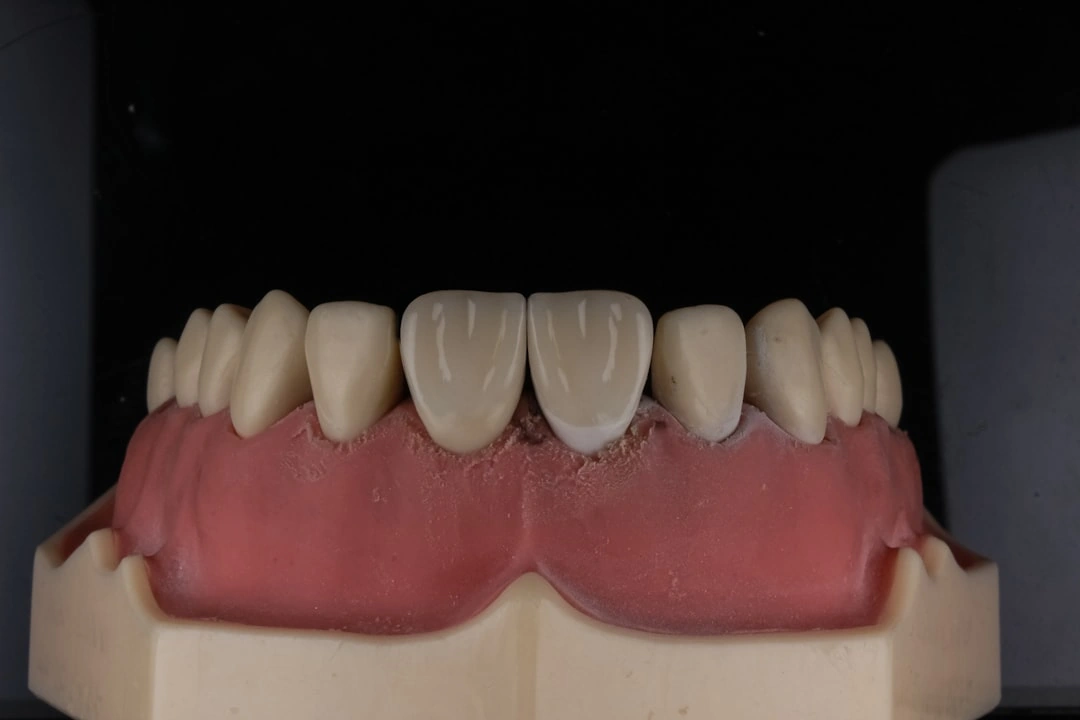
What Are the Different Dental Bridge Types?
There are four main dental bridge types used to replace missing teeth:
- Traditional dental bridge - A false tooth held by crowns on both neighboring teeth. Most common type.
- Cantilever dental bridge - Anchored to just one neighboring tooth. Used when only one side has a healthy tooth.
- Maryland dental bridge - A false tooth bonded to the backs of adjacent teeth using metal or porcelain wings. No crowns needed.
- Implant-supported dental bridge - Anchored to titanium implants in the jawbone instead of natural teeth. The most stable option.
Missing a tooth affects more than just your smile. It changes how you eat, how you speak, and how confident you feel day to day. The good news is that dental bridges have been restoring smiles for decades, and there are several types to fit different needs, budgets, and situations.
Not every gap is the same. The right bridge for you depends on where the missing tooth is, how many teeth need replacing, and the health of the teeth around the gap. That is why understanding your options before you sit down with a dentist can make a real difference.
At Champaign Dental Group, we have been helping families in Urbana and across Champaign County navigate exactly these kinds of decisions since 1997. Whether you are dealing with one missing tooth or several, we want you to feel informed and at ease before you ever step into our office.
This guide walks you through every bridge type, how the procedure works, and how to figure out which option fits your situation best.
Quick Dental Bridge Types definitions:
What is a Dental Bridge and How Does It Work?
At its core, a dental bridge is a custom-made device designed to literally bridge the gap left by one or more missing teeth. It is a fixed, non-removable solution that stays secure in your mouth, allowing you to chew, speak, and smile naturally.
To understand how a bridge works, it helps to know its two main parts: the pontic and the abutment teeth. The pontic is the artificial tooth that fills the empty space. This false tooth can be crafted from beautiful porcelain, ceramic, gold, or other sturdy alloys. The abutment teeth are the healthy natural teeth on either side of the empty space. These teeth act as the anchors for your new smile.
During a standard tooth replacement procedure, your dentist places custom-made dental crowns over these abutment teeth. The artificial tooth, or pontic, is fused between these crowns, creating a single, solid unit. By securing the crowns onto your natural teeth, the artificial tooth is suspended securely in the gap.
This combination of crowns and artificial teeth is often referred to as a Bridge and Crown Teeth system. It is a time-tested approach that distributes your natural bite force evenly across your jaw, prevents your remaining teeth from shifting out of place, and helps maintain the natural shape of your face.
Exploring the Four Main Dental Bridge Types
No two smiles are identical, which is why there are different dental bridge options available. When choosing the right bridge, we look closely at several clinical decision factors, including the gap location, the number of missing teeth, your budget, and your overall oral health.
Traditional Dental Bridge Types
The traditional dental bridge is the most popular style used in modern dentistry. It is the go-to choice when you have healthy, natural teeth on both sides of the empty space.
For this type of bridge, we prepare the adjacent teeth by gently reshaping them. This tooth preparation involves removing a small amount of enamel to make room for the porcelain crowns that will fit over them. Once the crowns are cemented onto these neighboring teeth, the pontic is held firmly in place.
Because they are supported on both sides, traditional bridges are incredibly strong and can easily withstand the heavy chewing forces of your back teeth. If you are looking for a reliable, time-tested option, a Fixed Dental Bridge is often the ideal solution. You can learn more about who benefits from this option by reading the Cleveland Clinic guide on Dental Bridges: Types & Who Needs Them.
Cantilever Dental Bridge Types
A cantilever bridge is very similar to a traditional bridge, but with one major difference: it only uses a single anchor tooth. This option is highly useful when there is only one natural tooth available next to the gap.
Because a Cantilever Bridge Dental setup relies on support from just one side, it acts like a diving board. It is a specialized option that requires careful planning. We generally do not recommend a Cantilever Bridge Teeth configuration for back teeth because the immense bite force in the back of the mouth can place too much leverage on the single supporting tooth, potentially causing it to crack or loosen. However, for front teeth, it can be an excellent, conservative choice.
Maryland Dental Bridge Types
If you want to replace a missing tooth without altering your healthy neighboring teeth, a Maryland bridge might be the perfect fit. Often called a resin-bonded bridge, this style represents a highly conservative approach.
Instead of using dental crowns that require reshaping your natural teeth, a Maryland bridge uses thin metal wings or porcelain wings. These wings are bonded directly to the back surfaces of your adjacent teeth using a strong dental adhesive. Because the front of your anchor teeth remains completely untouched, this option preserves your natural tooth structure.
Maryland bridges are most commonly used to replace missing front teeth, where the chewing pressure is relatively light. To explore how this conservative method compares to other styles, you can read A Guide to the Various Types of Dental Bridges.
Implant-Supported Dental Bridge Types
When you are missing multiple consecutive teeth, an implant-supported bridge is widely considered the gold standard. Instead of relying on your natural teeth for support, this bridge is anchored by titanium posts that are surgically placed directly into your jawbone.
This process requires a healing phase known as osseointegration, during which the titanium posts fuse securely with your natural bone over three to six months. Once the implants are fully integrated, they act as incredibly strong artificial roots. A custom Implant Bridge is then attached to these posts.
This option is perfect for replacing three or more missing teeth in a row. It is highly stable, incredibly comfortable, and does not require any modification of your remaining natural teeth.
The Dental Bridge Procedure and Recovery
Getting a dental bridge is a straightforward process that typically takes two dental visits over a couple of weeks, though implant-supported bridges require more time.
During your first visit, we focus on preparation. We use local anesthesia to ensure you remain completely comfortable and pain-free. We then gently shape the abutment teeth if you are getting a traditional or cantilever bridge. Next, we take highly accurate digital scans or impressions of your mouth. These scans are sent to a dental laboratory where technicians custom-craft your permanent bridge to match the exact shade and shape of your natural teeth. Before you leave, we place a lightweight temporary bridge to protect your prepared teeth and keep your smile looking complete.
At your second visit, we remove the temporary bridge and place your custom, permanent bridge. We carefully check the fit, make sure your bite feels perfectly aligned, and then secure the bridge in place using durable dental cement.
Your initial healing time is typically short. Most patients experience mild gum sensitivity or slight soreness for a week or two as their mouth adjusts to the new appliance. Eating soft foods and avoiding extremely hot or cold drinks for the first few days can help make this transition smooth and comfortable.
Dental Bridge vs. Implant: Which is Right for You?
When deciding how to replace a missing tooth, patients often weigh the choice of a dental bridge against a single dental implant. Both are excellent options, but they function differently.
A dental implant replaces the entire tooth, including the tooth root, through surgical placement in the jawbone. This root replacement provides vital bone preservation, stimulating the jawbone to prevent the natural bone loss that occurs when a tooth is missing. Implants stand completely on their own, meaning they do not put any stress on your adjacent teeth.
On the other hand, a dental bridge is a non-surgical option that can be completed in just a couple of weeks, whereas implants can take several months due to the osseointegration process. Bridges are also highly accessible and do not require a strong bone density to get started.
To help you decide which path is right for your smile, we recommend exploring these detailed comparisons:
Frequently Asked Questions About Dental Bridges
How long does a dental bridge typically last?
On average, the lifespan of a dental bridge is five to fifteen years, though many can last even longer with excellent care. The longevity of your bridge depends heavily on your daily oral hygiene and routine dental cleanings. Because a bridge relies on the health of the supporting teeth, keeping those anchor teeth free of plaque is essential to prevent premature wear and tear.
What are the risks or complications of dental bridges?
While dental bridges are highly successful, some risks include tooth decay under the supporting crowns if oral hygiene slips. Some patients may also experience temporary tooth sensitivity or mild gum irritation immediately after placement. Over time, heavy bite forces can occasionally cause structural failure or looseness, which is why regular checkups are so important to catch and fix minor issues early.
How much does a dental bridge cost and is it covered by insurance?
The cost of a bridge varies based on the bridge type, the number of missing teeth, and the materials used. Many dental insurance plans offer partial coverage for restorative procedures like bridges. If you do not have insurance, we offer convenient financing options, including our in-house Smile Protection Savings Plan, to help manage out-of-pocket costs and make your care completely affordable.
Conclusion
Choosing from the various dental bridge types is an important step toward reclaiming your smile, your confidence, and your ability to eat and speak comfortably. Whether a traditional bridge, a conservative Maryland bridge, or a sturdy implant-supported bridge is right for you, the key is partnering with a team that treats you like family.
At Champaign Dental Group in Urbana, Ohio, our compassionate team is dedicated to providing personalized family dental care. Since 1997, we have been helping our neighbors in Urbana, Mechanicsburg, West Liberty, and Springfield feel completely at ease during their dental visits.
If you are ready to explore your tooth replacement options, we invite you to learn more about our restorative options by visiting our Crowns and Bridges page, or take the first step today and Request an Appointment to meet our warm, welcoming team.