.jpg)
Why Regular Professional Teeth Cleanings Matter for Whole-Body Health

Why Dentist Teeth Cleaning Matters for Your Whole Health
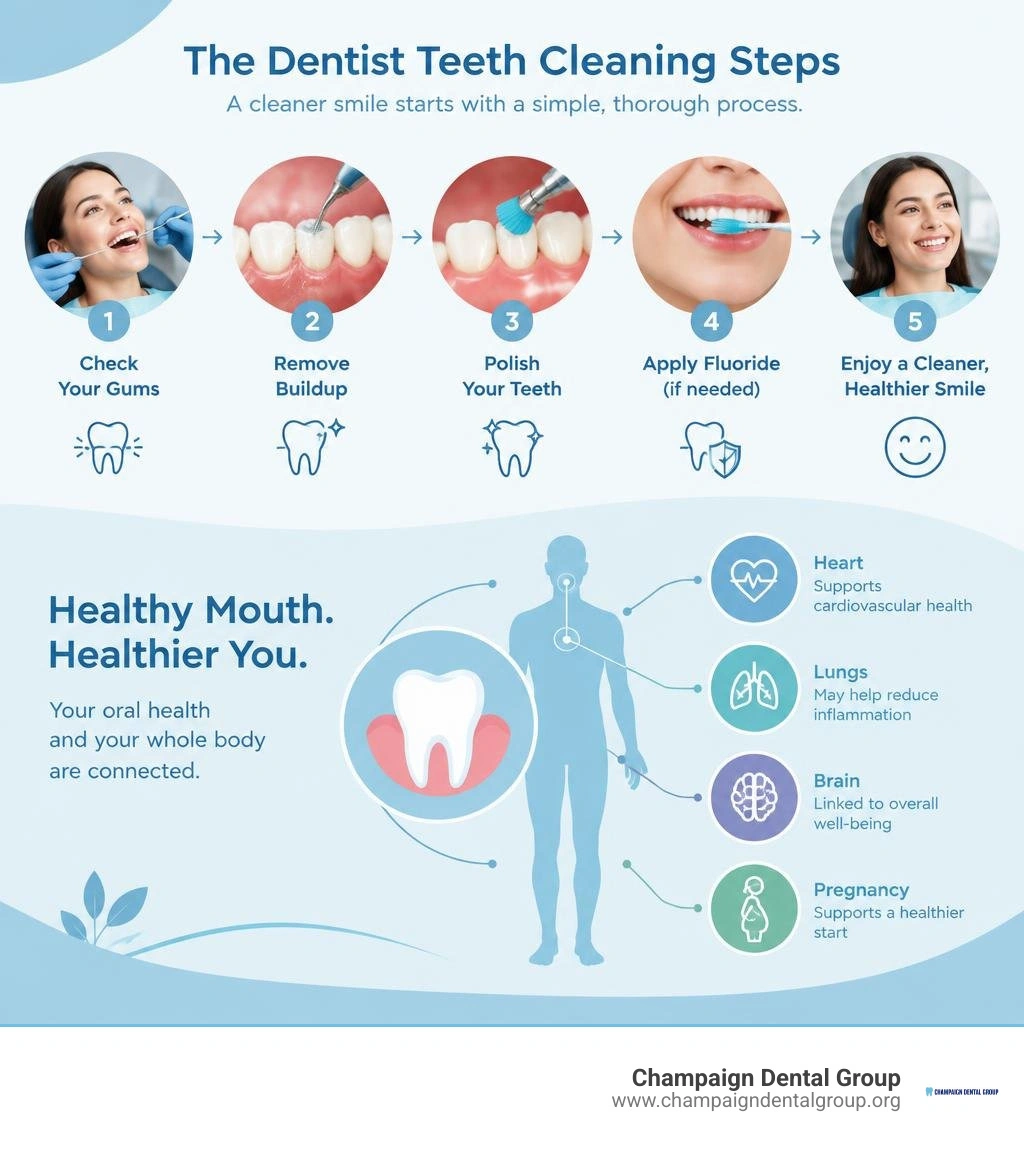
A dentist teeth cleaning removes sticky plaque and hardened tartar that brushing and flossing cannot fully remove. At a typical visit, a dental hygienist checks your gums, gently removes buildup, polishes your teeth, and may recommend fluoride or other preventive care. These visits help prevent cavities, gum disease, and bad breath while giving your dental team a chance to spot small concerns early.
That matters because oral health is not separate from the rest of your body. Nearly half of adults age 30 and older have periodontitis, a serious form of gum disease. Regular cleanings help control the bacteria and inflammation that can affect your gums and are linked with broader health concerns, a connection supported by organizations like the American Dental Association.
For families in Urbana and throughout Champaign County, preventive visits are a practical way to protect natural teeth and avoid bigger problems later. If it has been a while, you are not alone. Start with an exam and cleaning plan that fits your needs, with no judgment.
I am Dr. Ellen Zwick, and I will walk you through what happens at a cleaning and why this simple habit supports a healthier mouth and body.
Similar topics to dentist teeth cleaning:
What to Expect During a Dentist Teeth Cleaning Appointment
When you settle into the chair for professional dental hygiene care, our primary goal is to make you feel completely relaxed and informed. We start with a friendly conversation about your current medical history, any changes in your medications, and whether you have noticed tenderness, bleeding, or sensitivity.
Next, we perform a gentle soft tissue screening, checking your tongue, cheeks, palate, and throat to ensure everything looks healthy. We also evaluate your gum tissue to measure the spaces between your gums and teeth, known as periodontal pockets. Healthy pockets typically measure between 1 and 3 millimeters. This initial diagnostic assessment sets the stage for a customized cleaning session suited specifically to your oral landscape.

Ultrasonic Scaling and Manual Calculus Removal
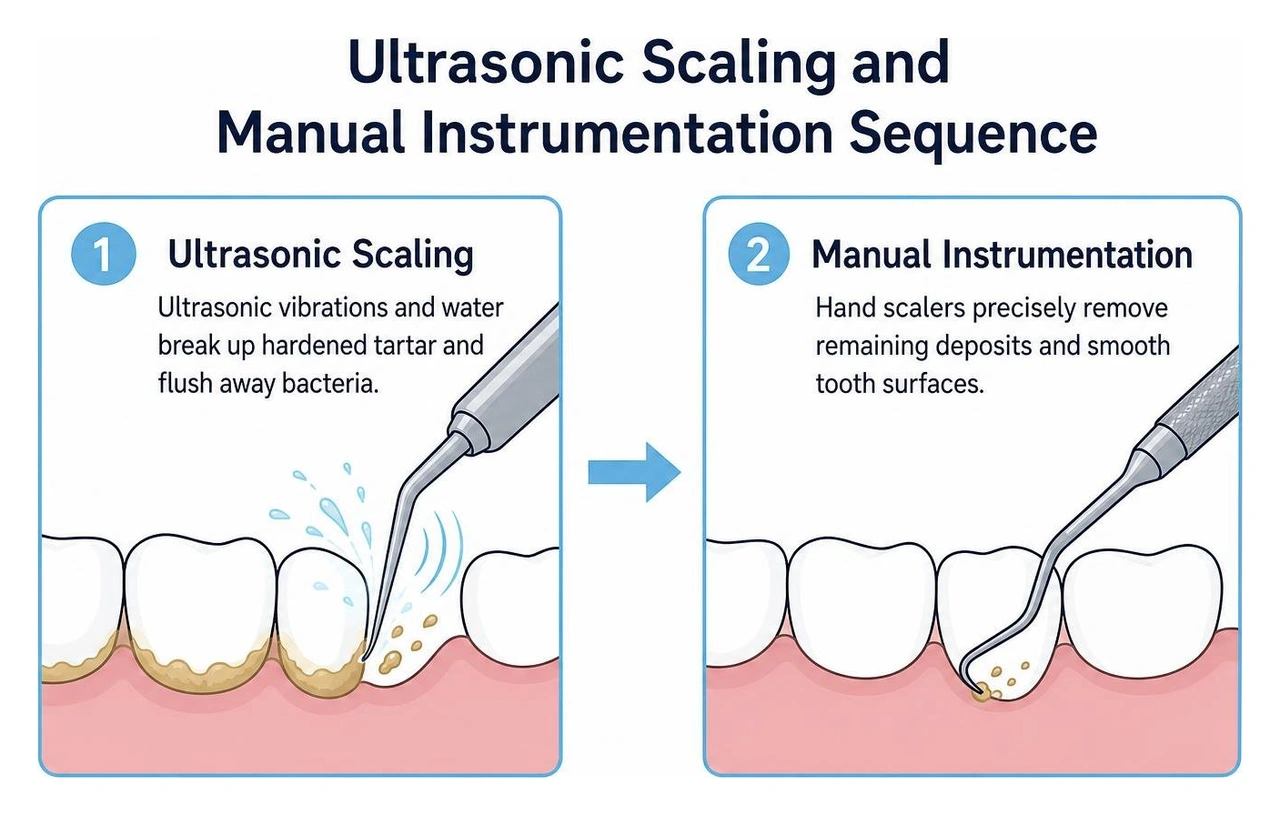
Even with diligent daily brushing, mineral-rich saliva causes soft bacterial biofilm to calcify into hardened tartar (calculus) within 24 to 72 hours. Once tartar forms along the gingival margin, regular bristles simply cannot budge it. Removing stubborn built up plaque on teeth requires specialized instruments.
We begin with an ultrasonic scaler, a gentle device that uses rapid, microscopic vibrations combined with a cooling water stream to break up hardened calculus and flush away trapped bacteria. Afterward, we use delicate manual instruments called hand scalers to precisely clean the curves of each tooth and carefully remove any remaining deposits.
Polishing, Flossing, and Enamel Protection
After removing all traces of calculus, we treat your teeth to a thorough polishing using a mildly abrasive prophy paste. This step gently removes extrinsic surface stains caused by coffee, tea, or everyday foods, leaving your enamel smooth and glossy.
We then floss carefully between every tooth to clear away loosened particles and check the tight contact points. Finally, we often apply a protective fluoride varnish to strengthen your enamel against acid attacks and provide personalized oral health advice to help you keep that fresh feeling at home.
The Systemic Health Connection: Oral Wellness Beyond Your Smile
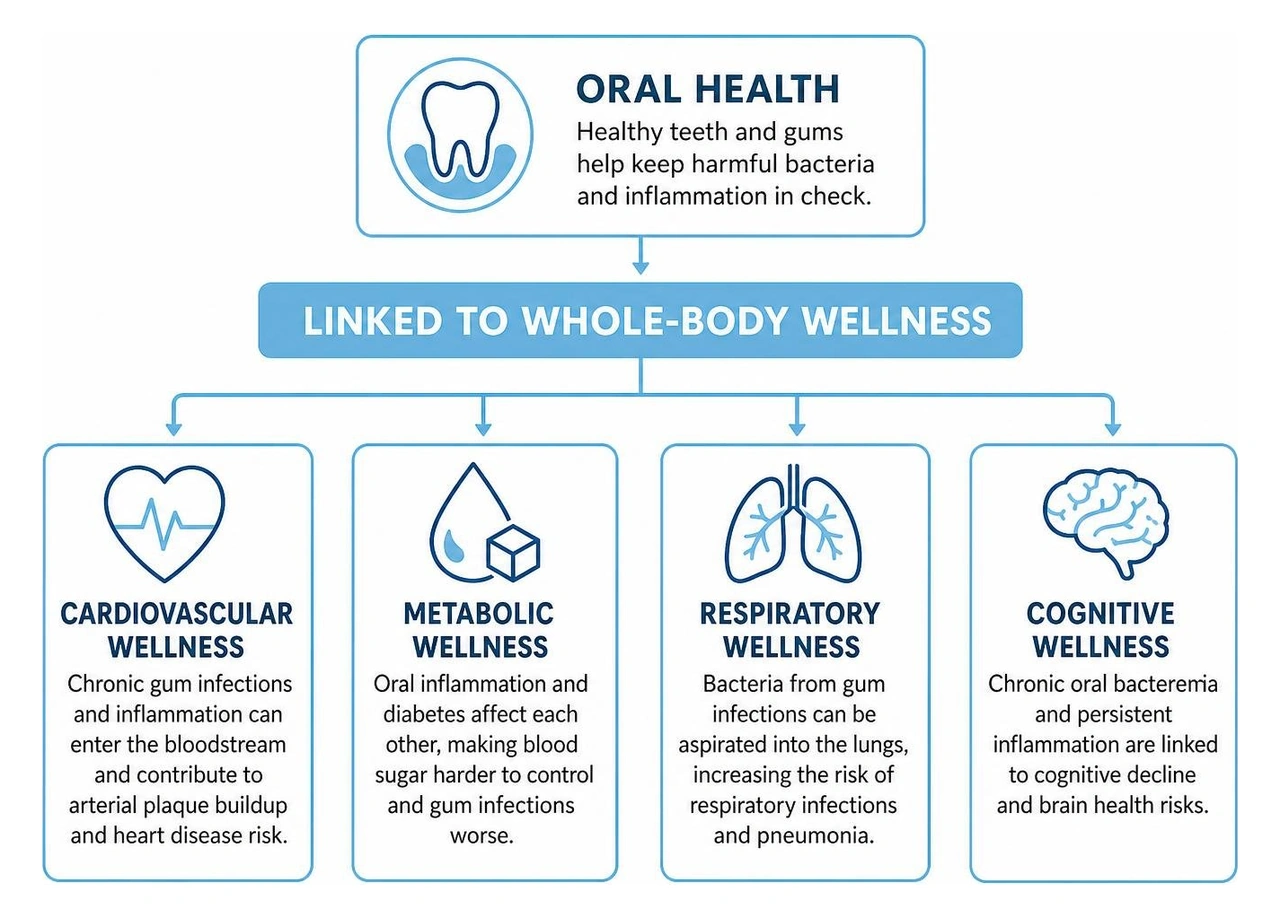
Your mouth serves as the primary gateway to your entire body. When chronic bacterial infections take root in your gums, harmful microbes and inflammatory chemicals do not stay confined to your mouth. They can enter your bloodstream, traveling to distant organs and contributing to widespread systemic inflammation.
Research consistently shows that chronic periodontal disease increases the risk of arterial plaque accumulation and cardiovascular conditions. Furthermore, the relationship between oral inflammation and diabetes is a two-way street: uncontrolled gum disease makes glycemic control harder to manage, while elevated blood sugar worsens gum infections. Prioritizing routine visits provides powerful teeth cleaning health benefits that protect your heart, blood vessels, and metabolic wellness.
Periodontal Health and Chronic Disease Prevention
When harmful bacteria multiply beneath the gumline, they can be aspirated into the lungs, increasing the risk of respiratory infections and pneumonia, especially in older adults. Emerging scientific studies also connect chronic oral bacteremia and persistent inflammation to cognitive decline. Keeping your gums free of infection is a vital defense for your brain, lungs, and immune system.
Routine Prophylaxis vs. Deep Cleaning: Understanding the Differences
Not all dental cleanings are the same. A standard routine cleaning, known clinically as prophylaxis, is a preventive procedure designed for individuals with healthy gum tissue or mild, reversible gingivitis. It focuses on cleaning the visible tooth structure above and slightly along the gumline.
When periodontal disease progresses, bacterial pockets deepen beyond 4 millimeters and cause underlying bone loss. In these cases, a standard prophylaxis is not enough. Patients require therapeutic deep cleaning teeth procedures, also known as scaling and root planing, to stop active infection.
Here is how the two treatments compare:
- Routine Prophylaxis: A preventive treatment for healthy gums that cleans above the gumline, removes surface stains, usually takes 45 to 60 minutes, and requires no local anesthetic.
- Deep Scaling and Root Planing: A therapeutic treatment for active periodontitis that cleans deep subgingival pockets, smooths rough root surfaces, often requires local numbing for total comfort, and is typically completed in targeted quadrant visits.
When Is Scaling and Root Planing Recommended?
We recommend a deep gum cleaning only when diagnostic pocket measurements, bleeding points, and digital imaging confirm active tissue detachment and bone loss. By smoothing the rough root surfaces, we eliminate bacterial hiding spots and allow your gum tissue to heal, tighten, and reattach firmly to the teeth.
Key Factors for Maintaining Long-Term Oral Health
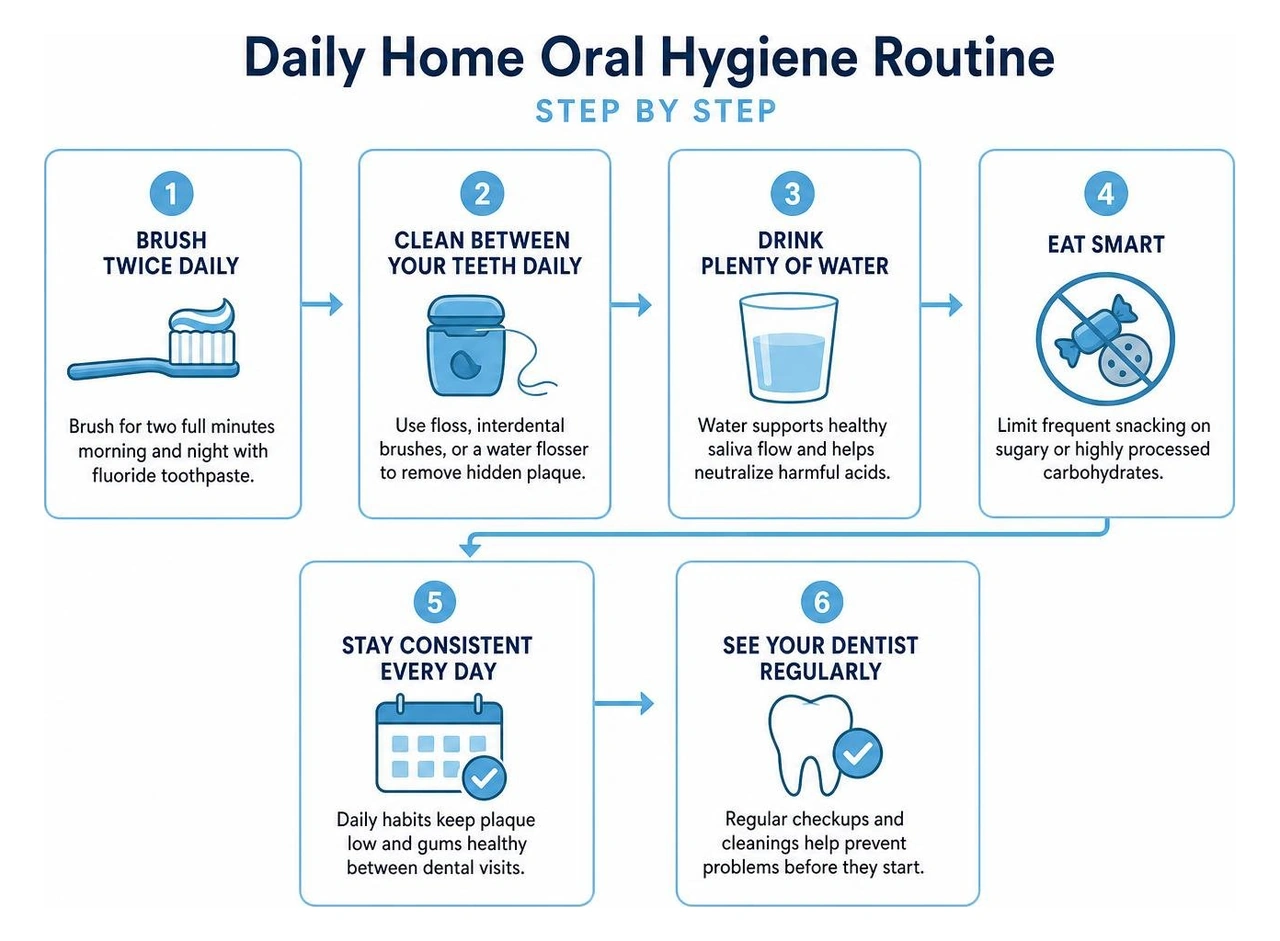
Professional cleanings work hand-in-hand with daily home care. Even the best dental cleaning needs consistent support between visits to keep plaque under control.
- Brush twice daily for two full minutes using a soft-bristled manual or electric toothbrush with fluoride toothpaste.
- Clean between your teeth daily using traditional floss, interdental brushes, or a water flosser to disrupt hidden plaque colonies.
- Drink plenty of water throughout the day to support healthy saliva flow, which naturally neutralizes harmful acids.
- Limit frequent snacking on sugary or highly processed carbohydrates that feed decay-causing bacteria.
- Partner with our practice for comprehensive preventative dentistry checkups tailored to your family's needs.
How Often Should You Schedule a Dentist Teeth Cleaning?
For most children, teenagers, and healthy adults, scheduling a preventive visit every six months is the ideal cadence. However, oral health is highly personal. If you have active periodontal disease, a history of frequent cavities, diabetes, or are undergoing orthodontic treatment, we may suggest maintenance cleanings every three to four months to prevent bacterial flare-ups.
Is a Dentist Teeth Cleaning Uncomfortable?
A routine cleaning should never be painful. You will feel light vibration, water mist, and slight pressure, but our skilled hygienists specialize in gentle techniques to keep you comfortable. If you have sensitive teeth or gum recession, we can apply topical numbing gels. For neighbors who feel nervous about dental care, our Urbana office offers soothing comfort amenities and safe sedation dentistry options so you can rest easy during your visit.
Frequently Asked Questions About Teeth Cleanings
Who performs teeth cleanings at a dental clinic?
Teeth cleanings are performed by licensed Registered Dental Hygienists (RDHs) who have completed rigorous clinical training in preventive care, periodontal therapy, and patient education. Your hygienist collaborates directly with our supervising dentists, who perform comprehensive evaluations, review X-rays, and screen for broader oral health conditions.
What should I do if I haven't had a dental cleaning in a long time?
If years have passed since your last visit, please do not feel embarrassed or worried about judgment. Life gets busy, and our team is simply here to help you move forward. We will begin with a gentle comprehensive dental examination, evaluate your current oral health status, and map out a step-by-step care plan tailored to your comfort and schedule.
Does insurance cover preventive dental cleanings?
Most dental insurance policies cover routine preventive cleanings and exams twice per year. For our uninsured neighbors throughout Urbana, Mechanicsburg, Tremont City, West Liberty, and Springfield, we proudly offer our in-house Smile Protection Savings Plan. This plan ensures your whole family can access regular cleanings, examinations, and preventive care without the hassle of traditional insurance deductibles or waiting periods.
Conclusion
A healthy smile is one of your greatest assets, supporting your self-confidence, your ability to enjoy meals, and your long-term whole-body wellness. Scheduling routine cleanings stops small concerns from turning into complex dental challenges.
Since 1997, Champaign Dental Group has served as a trusted dental home for families across Champaign County. Located at 139 Patrick Ave in Urbana, Ohio, we treat every patient like a neighbor and family member. Whether you are due for your routine six-month visit or taking the first step toward renewing your smile after years away, we are here to support you with compassionate, personalized care. We invite you to request an appointment with our friendly team today. We look forward to seeing you soon.