.jpg)
Fast Relief for Sudden Tooth Pain from Emergency Dentists Near Me
Find Help Fast for Sudden Tooth Pain
Severe tooth pain, a knocked-out adult tooth, or new facial swelling? Call a nearby dentist now and ask for the soonest urgent appointment. If a tooth is knocked out, hold it by the top, keep it moist in milk, and seek care right away. If you have trouble breathing or swallowing, heavy bleeding that will not stop, or a serious facial injury, go to the ER instead.
If you are in Champaign County, contact Champaign Dental Group in Urbana and explain what happened so the team can advise you on appointment availability.
I’m Dr. Ellen Zwick, and I’ll help you understand what to do next when a dental problem cannot wait.

Key terms for emergency dentists near me:
- emergency walk-in dentist near me
- urgent dental care your quick guide to handling dental emergencies
- request an appointment
For additional guidance on managing dental emergencies, the American Dental Association offers helpful first-aid tips for dental emergencies.
Identifying True Emergencies: When to Find Emergency Dentists Near Me
A dental emergency can catch anyone off guard, whether you are enjoying dinner with family or working in the yard. Knowing when an issue requires immediate attention helps prevent complications and gets you out of pain faster. Generally, any condition involving severe discomfort, uncontrolled bleeding, a knocked-out permanent tooth, or signs of an active infection counts as an urgent situation.
Common dental emergencies include:
- A severe, throbbing toothache that disrupts your sleep or daily routine
- A dental abscess, which often presents as a pimple-like bump on the gum line accompanied by swelling
- A fully knocked-out (avulsed) adult tooth or a tooth loosened by sudden trauma
- Deep soft-tissue cuts or tears to the lips, tongue, or inner cheeks
- A cracked or fractured tooth with exposed nerves causing sharp pain
Reviewing our urgent dental care guide can give you quick clarity on handling sudden issues until you reach our office.
Navigating Urgent Appointments with Emergency Dentists Near Me
When you need rapid relief, searching for emergency dentists near me is often the first step. Calling the office right away helps the team prepare for your arrival and set up the treatment room. While some practices accept walk-ins, giving the clinic a quick phone call ensures a dedicated provider is ready to assess your symptoms immediately.
If you are unable to call ahead, understanding your emergency walk-in care options allows you to seek care directly, ensuring that infections and severe discomfort are handled promptly.
Severe Pain Versus Routine Dental Discomfort
Not all oral discomfort demands an immediate emergency visit. Mild tooth sensitivity when drinking cold water or slight tenderness after flossing can often wait for a standard dental visit.
In contrast, an urgent dental issue typically involves deep, persistent throbbing, swelling in the jaw or cheek, or pain when biting down. If over-the-counter pain relievers fail to ease the ache, having a professional evaluate the issue prevents underlying decay or infection from spreading into deeper structures.
Immediate First-Aid Steps Before Reaching the Clinic

Taking the right first-aid actions at home can make a significant difference in saving a tooth and keeping you comfortable on your way to the dental office.
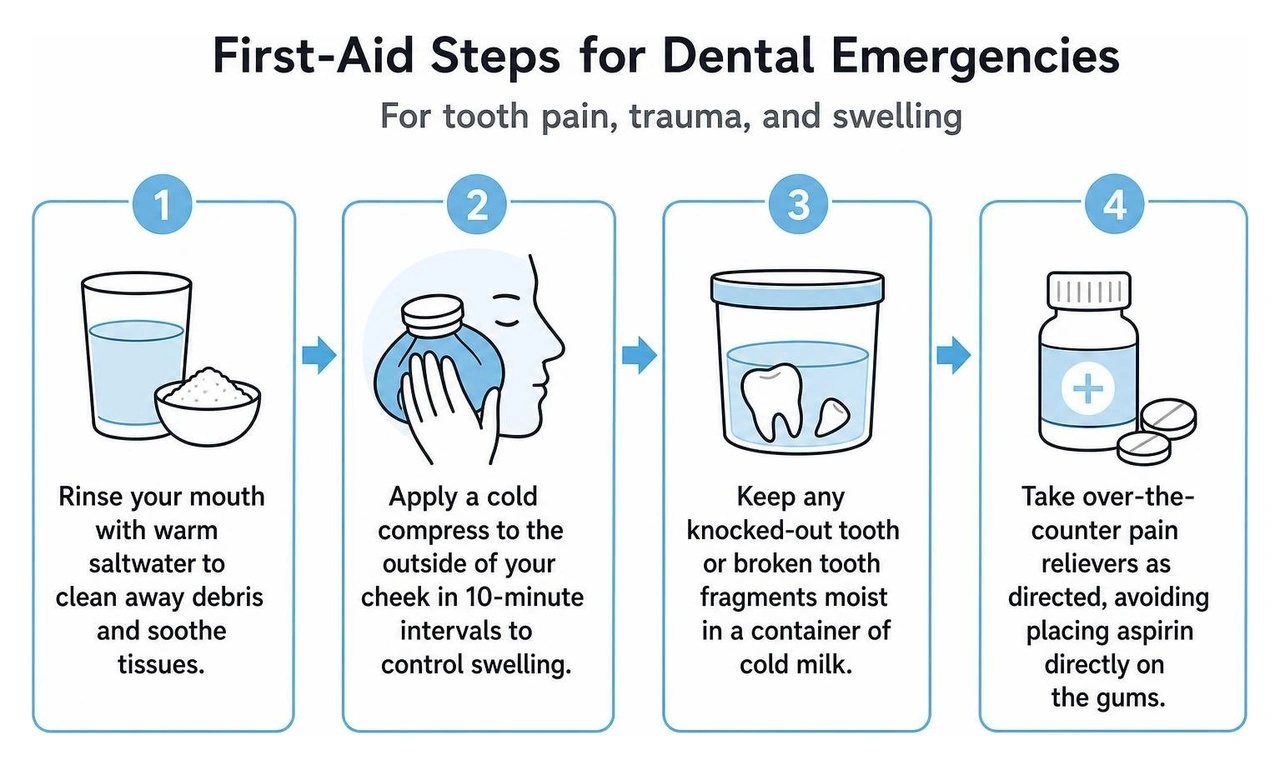
Essential first-aid steps:
- Gently rinse your mouth with warm saltwater to clean away debris and soothe tissues.
- Apply a cold compress to the outside of your cheek in 10-minute intervals to control swelling.
- Keep any knocked-out tooth or broken tooth fragments moist in a container of cold milk.
- Take over-the-counter pain relievers as directed, avoiding placing aspirin directly on the gums.
- Contact your dentist immediately to describe the injury and arrange an evaluation.
Managing Knocked-Out and Broken Teeth
If an adult tooth gets knocked out completely, handle it exclusively by the crown (the chewing surface) and never touch the delicate root. If it is visibly dirty, gently rinse it with milk or saline for a couple of seconds, but do not scrub or remove any attached tissue fragments. Try slipping the tooth back into its socket if possible. If that is uncomfortable, store it submerged in cold milk or saliva while heading straight to the clinic.
For cracked or chipped enamel, collect any broken pieces you can find. If a jagged edge is irritating your tongue or cheek, cover it with orthodontic wax or sugar-free gum. Our team can explore cracked tooth solutions or use tooth bonding for chipped teeth to restore your smile cleanly and comfortably.
Controlling Swelling, Bleeding, and Discomfort
Soft-tissue bleeding from the lips, tongue, or gums can look alarming, but firm, steady pressure usually brings it under control. Place a clean, sterile piece of gauze or a damp tea bag against the bleeding site and apply gentle pressure for 15 to 20 minutes without lifting it to check.
For swelling, an external ice pack wrapped in a cloth helps constrict blood vessels and numb the throbbing sensation. If you are recovering from recent trauma or dental work, learning how to stop bleeding after tooth extraction provides helpful techniques for maintaining steady clot formation.
Emergency Dental Evaluation and Treatment Options
When you arrive for an urgent visit, our priority is relieving your discomfort and pinpointing the root cause. Using low-radiation digital X-rays and gentle diagnostic tests, our team examines the tooth, surrounding bone, and gum tissue.
To keep you completely relaxed, we provide local numbing agents and comforting sedation dentistry options. Sedation helps melt away dental anxiety, allowing you to rest peacefully while our team restores your oral health.
Common Treatment Options from Emergency Dentists Near Me
Depending on the underlying cause of your dental emergency, several treatment options can resolve pain and protect your natural teeth:
- Emergency pulpectomy or root canal therapy: When deep decay or trauma inflames the internal nerve tissue, root canal treatment removes the infection, relieves pain, and preserves the natural tooth structure.
- Urgent tooth extraction: If a tooth is broken beyond repair or severely decayed, an emergency molar removal eliminates the infection source and prevents complications in neighboring teeth.
- Restorative repairs: Lost or broken restorations can leave sensitive dentin exposed. Placing a temporary filling, recementing a loose restoration, or repairing an emergency dental bridge shields the tooth from thermal changes and bacteria.
Complex Oral Surgery and Tooth Extraction Protocols
In cases involving severe impaction, structural trauma, or spreading abscesses, surgical intervention may be required. Having access to comprehensive care under one roof ensures you do not have to drive across town or wait days for an outside referral.
Our experienced oral surgeon performs gentle surgical extractions, drains deep infections, and places bone preservation materials directly in our office. For extensive details on what to expect during and after care, our tooth extractions guide outlines the healing process step by step.
Dental Office vs. Emergency Room: Where to Seek Urgent Care
Deciding whether to visit a dental office or a hospital emergency room comes down to the nature of your injury. Emergency rooms are equipped for general medical trauma and systemic stabilization, but most hospital staff lack dental handpieces, restorative materials, and specialized dental training. Going to the ER for a standard toothache often results in a prescription for temporary pain relievers and antibiotics, along with a recommendation to visit a dentist the next day.
A dedicated dental office provides immediate, definitive treatment, fixing the underlying tooth issue during your visit.
When to Go Straight to the Hospital ER
You should bypass the dental clinic and go directly to the nearest hospital emergency room (or call 911) if you experience any of the following symptoms:
- Severe swelling in the face, floor of the mouth, or neck that makes it difficult to breathe or swallow
- Suspected broken jaw bones or significant facial trauma from a high-impact accident
- Heavy, persistent bleeding from the mouth that does not slow down after 20 minutes of firm gauze pressure
- A very high fever combined with chills, confusion, or severe facial swelling
Insurance, Payment Options, and In-House Savings Plans
Urgent dental issues should never go untreated due to financial concerns or lack of traditional insurance coverage. Our office accepts most major PPO dental plans and helps you maximize your benefits for emergency visits.
For uninsured patients and local families, Champaign Dental Group offers our in-house Smile Protection Savings Plan. This plan provides predictable savings on preventive, restorative, and emergency care without waiting periods or confusing claim forms. To review coverage details and policies, check out our faq page.
Frequently Asked Questions About Emergency Dental Care
Do I need dental insurance or a referral to see an emergency dentist?
No, you do not need dental insurance or a doctor's referral to receive urgent dental treatment. Our practice welcomes new patients, uninsured individuals, and families alike. We prioritize getting you out of pain quickly and will clearly discuss all treatment recommendations and financing options before starting any care.
Can an emergency dentist save a knocked-out permanent tooth?
Yes, a knocked-out adult tooth can often be saved if it is treated quickly, ideally within 30 to 60 minutes of the accident. Keeping the root moist in milk preserves the living periodontal ligament cells. Once in the office, the dentist gently cleans the socket, repositions the tooth, and stabilizes it with a flexible splint so the bone and tissues can heal securely.
How do I prepare for an emergency dental procedure?
When preparing for an urgent dental visit, bring a valid photo ID, a list of your current medications and medical conditions, and any dental insurance cards you have. If a tooth or filling broke, place the pieces in a clean container and bring them with you. If you know you may undergo endodontic therapy, learning how to prepare for your root canal surgery helps you feel confident and comfortable before sitting in the chair.
Conclusion
Sudden tooth pain and dental injuries can feel overwhelming, but you do not have to endure discomfort alone. Champaign Dental Group has been a trusted staple in the Champaign County community since 1997, treating every patient who walks through our doors like family. Located at 139 Patrick Ave in Urbana, Ohio, we proudly serve families and neighbors across Urbana, Mechanicsburg, Tremont City, West Liberty, and Springfield.
Whether you need urgent pain relief, gentle oral surgery, soothing sedation dentistry, or routine preventive care for your children, our team provides complete dental services under one roof. When a dental emergency strikes, do not wait for the pain to get worse. Simply request an appointment online or call our friendly team right away to get the prompt, compassionate relief you deserve.