
Why an Implant Denture Offers Unmatched Stability and Comfort

Why an Implant Denture Feels More Secure
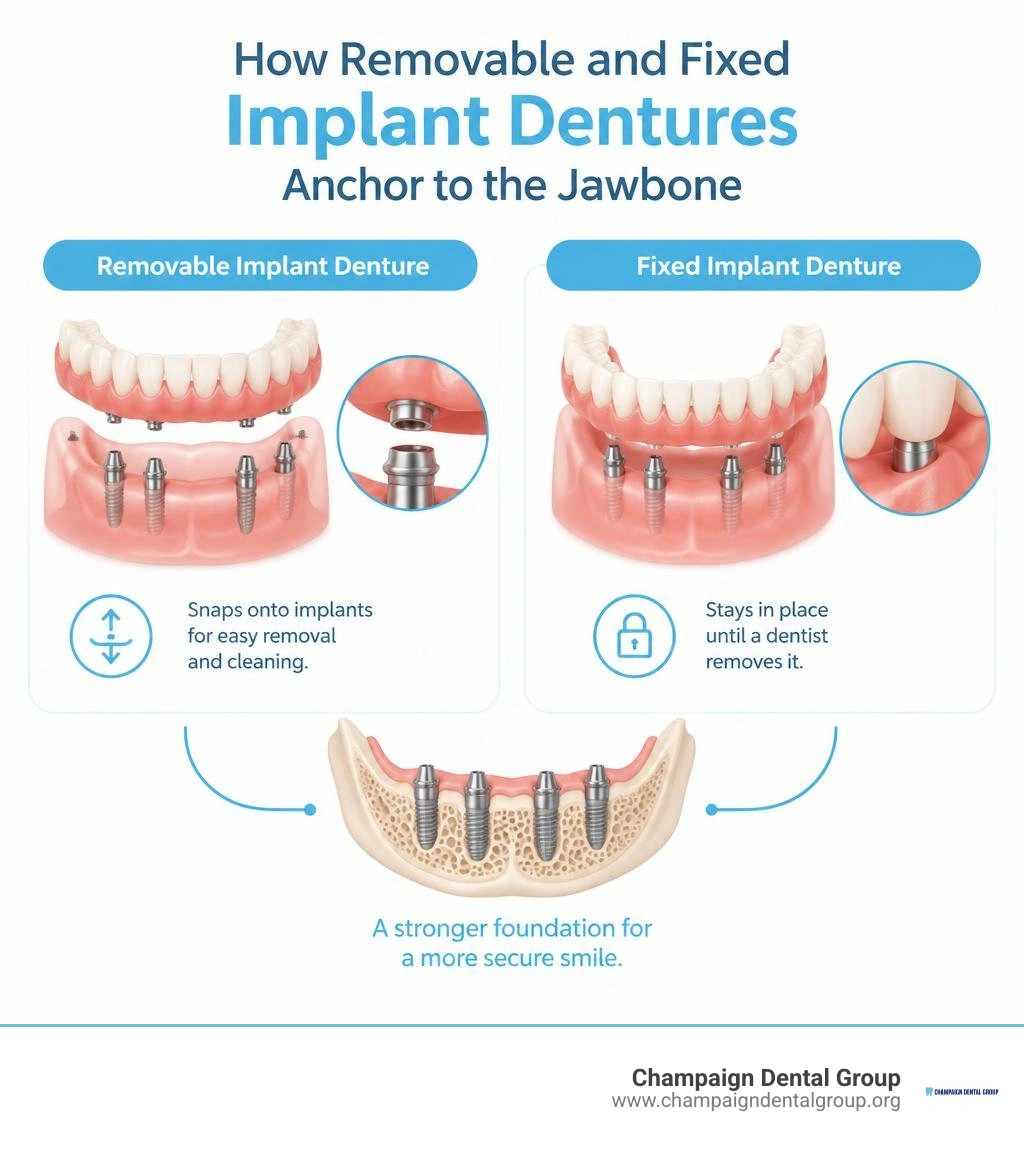
An implant denture attaches to small posts placed in your jaw, so it is less likely to slip while you eat or speak. Unlike a traditional denture that rests on your gums, it has a firm anchor. You can choose a denture that snaps out for cleaning or one that stays in place until a dentist removes it. The right choice depends on your jawbone, health, and daily preferences.
I'm Dr. Ellen Zwick, and I'll help you understand what each option could mean for your comfort and care.
Implant denture word roundup:
What Is an Implant Denture and How Does It Work?
More than 35 million Americans do not have any natural teeth, and over 178 million individuals are missing at least one tooth. When replacing a complete arch of teeth, traditional options rely entirely on the gums for support. An implant-supported system changes this dynamic completely.
Understanding the foundation begins with asking what is a dental implant. A dental implant is a small post, typically crafted from medical-grade titanium, that is gently placed into your jawbone. Over a period of several months, a natural biological process called osseointegration occurs. The surrounding bone cells fuse directly to the titanium post, creating a sturdy artificial tooth root.
Once integrated, special connector pieces called abutments are secured to the tops of these posts. Your custom dental prosthetic then attaches securely to these abutments. In modern dentures and tooth replacement, this mechanical connection transfers biting forces straight into your jawbone rather than pressing against sensitive gum tissue. This makes eating comfortable and predictable.

Comparing an Implant Denture vs. Traditional Dentures
Traditional dentures stay in place through natural suction, saliva, and over-the-counter adhesives. While they offer an accessible tooth replacement option, lower traditional dentures frequently shift because the tongue and cheeks constantly move against them.
By contrast, an implant-retained system locks firmly onto solid anchors. This mechanical retention provides several immediate benefits:
- Significantly higher chewing power: Traditional dentures restore roughly 20% to 30% of natural chewing efficiency. An implant-supported system delivers 60% to 70% chewing efficiency, letting you comfortably enjoy crisp apples, vegetables, and lean meats without fear of slippage.
- Enhanced taste and natural speech: Traditional upper dentures require a full acrylic plate that covers the roof of your mouth. Upper implant prosthetics often leave the palate open, restoring your ability to taste foods and perceive temperatures accurately.
- No sticky adhesives: Because your teeth snap or screw directly onto posts, messy denture pastes are entirely unnecessary.
Long-Term Jawbone Health and Facial Structure Preservation
When you lose natural teeth, your jawbone no longer receives direct chewing stimulation. Over time, the body resorbs this unused bone tissue. Wearing conventional dentures for 15 to 20 years often leads to substantial bone thinning, causing traditional dentures to loosen and creating a sunken facial profile.
One of the most meaningful benefits of dental implants is active bone stimulation. As clinical guides on implant-supported dentures explain, titanium posts anchored within bone tissue mimic natural roots and transmit healthy pressure into the jaw whenever you chew. This consistent stimulation preserves natural facial contours, supports your lips and cheeks, and prevents long-term bone loss.
Types of Implant-Supported Denture Solutions
Every mouth is unique, which is why exploring modern dental implant options your guide for replacing missing teeth helps you determine the best path forward. During a comprehensive evaluation, we look closely at your bone volume, arch shape, and personal lifestyle preferences.
Removable Snap-On Overdentures
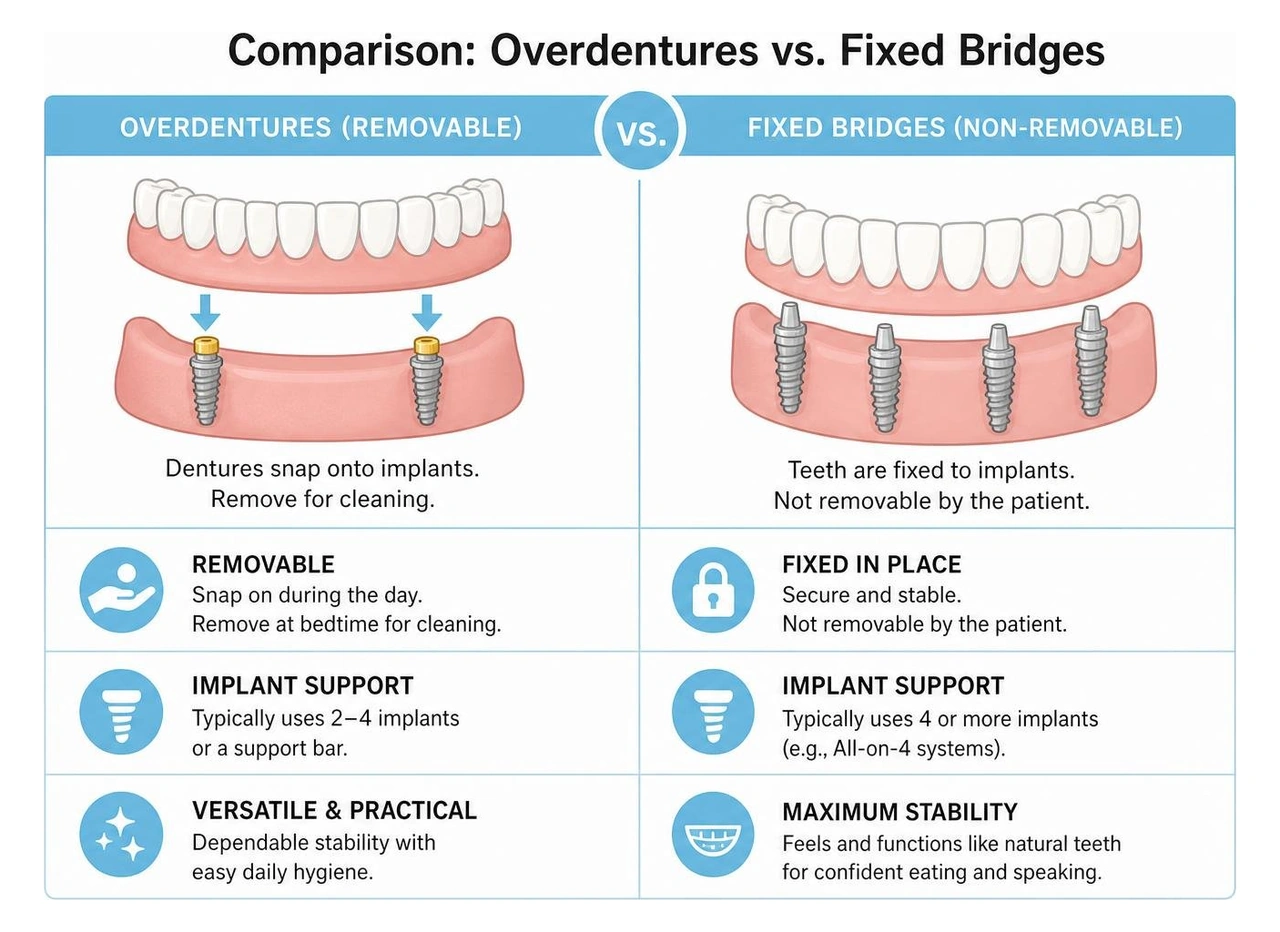
Removable overdentures snap firmly onto implants during the day and can be removed at bedtime for easy cleaning. They often utilize locator or ball attachments secured to two to four implants in the lower jaw, or clip onto a custom support bar. If you are exploring a versatile removable teeth set, snap-on options provide dependable stability while keeping daily oral hygiene straightforward.
Fixed Full-Arch Bridges and All-on-4 Systems
For individuals seeking a non-removable solution, fixed full-arch restorations stay securely locked in place 24/7. These prosthetics are screw-retained and can only be removed by a dental professional during routine checkups.
Using techniques detailed in our all in 4 dental implants guide 2026, four to six posts are strategically placed in the arch. By angling the posterior implants, we can often maximize available bone density and eliminate the need for extensive bone grafting. This provides a durable form of permanent tooth replacement that functions just like natural teeth.
Mini Dental Implants for Specialized Cases
In cases where bone density is narrow and bone grafting is not desired, mini dental implants offer an alternative. These posts have a narrower diameter and can often be placed with minimally invasive techniques to provide immediate stabilization for removable overdentures.
The Step-by-Step Procedure and Recovery Timeline
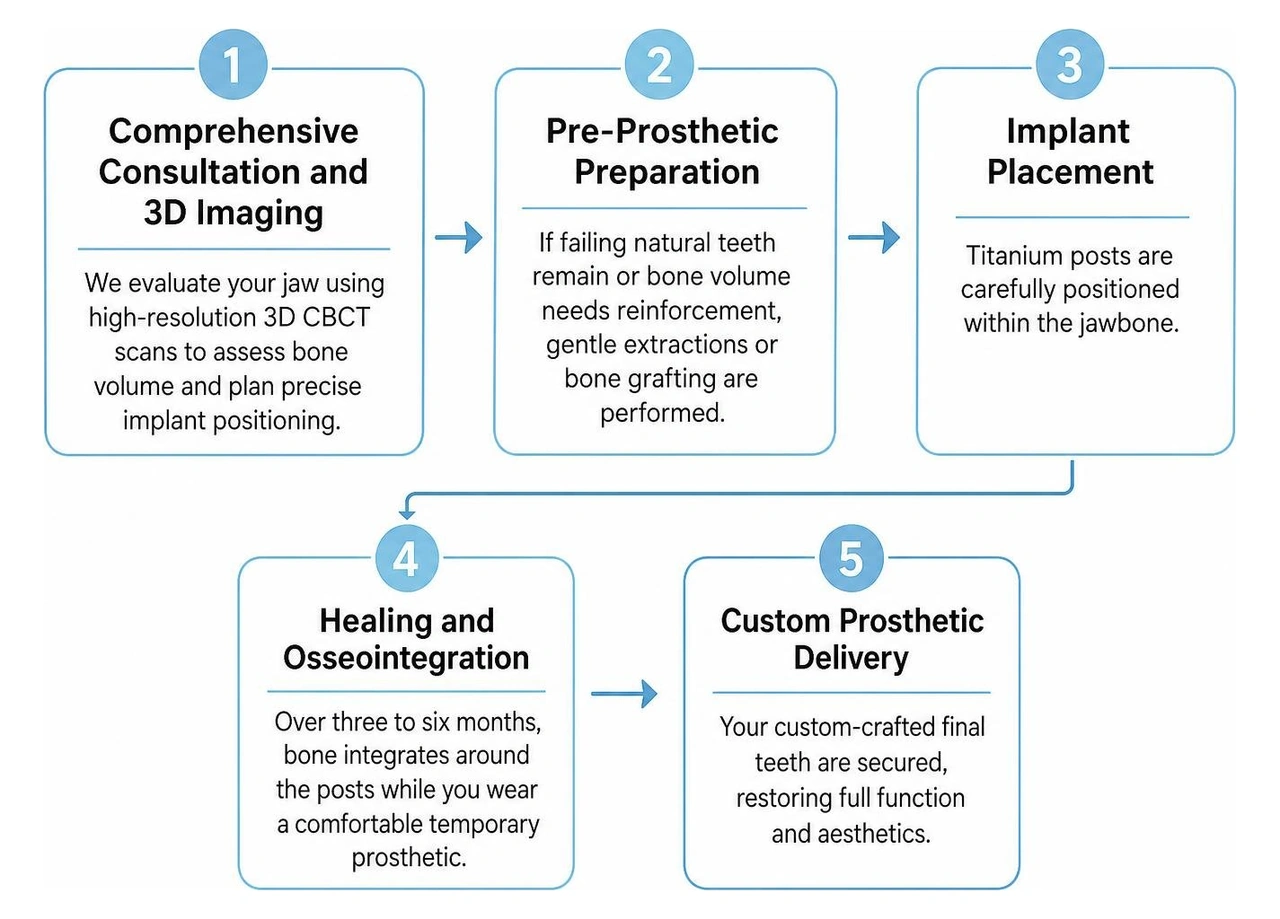
Restoring your smile with implant teeth follows a well-planned, step-by-step sequence designed for comfort and predictability.
- Comprehensive Consultation and 3D Imaging: We evaluate your jaw using high-resolution 3D CBCT scans to assess bone volume and plan precise implant positioning.
- Pre-Prosthetic Preparation: If failing natural teeth remain or bone volume needs reinforcement, gentle extractions or bone grafting are performed.
- Implant Placement: Titanium posts are carefully positioned within the jawbone.
- Healing and Osseointegration: Over three to six months, bone integrates around the posts while you wear a comfortable temporary prosthetic.
- Custom Prosthetic Delivery: Your custom-crafted final teeth are secured, restoring full function and aesthetics.
Surgical Placement, Sedation, and Osseointegration
Your comfort is always our priority. With gentle techniques and modern dental implant pain management, the surgical procedure is smooth and predictable. Most patients return to their normal daily routines within two to three days, managing minor soreness with mild over-the-counter pain relievers. Over the next three to six months, the bone fully integrates with the implants while you eat a modified, soft-food diet.
Designing and Fitting Your Custom Implant Denture
Once healing is complete, we capture precise impressions to design natural looking dental implants that complement your facial features and natural bite. Balancing proper bite alignment with custom aesthetics ensures your new teeth look beautiful and function comfortably for decades.
Longevity, Daily Maintenance, and Investment Factors
Dental implant posts can last a lifetime with proper care. The overdenture component attached to the posts typically lasts 15 to 20 years, far outlasting traditional dentures that often need replacement every 5 to 10 years due to jawbone changes.
Daily care is simple but vital:
- For removable overdentures: Take out your prosthetic nightly, brush it with a non-abrasive cleanser, and gently clean around the locator attachments on your gums with a soft-bristled brush.
- For fixed bridges: Use water flossers, interdental brushes, and floss threaders to clean underneath the bridge daily.
- Routine maintenance: Replace small nylon locator inserts every one to two years when they naturally lose retention, and visit us regularly for cleanings.
Following simple denture maintenance tips protects your gums and keeps your restoration shining brightly.
Navigating Costs, Insurance, and Financing Options
The overall investment in implant restorations depends on several factors, including the number of posts placed, preparatory bone grafting, and whether you select a removable snap-on overdenture or a fixed hybrid bridge.
Navigating dental coverage can feel complex, but our dental implant insurance complete guide breaks down how standard benefits apply to different stages of care. To keep care accessible for families in our community, flexible solutions outlined in our payment plan for dentures guide help make restoring your smile comfortable and affordable.
Frequently Asked Questions About Implant Dentures
Can I switch from traditional dentures to an implant denture later?
Yes. Many patients wear conventional dentures for years before upgrading to implant stability. If long-term wear has caused bone loss, modern restorative dentistry options like minor bone grafting or angled All-on-4 placement can rebuild support for your new teeth.
How many implants are needed for upper versus lower dentures?
In the lower jaw, two implants represent the standard foundation for securing a removable overdenture. In the upper jaw, bone is naturally softer, typically requiring four to six implants or a support bar to ensure long-term stability and eliminate the need for full palate coverage.
When should I contact my dentist after getting implant dentures?
While recovery is normally straightforward, you should contact our office promptly if you experience:
- Persistent, increasing pain that does not improve after several days
- Visible signs of infection, such as fever above 101°F or unusual swelling
- A loose feeling in your implant posts or attachment hardware
Conclusion
Missing teeth should never hold you back from enjoying your favorite meals or laughing openly with family and friends. By anchoring securely into your jawbone, implant-supported solutions eliminate shifting, protect long-term bone structure, and restore the natural function of your bite.
Located at 139 Patrick Ave, Urbana, Ohio 43078, Champaign Dental Group has proudly cared for families across Urbana, Mechanicsburg, Tremont City, West Liberty, Springfield, and Champaign County since 1997. Whether you need general dentistry, on-site oral surgery, calming sedation options, or coverage through our in-house Smile Protection Savings Plan, we treat you like family every step of the way.
Ready to restore your smile with stability and comfort? Please request an appointment for a personalized dental implant consultation with our warm, friendly team today. We look forward to seeing you soon.