.jpg)
What Is a Dental Implant? A–Z Guide to Basics
You Lost a Tooth. Now What? Understanding Dental Implants
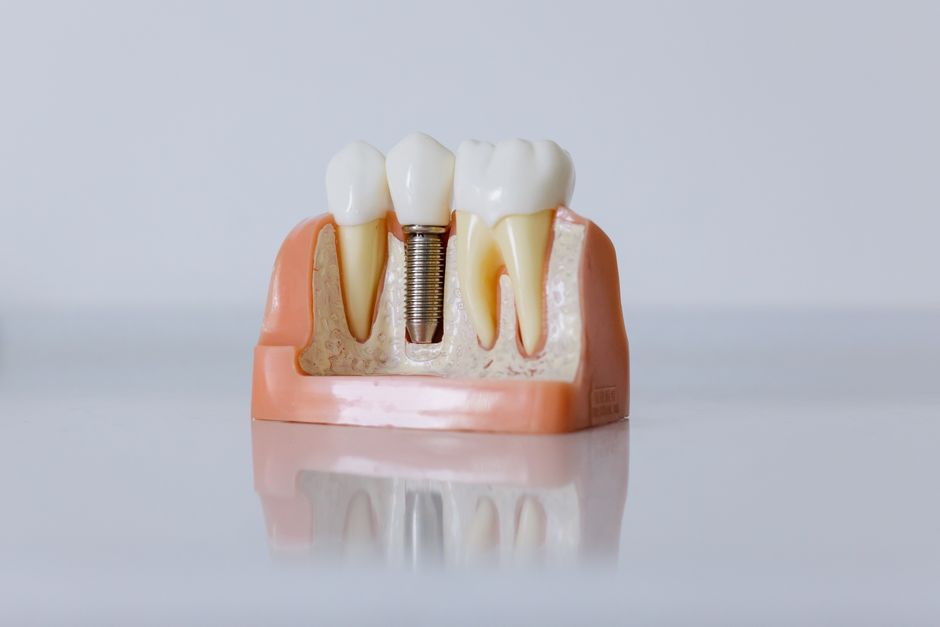
What is a dental implant? It's a small titanium post that a dentist surgically places into your jawbone to act as an artificial tooth root. Once it fuses with the bone, it supports a realistic-looking crown, bridge, or denture on top.
Here's the short version:
- What it is: A surgically placed titanium post that replaces a missing tooth root
- What it does: Holds a custom crown, bridge, or denture securely in place
- How it feels: Like a natural tooth once fully healed
- How long it takes: Several months from placement to final crown
- Who it's for: Adults with good overall health and enough jawbone density
- How long it lasts: A lifetime with proper care (the crown typically lasts around 15 years)
Losing a tooth is more common than you might think. In the U.S. alone, dental providers place over 3 million implants every year. And it's not just about looks. A missing tooth can make it harder to chew, affect your speech, and even cause the jawbone to shrink over time.
If you've been putting off dealing with a missing tooth because of cost, fear, or just not knowing where to start, you're not alone. That's exactly why we put this guide together.
At Champaign Dental Group, we've been helping families in Urbana and across Champaign County restore their smiles since 1997. We know the idea of implant surgery can feel overwhelming. This guide breaks it all down in plain language so you can make a confident, informed decision.
Simple what is a dental implant glossary:
What Is a Dental Implant and How Does It Work?

To truly understand how a dental implant works, it helps to look at what goes on beneath the surface of your gums. Your natural teeth stay securely in place because they are anchored by roots deep within your jawbone. When you lose a tooth, you lose both the visible crown and the invisible root.
A dental implant is designed to mimic this natural structure. By replacing the root, the implant provides a stable, permanent foundation for your new tooth. This stability is made possible by a remarkable biological process called osseointegration. Discovered by researchers, this is the process where your natural jawbone actually grows into and fuses with the surface of the implant.
This bone-to-implant bond is what makes implants so unique. Unlike traditional options that simply sit on top of your gums, an implant becomes a permanent part of your jaw. This direct connection prevents your surrounding teeth from shifting and preserves your jawbone. Without a root to support, the bone in your jaw can naturally begin to deteriorate over time. The implant stimulates the bone just like a real tooth root, keeping your facial structure strong and healthy. You can learn more about the deep science behind this process by reading the clinical overview on the Dental Implants - StatPearls - NCBI Bookshelf.
The Anatomy of What Is a Dental Implant
A complete dental implant system is not just a single piece. It is actually made up of three distinct parts that work together to replace your missing tooth:
- The Implant Body: This is the small, threaded post that is surgically placed directly into your jawbone. It acts as your new tooth root. Most implant bodies are made of biocompatible titanium, which is highly accepted by the human body and rarely causes any allergic reactions.
- The Abutment: This is a small connector piece that is attached to the top of the implant body. It sits right at the gumline and serves as the support post that holds your new tooth.
- The Restoration: This is the visible part of the tooth that everyone sees. Depending on how many teeth you are replacing, your restoration will be a custom-made crown, a bridge, or a full set of dentures.
These components are manufactured under strict safety guidelines. If you want to understand how these devices are regulated and evaluated for patient safety, you can read the official information page on Dental Implants: What You Should Know | FDA.
Finding Out If What Is a Dental Implant Is Right for You
While dental implants are an incredible solution, they are not the perfect fit for everyone. To be a good candidate for this procedure, you need to meet a few basic health requirements:
- Adequate Jawbone Density: Since the implant relies on your bone for support, you must have enough healthy bone to hold the post securely. If you have been missing a tooth for a long time and have suffered bone loss, we can often perform a bone graft to rebuild the area first.
- Healthy Gums: Active periodontal disease can cause an implant to fail. We will want to make sure your gums are completely healthy before starting the process.
- Good Overall Health: Conditions that slow down your body's natural healing process, such as uncontrolled diabetes, can make it harder for the implant to fuse with the bone.
- A Commitment to Good Oral Hygiene: Implants cannot get cavities, but the gums around them can still get infected if they are not brushed and flossed regularly.
We also highly recommend that patients be non-smokers. Tobacco use can significantly slow down the healing process and increase the risk of implant failure. If you are curious about how likely your procedure is to succeed, check out our article on More info about dental implant success rates.
Types, Materials, and Alternatives for Replacing Teeth
When we talk about dental implants, we are usually referring to endosteal implants. These are the most common type and are placed directly into the jawbone. However, for patients who do not have enough healthy jawbone and cannot undergo a bone graft, there are other options:
- Subperiosteal Implants: These implants rest on top of the jawbone but under the gum tissue. They are used far less often today but remain an option for specific cases.
- Mini Dental Implants: These are smaller than standard implants and are often used to secure loose dentures or to fit into very tight spaces where a standard post will not fit.
In terms of materials, titanium remains the gold standard because of its incredible strength and high success rates. However, zirconia is a popular metal-free ceramic alternative that is highly aesthetic and excellent for patients with metal sensitivities.
If you are trying to decide between different tooth replacement options, it is helpful to look at how implants compare to traditional methods. Traditional dental bridges require us to grind down the healthy neighboring teeth to support the new artificial tooth. Implants, on the other hand, are a single-tooth solution to a single-tooth problem. They do not affect your surrounding teeth at all. To see a detailed breakdown of these differences, read our guide on Dental Implants Versus Bridges.
The Dental Implant Procedure and Recovery Timeline
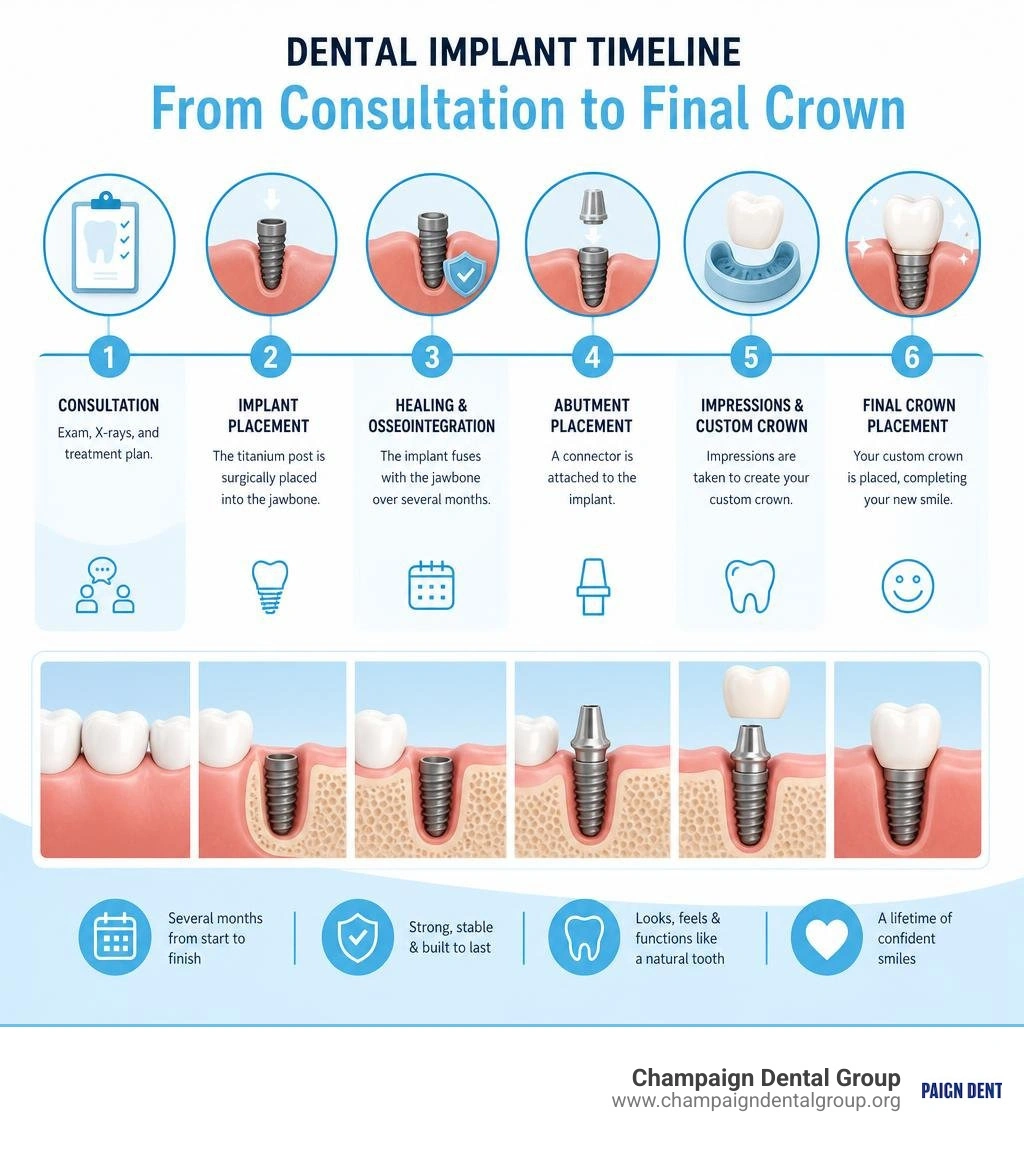
Getting a dental implant is a multi-step process that requires patience, but the long-term results are well worth the wait. Here is what you can expect during your treatment:
- The Initial Consultation: We will take detailed images of your jaw to evaluate your bone density and plan the exact placement of your implant.
- Bone Grafting (If Needed): If your jawbone is too thin, we will perform a simple bone graft. This step can add a few months to your timeline while we wait for the new bone to grow.
- Placing the Implant: During this outpatient surgery, we will gently place the titanium post into your jawbone. Thanks to modern local anesthesia and our comfortable sedation options, most patients find this step to be much gentler than a tooth extraction.
- Osseointegration (The Healing Period): You will wait three to six months for your bone to grow around and fuse with the implant post.
- Placing the Abutment and Crown: Once the implant is fully secure, we will attach the connector piece and place your beautiful, custom-made crown.
For a detailed medical overview of what to expect during each stage of the surgery, you can read the guide on Dental implant surgery - Mayo Clinic.
Your comfort is always our top priority. While you will feel some mild soreness for a few days after the initial placement surgery, it is easily managed with over-the-counter pain relievers. To learn more about how we keep you comfortable, read our advice on More info about dental implant pain management.
Frequently Asked Questions About Dental Implants
How long do dental implants last?
With proper care, dental implants can last a lifetime. While the custom crown on top may need to be replaced after 10 to 15 years due to normal wear and tear, the titanium post itself is designed to be permanent. Titanium implants have an incredible success rate of 97% and a 10-year survival rate of nearly 99%. Keeping up with regular dental cleanings and brushing twice a day will ensure your implant stays healthy for decades.
What are the costs and insurance options for implants?
Because every smile is unique, the total investment for a dental implant depends on your specific needs, such as whether you need a bone graft or a tooth extraction first. Many dental insurance plans now offer partial coverage for implant procedures. To help you navigate the financial side of your care, we have put together a Dental Implant Insurance Complete Guide. We also offer flexible payment plans to make your treatment fit your family's budget. You can explore these options in our Dental Implants Financing Complete Guide.
What are the main risks of the surgery?
Like any surgical procedure, dental implant surgery carries minor risks, including infection at the site, temporary nerve irritation, or sinus issues if an upper implant is placed close to the sinus cavity. However, these complications are rare. When performed by an experienced team in a sterile environment, implant surgery is one of the safest and most predictable procedures in modern dentistry.
Conclusion
A missing tooth does not have to hold you back from enjoying your favorite foods or smiling with confidence. At Champaign Dental Group, we believe in treating you like family, not just a number on a chart. Since 1997, our family-focused practice in Urbana, Ohio, has been helping our neighbors across Champaign County find their dental home.
We understand that dental anxiety is real. That is why we provide a warm, supportive environment and offer on-site oral surgery and sedation dentistry to make your experience as peaceful and stress-free as possible. Whether you live in Urbana, Mechanicsburg, West Liberty, Tremont City, or Springfield, we are here to help you restore your smile.
Ready to take the first step toward a healthy, complete smile? Schedule an appointment for dental implants with our friendly team today!