.jpg)
Bridging the Gap: Everything You Need to Know About Dental Bonding for Spaces

Understanding Your Options for a Confident Smile
Teeth bonding for gaps is a cosmetic dental procedure that uses tooth-colored composite resin to close spaces between your teeth, typically completed in a single office visit without anesthesia.
Quick Answer: What You Need to Know
- What it is: A dentist applies composite resin material to fill gaps, then shapes and polishes it to match your natural teeth
- How long it takes: 30-60 minutes per tooth in one appointment
- How long it lasts: 4-10 years depending on location and care habits
- Best for: Small to moderate gaps (a few millimeters) between front teeth
- Key benefits: Quick results, pain-free, preserves natural tooth structure, and more affordable than veneers
- Considerations: Can stain from coffee or smoking, may chip with nail-biting or hard foods
If you've ever felt self-conscious about the space between your front teeth, you're not alone. That gap—sometimes called a diastema—is one of the most common reasons people seek cosmetic dental treatment. Maybe you avoid smiling in photos, or you've simply wondered if there's a simple solution that doesn't require months of orthodontic work.
The good news? Dental bonding offers a fast, affordable, and minimally invasive way to close those spaces. Unlike braces or veneers, bonding can transform your smile in about an hour, with results that look natural and feel comfortable.
At Champaign Dental Group, our compassionate team understands that busy parents like you need dental solutions that fit into packed schedules. We also know that high-quality care matters—not just for you, but for your whole family. That's why we offer convenient options like our Smile Protection Savings Plan to make excellent dental care accessible.
This guide will walk you through everything you need to know about teeth bonding for gaps: how it works, who it's right for, how long it lasts, and how to care for your newly transformed smile.
What is Teeth Bonding for Gaps?
Imagine a sculptor carefully adding clay to a masterpiece, shaping it perfectly to blend with the existing form. That's essentially what happens during dental bonding! It's a cosmetic dental procedure where a tooth-colored composite resin material is carefully applied to your tooth, then shaped, sculpted, and polished to improve its appearance. For closing gaps, this resin is used to subtly widen the adjacent teeth, effectively "bridging" the space between them. The result is a seamless, natural-looking smile that you'll be proud to show off.
This procedure is a fantastic example of modern cosmetic dentistry that prioritizes both aesthetics and the preservation of your natural tooth structure. It's a minimally invasive way to address various dental imperfections, making it a popular choice for many of our patients in Urbana OH and Champaign County OH. You can learn more about the general process of dental bonding and specifically about direct composite bonding through our resources.
Why it’s a Top Choice for Teeth Bonding for Gaps
When it comes to cosmetic improvements, we understand you want solutions that are effective, efficient, and gentle on your teeth. Teeth bonding for gaps shines in these areas, making it a top choice for many of our patients:
- Enamel Preservation: Unlike some other cosmetic procedures, dental bonding typically requires very little, if any, removal of your natural tooth enamel. This means your teeth remain largely intact, which is always a win in our book!
- Reversibility: While permanent, bonding is a less irreversible procedure compared to alternatives like veneers. If for some reason you wanted to change your smile again in the future, it's often possible to remove or modify the bonded material.
- Single-Visit Results: Who has time for multiple appointments when you're juggling family life? One of the biggest perks of bonding is that it's usually completed in a single visit to our office. You can walk in with a gap and walk out with a beautifully uniform smile, often in just 30-60 minutes per tooth. This quick, pain-free process contributes to the high satisfaction rates, with 80% of patients reporting they are happy with their results.
- Cost-Effective: Bonding is significantly more affordable than alternatives like veneers or crowns, making it an accessible option for many families looking to improve their smiles.
- Immediate Improvement: The results are visible immediately, offering a significant boost to your confidence right after your appointment.
While dental bonding is an excellent option, it's helpful to understand how it compares to other solutions like veneers. For a more detailed comparison, you might find our article on Teeth Bonding vs. Veneers insightful.
Ideal Candidates for Teeth Bonding for Gaps
So, is teeth bonding for gaps the right solution for you? While it's a versatile treatment, it's particularly well-suited for certain situations. We always recommend a thorough consultation to determine the best approach for your unique smile, but here are some general guidelines for who makes an ideal candidate:
- Minor to Moderate Spacing: Bonding is excellent for closing small to medium-sized gaps between teeth, typically a few millimeters. For very large gaps or significant orthodontic issues, other treatments like braces might be more appropriate.
- Diastema: This is the fancy dental term for a gap between your front teeth. If you have a diastema that you'd like to close for cosmetic reasons, bonding is often a fantastic solution.
- Healthy Enamel and Gums: For successful bonding, your teeth and gums should be healthy and free from significant decay or gum disease. Any underlying issues will need to be addressed before bonding can proceed.
- Good Oral Hygiene Habits: While bonding material is durable, it benefits greatly from consistent oral care. Candidates who are committed to maintaining good oral hygiene will see the best long-term results.
- Realistic Expectations: While bonding can dramatically improve your smile, it's important to have realistic expectations about the outcome. Our team will work with you to ensure you understand what bonding can achieve for your specific situation.
- Understanding Potential Downsides: If you have habits like smoking, regularly drinking coffee, or biting your nails, you should discuss these with us. The composite resin used in bonding is porous and can stain, and it's not as strong as your natural teeth, meaning it could chip. We'll help you weigh these factors.
If you're curious about the changes possible, take a look at our Teeth Bonding Before and After guide for some inspiring examples. We're here to help you achieve the smile you've always wanted with the highest quality of patient care.
The Procedure: How Bonding Closes Spaces
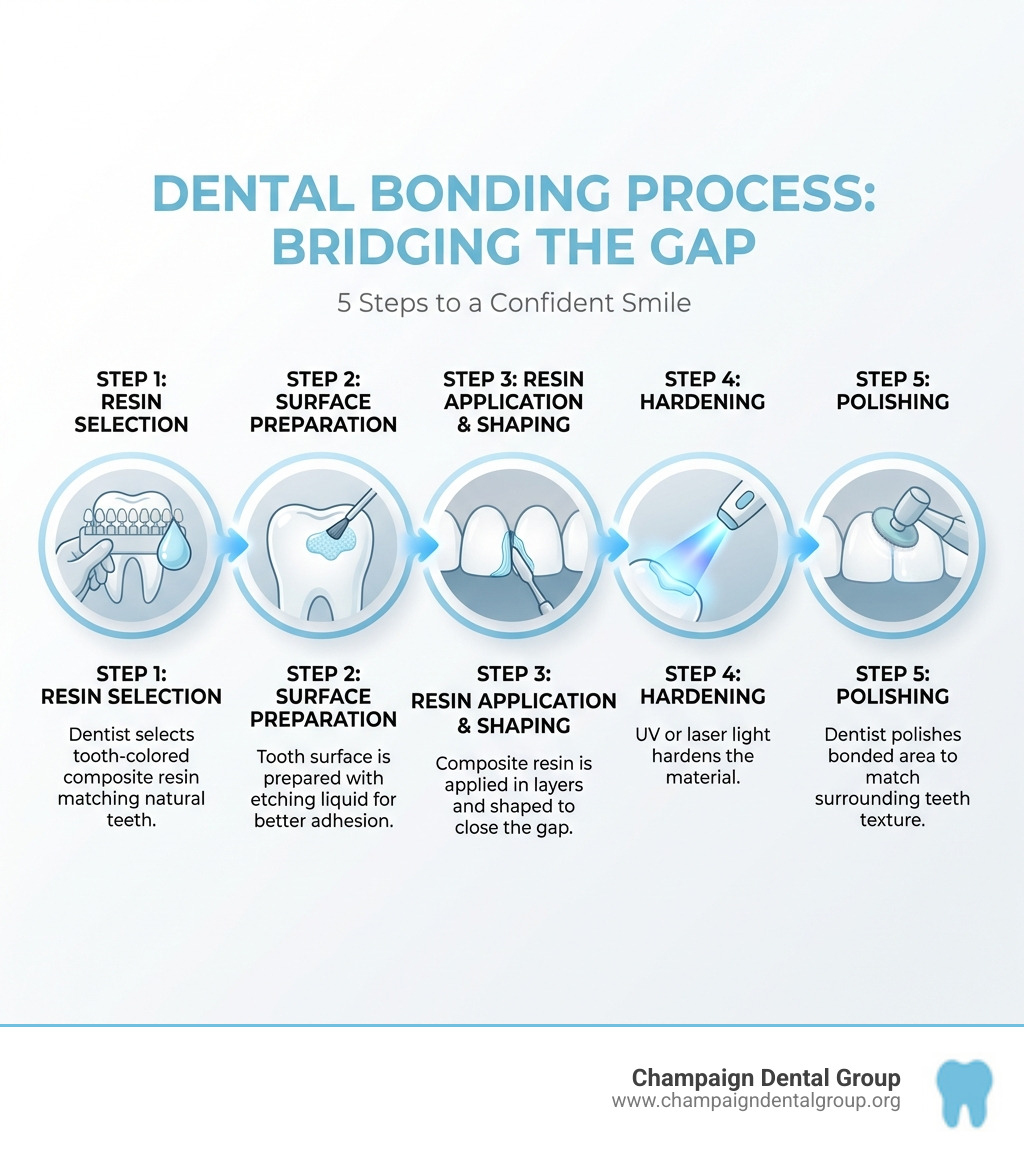
The beauty of teeth bonding for gaps lies in its simplicity and efficiency. When you visit us at Champaign Dental Group, you'll find the process comfortable and straightforward, often completed in a single appointment. Here's a step-by-step look at how we typically close those spaces:
- Initial Consultation: First, we'll chat about your smile goals and examine your teeth to ensure bonding is the best option for you. We'll also select a shade of composite resin that perfectly matches your natural tooth color, ensuring a seamless blend.
- Tooth Preparation: We'll gently prepare the tooth surface. This usually involves roughening the tooth with a mild etching liquid. This creates tiny microscopic pores on the enamel, which helps the bonding material adhere securely. Don't worry, this step is painless!
- Applying the Conditioning Agent: A conditioning liquid is then applied, further enhancing the bond between your natural tooth and the resin.
- Applying the Composite Resin: The tooth-colored composite resin, which feels a bit like putty, is then applied to the tooth. Our skilled dentists will carefully sculpt and shape this material to fill the gap and create a natural, harmonious tooth contour. This layering technique allows us to build up the tooth precisely.
- Curing (Hardening) the Material: Once the resin is perfectly shaped, we'll use a special curing light (often a laser or ultraviolet light) to rapidly harden the material. This light activates a photoinitiator in the resin, making it rigid and durable.
- Shaping and Polishing: The final—and arguably most artistic—step involves further shaping and then carefully polishing the bonded tooth. Our goal is to ensure the bonded area not only closes the gap but also blends flawlessly with your surrounding teeth in terms of texture and shine. This step is crucial for achieving a natural look and comfortable bite.
The entire process is minimally invasive and, for most patients, completely pain-free, rarely requiring anesthesia. You can learn more about the general procedure of What Is Dental Bonding and How Does It Work?. To see the amazing changes that can occur, check out our Direct Bonding Teeth Before & After Guide.
Longevity, Cost, and Alternatives
When considering any dental treatment, it's natural to wonder about its lifespan, cost, and what other options are available. Teeth bonding for gaps is a fantastic solution, but understanding these factors will help you make an informed decision for your smile.
Longevity: With proper care, dental bonding can last between 5 to 10 years. For bonding specifically on the front teeth, it typically lasts between 4 and 8 years, though some patients may need replacement in as little as 3 years, while others enjoy results for up to 10 years. The lifespan depends heavily on factors like the bond's location, your bite, and your eating habits. After about 8 years, we'll assess the bonded areas during your regular check-ups to determine if a retouch or replacement is needed.
Cost: While we don't discuss specific pricing, we can tell you that dental bonding is widely recognized as a more affordable cosmetic solution compared to alternatives like porcelain veneers or crowns. It's often completed in a single visit, which also contributes to its cost-effectiveness. We believe everyone deserves a healthy, confident smile, which is why we offer our Smile Protection Savings Plan to help make high-quality care accessible. You can explore more about Bonding Teeth Price through our dedicated resources.
Staining and Chipping Considerations: The composite resin material used in bonding is porous, making it susceptible to staining over time, especially from dark-colored foods and beverages like coffee, tea, red wine, and tobacco. It's also not as strong as your natural tooth enamel, so habits like biting nails, chewing on pens, or biting into very hard foods can lead to chipping. But don't worry, we'll discuss strategies to mitigate these risks and keep your bonded teeth looking their best!
Here's a quick comparison of common cosmetic options for gaps and other imperfections:
FeatureDental BondingPorcelain VeneersDental CrownsMaterialComposite ResinThin shells of porcelainCaps typically made of porcelain, ceramic, or metalProcedureDirect application, shaped and cured in-officeCustom-made in lab, bonded to tooth in 2 visitsCustom-made in lab, covers entire tooth, 2 visitsLongevity5-10 years (4-8 years on front teeth)10-15+ years10-15+ yearsCostMost affordable cosmetic optionMore expensive than bondingMost expensive (often for structural issues)Tooth PrepMinimal to noneModerate enamel removalSignificant enamel removalStain Resist.Moderate (can stain over time)High (very stain-resistant)High (very stain-resistant)StrengthGood, but can chip with bad habitsVery strong and durableVery strong and durableReversibilityEasier to modify/repairIrreversible (enamel removed)Irreversible (enamel removed)Best ForSmall gaps, minor chips, discolorationModerate gaps, significant aesthetic changes, uniform.Severely damaged, decayed, or weakened teeth
Alternatives to Dental Bonding
While teeth bonding for gaps is a fantastic solution for many, it's not the only way to achieve a perfect smile. Depending on the size of your gaps, the overall alignment of your teeth, and your aesthetic goals, we might discuss other options. Our commitment to high-quality patient care means we explore all suitable treatments with you.
- Porcelain Veneers: These are thin, custom-made shells of medical-grade porcelain that are bonded to the front surface of your teeth. Veneers offer exceptional durability and stain resistance, and they can create a dramatically uniform and bright smile. They are often chosen for more significant cosmetic changes, larger gaps, or when a patient desires a completely new smile aesthetic. While they are a larger investment and typically require more tooth preparation than bonding, their longevity and aesthetic appeal are significant advantages. You can dig deeper into this comparison with our guide on Veneers vs. Crowns: Which Will Win Your Smile?.
- Orthodontics: For larger gaps, significant misalignment, or issues with your bite, orthodontic treatment (like braces or clear aligners) might be the most comprehensive and effective solution. Orthodontics physically moves your teeth into their correct positions, addressing the root cause of the gaps. While this option takes more time, the results are often permanent and contribute to overall oral health. Sometimes, bonding might even be used after orthodontic treatment to perfect any small remaining spaces or reshape teeth slightly.
During your consultation at Champaign Dental Group, we'll thoroughly evaluate your oral health and discuss all suitable options, helping you understand the pros and cons of each. Our goal is to empower you with the knowledge to choose the treatment that best fits your needs and lifestyle.
Frequently Asked Questions about Dental Bonding
We know you might have more questions about teeth bonding for gaps, and we're here to provide clear, warm, and expert answers. Our team at Champaign Dental Group prides itself on comprehensive patient education, ensuring you feel confident and informed every step of the way.
How long does dental bonding last?
Ah, the million-dollar question! The lifespan of your dental bonding isn't quite fixed in stone, but it's pretty impressive. Generally, you can expect dental bonding for gaps to last between 5 to 10 years. However, if the bonding is on your front teeth, where it might experience more biting and chewing forces, it typically lasts between 4 and 8 years. Some patients might find it needs a touch-up or replacement in as little as 3 years, while others happily go for 10 years or more!
The key to maximizing its longevity lies in your maintenance habits. Just like a good relationship, your bonded teeth thrive on care and attention. Avoiding bad habits and maintaining excellent oral hygiene are crucial. We'll discuss all the specifics for extending the life of your bonding during your visit. For more information on related topics, you can also explore our article on Dental Bonding Cost.
Can bonded teeth get stained or chipped?
Yes, they can, and this is an important consideration we always discuss with our patients.
- Staining: The composite resin material used in bonding is quite porous. Think of it like a sponge, albeit a very tiny, hard one! This porosity means it can absorb pigments from certain foods and drinks over time. Culprits include:
- Coffee and tea
- Red wine
- Dark sodas
- Berries and other highly pigmented foods
- Tobacco products (smoking or chewing)
- Chipping: While durable, the composite resin isn't quite as strong as your natural tooth enamel. This means it can chip or break, especially if subjected to undue force. We recommend avoiding habits such as:
- Biting your fingernails
- Chewing on pens, ice, or other hard objects
- Using your teeth to open packages
- Biting into very hard or sticky foods with your bonded front teeth
Is the procedure painful?
One of the most common questions we get is, "Will it hurt?" And we're thrilled to tell you that for most patients, dental bonding for gaps is a remarkably comfortable and pain-free experience!
Here's why:
- Minimally Invasive: The procedure typically involves very little, if any, alteration to your natural tooth structure. We're usually just adding material to your tooth, not removing much.
- No Anesthesia Often Needed: Because it's so gentle, local anesthesia is rarely required unless we're also addressing a cavity or an existing filling during the bonding process. You'll simply relax in our chair while we work our magic.
- Quick Process: The entire procedure for closing a gap is often completed in 30-60 minutes per tooth, meaning you're not in the chair for an extended period.
Many of our patients are pleasantly surprised at how easy and comfortable the bonding process is. We prioritize your comfort and ensure you feel at ease throughout your visit. You can learn more about our Bonding services and what to expect.
Conclusion
We hope this extensive guide has shed some light on the wonderful world of teeth bonding for gaps. It's truly a fantastic solution for many individuals in Urbana OH and Champaign County OH looking to improve their smiles quickly, affordably, and with minimal discomfort. At Champaign Dental Group, we believe everyone deserves a smile they love, and dental bonding is one of the many ways we help make that a reality.
Our dedicated team is committed to providing compassionate care and the highest quality patient experience, from your first consultation to your follow-up appointments. We'll take the time to listen to your concerns, answer all your questions, and craft a personalized treatment plan that aligns perfectly with your smile goals. Plus, with options like our Smile Protection Savings Plan, we strive to make exceptional dental care accessible for your entire family.
Ready to bridge that gap and accept a more confident smile? We're here to guide you every step of the way.
Request an Appointment with us today to discuss how dental bonding can transform your smile!