.jpg)
How to Remove Black Tartar Without a Dentist
What You Should Know Before Trying to Remove Black Tartar
If you want to remove black tartar from your teeth, here is the honest short answer:
You cannot fully remove hardened black tartar at home. Once plaque hardens into tartar, only a dental professional with the right tools can safely remove it. But there is still a lot you can do at home to slow new buildup and protect your smile.
Quick answers:
- What is black tartar? Hardened plaque that has turned dark from tobacco, coffee, tea, or blood mixing with buildup below the gumline
- Can you remove it at home? No. Home tools and remedies cannot safely remove hardened tartar
- What can you do at home? Brush twice a day, floss daily, and use an antibacterial mouthwash to help stop plaque before it hardens
- What actually removes it? A professional dental cleaning using scaling tools and ultrasonic instruments
- When should you act? As soon as you notice it. Leaving black tartar alone can lead to gum problems, bone loss, and even tooth loss
That rough, dark crust near your gumline or between your teeth is not just a cosmetic concern. A lot of adults deal with tartar buildup, and gum disease is also very common. Black tartar is one of the warning signs we take seriously.
The good news is that even long-standing buildup can often be removed safely and comfortably by a dental hygienist. At Champaign Dental Group, we have been caring for families in Urbana and across Champaign County since 1997, and we know many people feel embarrassed or nervous when they notice dark buildup on their teeth. Please know you are not alone, and you will be treated with kindness here.
This guide walks you through what black tartar really is, what is safe to try at home, and when it is time to call your dentist.
Simple guide to remove black tartar:
What Black Tartar Is and Why It Turns Dark
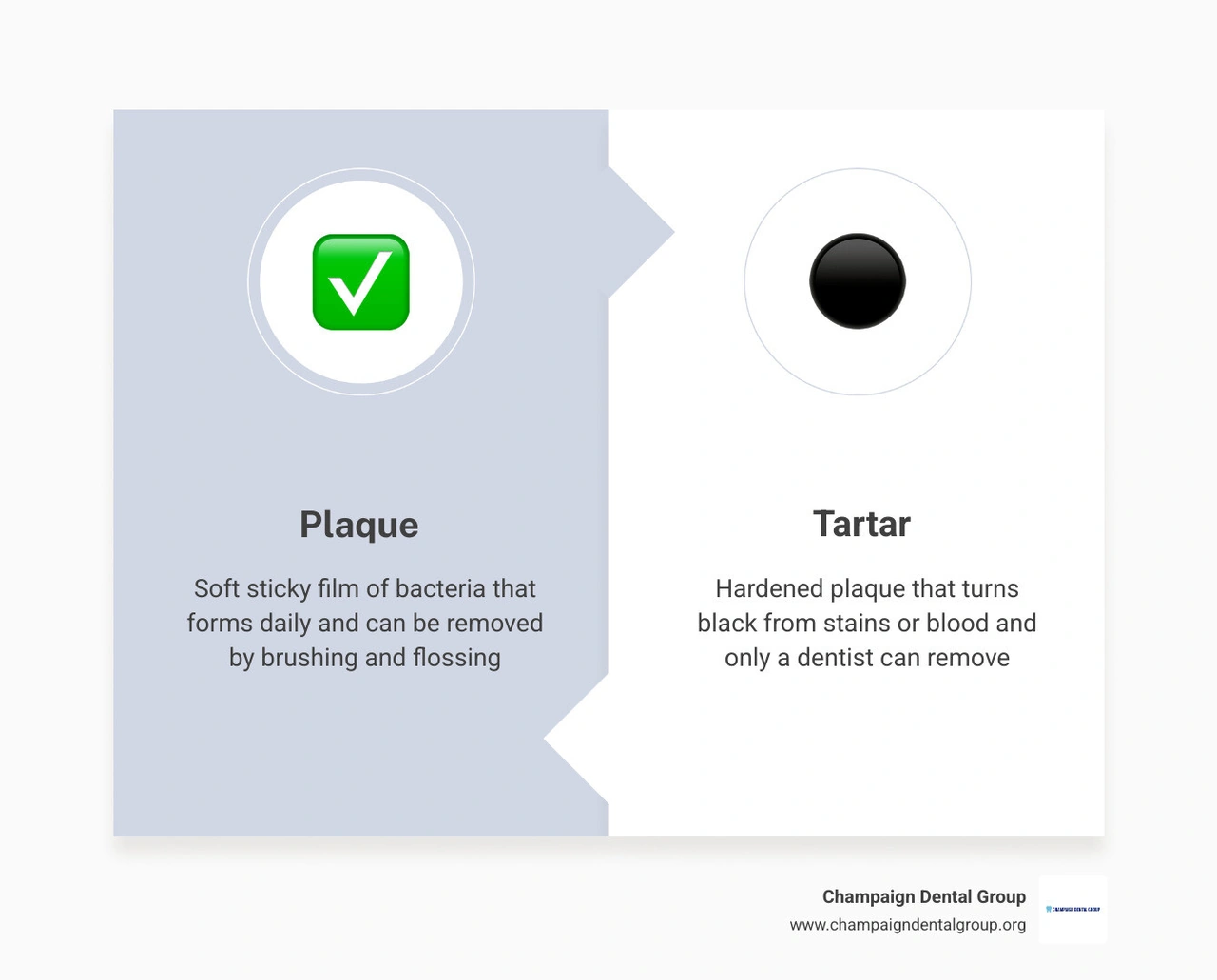
To understand how to remove black tartar, it helps to first understand what it really is. It does not start out black. It begins as plaque, that sticky film of bacteria that forms on your teeth after you eat or drink. If that plaque is not cleaned away, it mixes with minerals in your saliva and hardens into tartar. This can happen surprisingly fast, sometimes within 24 to 72 hours. You can read more about tartar from Cleveland Clinic.
What black tartar actually is
Think of tartar as a hard shell of old plaque that sticks tightly to the tooth. It is made of bacteria, proteins from saliva, and minerals. Unlike fresh plaque, which you can brush away, tartar bonds to the tooth and creates a rough surface where even more plaque can collect. That is one reason it tends to keep getting worse once it starts.
Why tartar turns black instead of yellow or brown
Most tartar starts out off-white, yellow, or light brown. Over time, it can soak up stains from coffee, tea, red wine, or tobacco and turn darker.
Another common reason is bleeding under the gums. When tartar forms below the gumline, it can irritate the gums and cause bleeding. That blood can mix with the buildup and make it look dark brown, black, or even greenish. When we see that kind of discoloration, it often means the area has been inflamed for a while.
Black tartar vs surface stains vs tooth decay
It can be hard to tell the difference just by looking in the mirror. Here is a quick comparison:
Feature: Texture
Black tartar: Rough, crusty, and raised
Surface stains: Smooth and part of the tooth surface
Tooth decay or cavities: Soft, sticky, or a visible hole
Feature: Location
Black tartar: Usually near or under the gumline
Surface stains: Can appear on many parts of the tooth
Tooth decay or cavities: Often in grooves, pits, or between teeth
Feature: Feel
Black tartar: Like a hard bump or ledge
Surface stains: Usually not something you can feel
Tooth decay or cavities: May feel sensitive or painful
Feature: Removal
Black tartar: Needs professional scaling
Surface stains: May improve with polishing or whitening
Tooth decay or cavities: Needs a filling or other treatment
For more details on identifying dark spots on teeth, check out our Black Plaque on Teeth Guide.
Can You Remove Black Tartar at Home Safely?
We see many patients in our Urbana office who have tried to remove black tartar on their own. We understand the temptation. If you can see it in the mirror, it feels like something you should be able to scrub or scrape away. But trying to remove hardened tartar at home can do more harm than good.
What you can do at home to reduce plaque before it hardens
The best at-home approach is prevention. You can help stop plaque from turning into black tartar by:
- Brushing for two full minutes twice a day with a soft-bristled toothbrush
- Using an electric toothbrush, which can be very helpful for stubborn plaque along the gumline
- Choosing a fluoride or tartar-control toothpaste
- Flossing every day to clean the spots between teeth where buildup loves to hide
- Using interdental brushes if you have wider spaces between teeth
- Rinsing with an antibacterial mouthwash
- Drinking water often, especially after coffee, tea, or sugary foods
Why you should not try to remove black tartar with scraping tools
You can find dental scaler kits online, but using them yourself is risky. These tools are sharp, and they take training to use safely. If you try to scrape tartar off at home, you could cause:
- Damage to your enamel: Scratching the outer surface of the tooth can lead to long-term sensitivity
- Cuts to your gums: A slip can injure the gums and make the area sore or infected
- Missed buildup under the gums: You may only remove a little from the top while leaving the more harmful buildup behind
Read more about the risks in our article on plaque and tartar removal.
Remove black tartar myths: baking soda, peroxide, vinegar, and water flossers
There are plenty of home remedies online, but most of them do not remove hardened tartar:
- Baking Soda: It may help with some surface stains, but it cannot remove tartar once it has hardened
- Hydrogen Peroxide: It may freshen the mouth or lighten minor surface discoloration, but it does not break tartar off the teeth
- Vinegar or Lemon Juice: These are acidic and can wear down enamel, which creates a whole new problem
- Water Flossers: These are great for food particles and soft plaque, but not for hardened tartar
- Oil Pulling: Some people like it for freshness, but there is no good evidence that it removes tartar
If you are not sure whether you are dealing with stain, tartar, or something else, it is always safer to let a dental team take a look.
How Dentists Remove Black Tartar When Home Care Is Not Enough
When home care is not enough to remove black tartar, a professional cleaning is the safest next step. At Champaign Dental Group, we have been caring for Urbana and Champaign County families since 1997, and we do our best to make every visit feel calm, personal, and judgment-free.
What happens during a standard cleaning for visible black tartar
For tartar that you can see above the gumline, a standard teeth cleaning is often enough. We check the area first, then use special hand tools and ultrasonic instruments to gently loosen and remove the buildup. The ultrasonic tool uses vibration and water spray to help lift tartar away from the teeth. After that, we polish your teeth so they feel smoother and cleaner.
How deep cleanings help remove black tartar below the gums
If the black tartar has moved under the gums, you may need scaling and root planing, also called a deep cleaning.
- Scaling: We remove buildup from the tooth surface and from inside the spaces under the gums
- Root planing: We smooth the root surfaces so it is harder for bacteria to stick and easier for the gums to heal
You can learn more about this process in our guide to deep gum cleaning. For a general overview of black tartar, Colgate's oral health guide is another helpful resource.
What to expect if remove black tartar treatment is severe
If the buildup is heavier or you feel anxious about treatment, we can talk through ways to make the visit more comfortable. Because we offer sedation dentistry right here in our Urbana office, many patients are able to get the care they need without feeling overwhelmed. Sometimes we recommend dividing treatment into more than one visit so your mouth has time to recover. Some tenderness or sensitivity afterward is normal, but it usually improves as your gums start to heal.
What Happens If You Leave Black Tartar Untreated
Leaving black tartar on your teeth is a bit like leaving a splinter in your finger. It keeps irritating the area until something is done about it.
Early problems black tartar can cause
The first signs are often red or swollen gums, bleeding when you brush or floss, and bad breath that keeps coming back. Black tartar creates a rough place for bacteria to collect, so it tends to make the whole area harder to keep clean.
Long-term risks of untreated buildup
If it stays there, the irritation can turn into more serious gum disease. Over time, that can damage the support around your teeth, including the bone that helps hold them in place. Teeth may start to feel loose, and in severe cases, people can lose teeth. That is why it is always better to deal with tartar early instead of waiting.
Who is more likely to get black tartar
Some people are simply more prone to buildup than others. Risk factors include:
- Smoking or tobacco use
- Dry mouth, which can happen with certain medications or health conditions
- Crowded teeth or braces, where it is harder to clean every area well
- A diet high in sugar or starch
- Frequent coffee, tea, or red wine
- Skipping regular dental cleanings
If any of these sound familiar, it does not mean you are doing something wrong. It just means you may need a little extra support and a cleaning schedule that fits your smile.
How to Prevent Black Tartar from Coming Back
Once we help you remove black tartar, the next step is keeping it from coming back. Small daily habits make a big difference.
Best brushing and flossing habits for tartar-prone teeth
- Brush for two full minutes: Most people stop too soon without realizing it
- Aim at the gumline: Hold your toothbrush at a 45-degree angle toward the gums
- Use soft bristles: They clean well without being harsh on your gums
- Floss every day: This helps clean the tight spaces a toothbrush cannot reach
- Do not forget the inside surfaces: The back of the lower front teeth is a common place for tartar to build up
- Clean your tongue too: It can help with both bacteria and breath
Diet and lifestyle habits that raise your risk
- Drink water often: Especially after coffee, tea, or meals
- Cut back on sugary and starchy snacks: These feed the bacteria that create plaque
- Watch stain-heavy drinks: Coffee, tea, and red wine can darken buildup over time
- Avoid smoking: This is one of the biggest risk factors for black tartar and gum disease
- Address dry mouth when possible: If your mouth often feels dry, let your dental team know
How often should you get tartar removed?
For many of our neighbors in Urbana, Mechanicsburg, West Liberty, Tremont City, Springfield, and across Champaign County, a professional dental cleaning check-up every six months works well. If you build tartar quickly or have a history of gum problems, we may recommend more frequent visits. We will help you find a schedule that fits your needs and keeps your smile healthy.
When to Get Help for Black Tartar
If you see dark buildup that will not brush away, or your gums feel tender and bleed easily, it is time to get help.
Signs it is time to book a cleaning
- You see a hard black or brown ledge near your gums
- Your floss catches on a rough spot or shreds in one area
- You have bad breath that keeps coming back after brushing
- Your gums are pulling away from your teeth
- You notice recurring buildup in the same places
If you feel nervous about tartar removal
We know many people feel anxious about seeing the dentist, especially if it has been a while. At Champaign Dental Group, we believe in explaining things clearly, moving at your pace, and treating you like family. Our full-service office in Urbana offers everything from preventive care to oral surgery and sedation dentistry, so you can get the care you need in one familiar place.
If you do not have insurance, our Smile Protection Savings Plan was created to help make care more manageable for local families and individuals.
If black tartar is affecting your health or your confidence, we would be glad to help. Request an appointment with our team today.
For more information on costs and services, you can explore: