.jpg)
Closing the Distance with Gap Teeth Before and After Bonding

What Gap Teeth Before and After Bonding Actually Looks Like
Seeing gap teeth before and after bonding is a great way to understand how a simple visit can change your smile. Many of our neighbors here in Champaign County have a little space between their front teeth and wonder if there is an easy fix that does not involve braces or a lot of dental work.
Here is the simple breakdown:
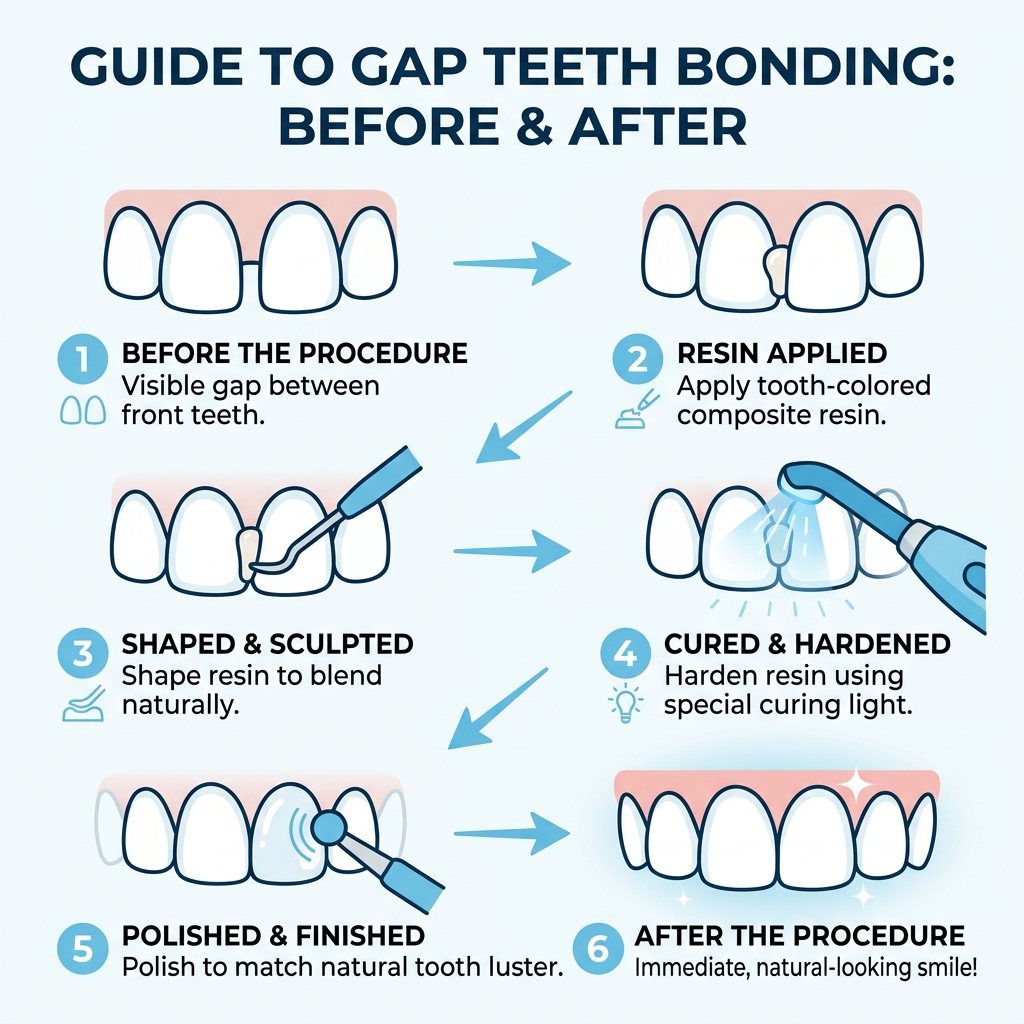
- Before bonding: A visible gap between one or more teeth, sometimes making you feel shy when smiling or speaking.
- After bonding: The gap is closed using a tooth colored material that is shaped to match your natural teeth and hardened in a single visit.
- Time required: Most visits take about 30 to 60 minutes.
- Result: An immediate, natural looking smile with no drilling and no long recovery time.
Bonding works by adding a tooth colored material to the sides of the teeth next to the gap. We sculpt and polish it to blend in with your existing teeth. The result is visible right away.
About 8 to 12% of people have a gap between their front teeth. Many of our patients do not realize how quickly and affordably it can be fixed. If you have been putting it off, you are not alone, and the good news is that the process is much simpler than most people expect.
Handy gap teeth before and after bonding terms:
Understanding Why Gaps Happen
In the dental world, that space between your teeth is simply called a gap. While it is most common between the two upper front teeth, gaps can happen anywhere in the mouth. For some, it is a signature part of their look. Think of famous smiles like Michael Strahan’s. However, if that little space makes you want to cover your mouth when you laugh, it is helpful to know why it is there in the first place.
Genetics play the biggest role. Just like your eye color or height, the size of your teeth and the width of your jawbone are inherited. If your teeth are a bit small for your jaw, they will naturally spread out, creating spaces. Research shows that about 8 to 12% of people have some form of a gap.
Another common cause is a small piece of tissue that connects your upper lip to your gums. If that tissue is especially thick or grows too far down, it can act like a physical barrier, pushing the two front teeth apart.
Habits also matter. Things we did as kids, like thumb sucking or pushing the tongue against the front teeth when swallowing, can put enough pressure on teeth to move them over time. In some cases, gaps can even be a sign of underlying bone health issues, as teeth may start to shift if the supporting structures are not strong.
According to Closing Teeth Gaps with Bonding: Pros and Insights, these gaps can sometimes become food traps. When food gets stuck, it increases the risk of decay and gum irritation. So, while many people look into teeth bonding for gaps for the look of it, there are often great health reasons to close that distance too.
How Dental Bonding Closes Gaps Between Teeth
The magic behind bonding is a material called composite resin. This is a durable, tooth-colored plastic that we can mold and shape right in our Urbana office. The best part? It is usually a one visit solution. You can walk in with a gap and walk out with a brand new smile in about 30 to 60 minutes.
Here is how we do it, step by step:
- Shade Matching: We start by picking a resin color that perfectly matches your natural teeth. We want the addition to be invisible to everyone but you and your dentist.
- Preparation: We gently roughen the surface of the tooth. Don't worry, this doesn't hurt! We use a mild etching liquid that creates tiny, microscopic textures. This helps the bonding material stick firmly to your enamel.
- Application: We apply the putty like resin to the side of the tooth. This is where the artistry comes in. We carefully sculpt the material to widen the tooth and close the gap.
- Curing: Once the shape is just right, we use a special blue curing light. This light hardens the resin in seconds.
- Polishing: Finally, we trim and polish the bonded area so it has the same smooth feel and natural shine as the rest of your teeth.
Because this process is "additive," meaning we are adding to your tooth rather than taking away, it is incredibly conservative. Most patients don't even need numbing because there is no drilling involved. It is a gentle way to get big results.
Gap Teeth Before and After Bonding: What to Expect
When you look at a direct bonding teeth before after guide, the most striking thing is how immediate the change is. Unlike braces, which take months or years, bonding gives you that "aha!" moment the second you look in the mirror at the end of your appointment.
One of the things our neighbors in Champaign County appreciate most is that bonding is a conservative choice. We aren't removing healthy tooth structure to make room for a crown or a veneer. We are simply enhancing what you already have. It is also reversible. Because we haven't permanently altered your natural enamel, the bonding can be removed or replaced down the road if you ever change your mind.
Visualizing Gap Teeth Before and After Bonding Results
The goal of teeth bonding before and after is balance. We don't just want the gap gone; we want your teeth to look proportional. If we only added material to one tooth, it might look much wider than its neighbor. Usually, we add a little bit to both teeth bordering the gap to keep everything symmetrical.
We also pay close attention to the "smile line." This is the curve of your teeth as they follow your lower lip. By closing the gap, we can create a more harmonious, full appearance. Many patients tell us that after their gap is closed, they feel a huge boost in confidence. They find themselves smiling more in photos and feeling more relaxed during conversations.
Longevity of Gap Teeth Before and After Bonding
How long will your new smile last? On average, composite bonding teeth will look great for about 5 to 7 years. Some people get up to 10 years out of their bonding, while others might need a touch up after 3 or 4 years.
Research shows that about 85% of bonded gap closures still look excellent at the five year mark. The durability of direct composite bonding depends a lot on your lifestyle and your bite. If you tend to grind your teeth at night or if you have a very heavy "bite," the resin might wear down faster. The material is strong, but it isn't quite as tough as your natural enamel or porcelain.
Comparing Bonding to Veneers and Orthodontics
When you are looking at bonding teeth price and options, it is helpful to see how it stacks up against other treatments.
| Feature | Dental Bonding | Porcelain Veneers | Orthodontics (Braces/Invisalign) |
|---|---|---|---|
| Time | 1 visit (under 1 hour) | 2 to 3 visits | 6 to 24 months |
| Tooth Prep | Minimal to none | Shaving of enamel | None |
| Longevity | 5 to 10 years | 10 to 20 years | Permanent (with retainers) |
| Reversibility | Yes | No | Yes |
| Cost | Most affordable | Higher investment | Varies by case |
Bonding is often the best choice for small, cosmetic gaps. If you have a very large gap, or if your teeth are also very crooked, we might talk about Invisalign or traditional braces. Orthodontics move the actual roots of the teeth, which is a more permanent structural change. However, many people deal with "orthodontic relapse," where a gap opens back up years after they finish braces. In those cases, bonding is a perfect, quick fix to close that space back up.
Veneers are beautiful and last a long time, but they require us to remove a thin layer of your natural tooth enamel. For many of our patients, especially younger ones, bonding is the preferred "middle ground" because it stays away from the drill and keeps the tooth intact.
Caring for Your New Smile and Managing Costs
Once your gap is closed, you want to keep it looking sharp. The resin material is slightly more porous than natural enamel, which means it can pick up stains over time. If you are a big coffee, tea, or red wine drinker, you will want to be a bit more mindful.
Here are our top tips for maintenance:
- Brush and Floss: Treat your bonded teeth like your natural ones. Floss gently to protect resin edges and use a soft-bristle toothbrush to avoid scratching the polish.
- Avoid "Using Teeth as Tools": Don't use your teeth to open packages, bite your nails, or chew on pens. This can chip the resin.
- Watch the Ice: Chewing on ice is a common way people accidentally chip their bonding.
- Night Guards: If you know you grind your teeth, a custom night guard can protect your investment while you sleep.
- Regular Cleanings: Coming in to see us in Urbana for your six month checkups allows us to professionally polish the bonding, which helps keep it smooth and stain resistant.
We know that the dental bonding cost is a factor for many families. While it is one of the most cost effective cosmetic treatments available, we want to make sure everyone can access the care they need. For our neighbors who don't have insurance, we offer a Smile Protection Savings Plan. This plan helps cover the cost of dental bonding without insurance by providing discounts on services, making it easier to fit a smile makeover into the family budget.
Frequently Asked Questions about Bonding for Gaps
What size gaps can dental bonding effectively close?
Bonding is a champion for small to moderate spaces. Generally, gaps under 3mm are the best fit for this treatment. If a gap is too wide, adding enough material to close it might make the teeth look unnaturally wide. During your visit, we look at your tooth proportions and your bite to make sure the end result will look balanced and natural.
Is the dental bonding visit painful?
Not at all! Because we are usually just adding material to the surface of your tooth, we rarely need to use any numbing or needles. Most of our patients find the process very comfortable and even relaxing. You might feel a little bit of mild sensitivity to cold for a day or two after the visit, but that usually clears up very quickly.
Can dental bonding be reversed if I change my mind?
Yes, it can. This is one of the biggest advantages of bonding. Since we do not have to remove much enamel to apply the material, we can safely remove the bonding if you ever decide you want to go back to your original look or if you decide to upgrade to porcelain veneers later on. It is a very conservative way to test out a new look for your smile.
Conclusion
At Champaign Dental Group, we have been a part of the Urbana community since 1997. We have seen a lot of smiles over the years, and nothing makes us happier than helping a neighbor feel more confident. Whether you are from right here in Urbana or you are coming to see us from Mechanicsburg, Tremont City, West Liberty, or Springfield, we treat you like family.
We believe that everyone deserves a smile they are proud to show off. If you have been living with a gap that bothers you, we would love to chat about your options. Our full service practice can handle everything from simple bonding to more complex care, all in a warm and reassuring environment. And if you are worried about the budget, remember to ask us about our Smile Protection Savings Plan.
Ready to see what your smile could look like? Request an appointment for bonding today and let us close that gap together. We look forward to seeing you soon!