
The Ultimate Guide to Crown Tooth Costs

What Determines the Price for Crown Teeth?
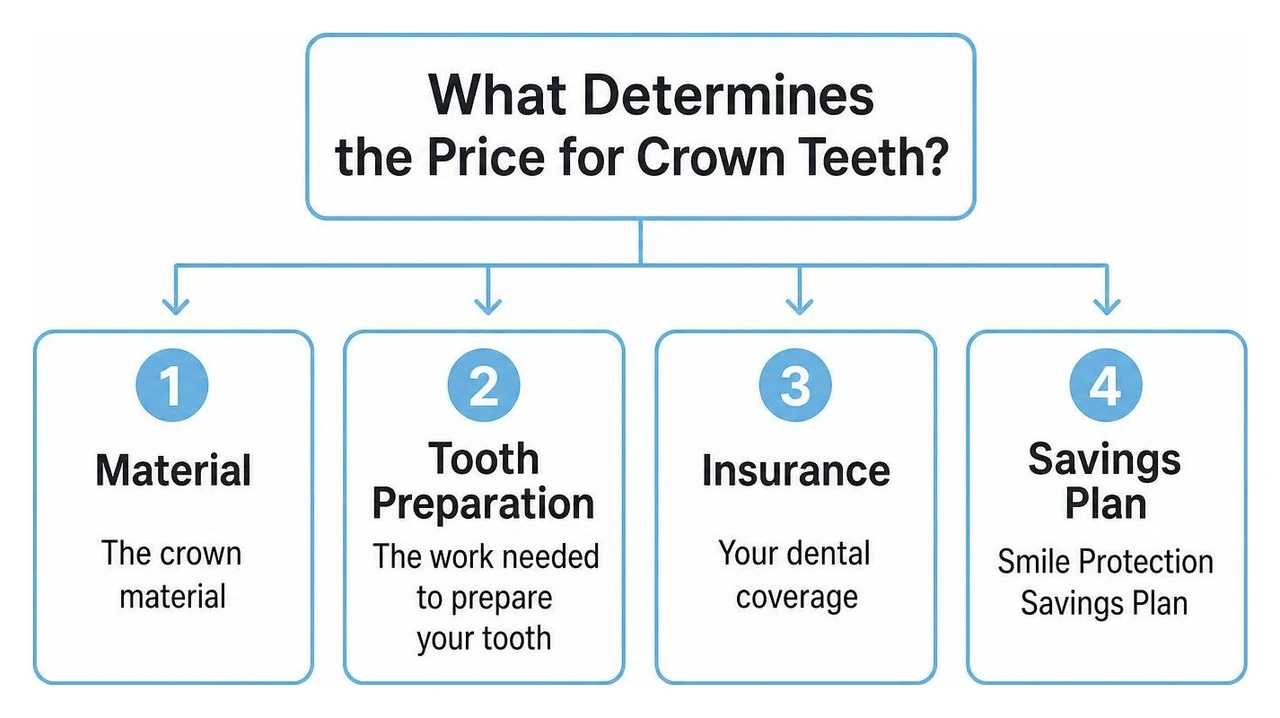
The price for crown teeth depends on the crown material, the work needed to prepare your tooth, and your dental coverage. The most useful way to know what you will pay is to ask for an itemized treatment estimate. It should show the crown, any added care, and your expected insurance share.
If you don't have insurance, ask about Champaign Dental Group's Smile Protection Savings Plan. A crown is a long-term choice, so it helps to understand both the cost and how it will protect your tooth.
I'm Dr. Ellen Zwick, and I'll help you make sense of the choices before you decide what comes next.
Understanding the Total Price for Crown Teeth and Preparatory Care

When you look at restorative dental care, the total cost involves more than just the custom cap placed over your tooth. A dental crown acts as a protective shield for a natural tooth that has suffered deep decay, extensive cracking, or severe wear. To ensure that your new crown lasts for years, the foundation underneath must be completely clean, stable, and healthy.
Before placing a crown, we evaluate everything supporting your tooth. When treating damaged enamel, we make sure that hidden decay is removed and that your gums are in good condition. Skipping foundational care would be like building a house on soft sand. Because every smile is unique, the steps required during the dental crown preparation process can vary from person to person, directly shaping your overall treatment plan.
Pre-Restoration Procedures and Ancillary Fees
Before a crown is made, several preparatory steps may be necessary to restore tooth strength:
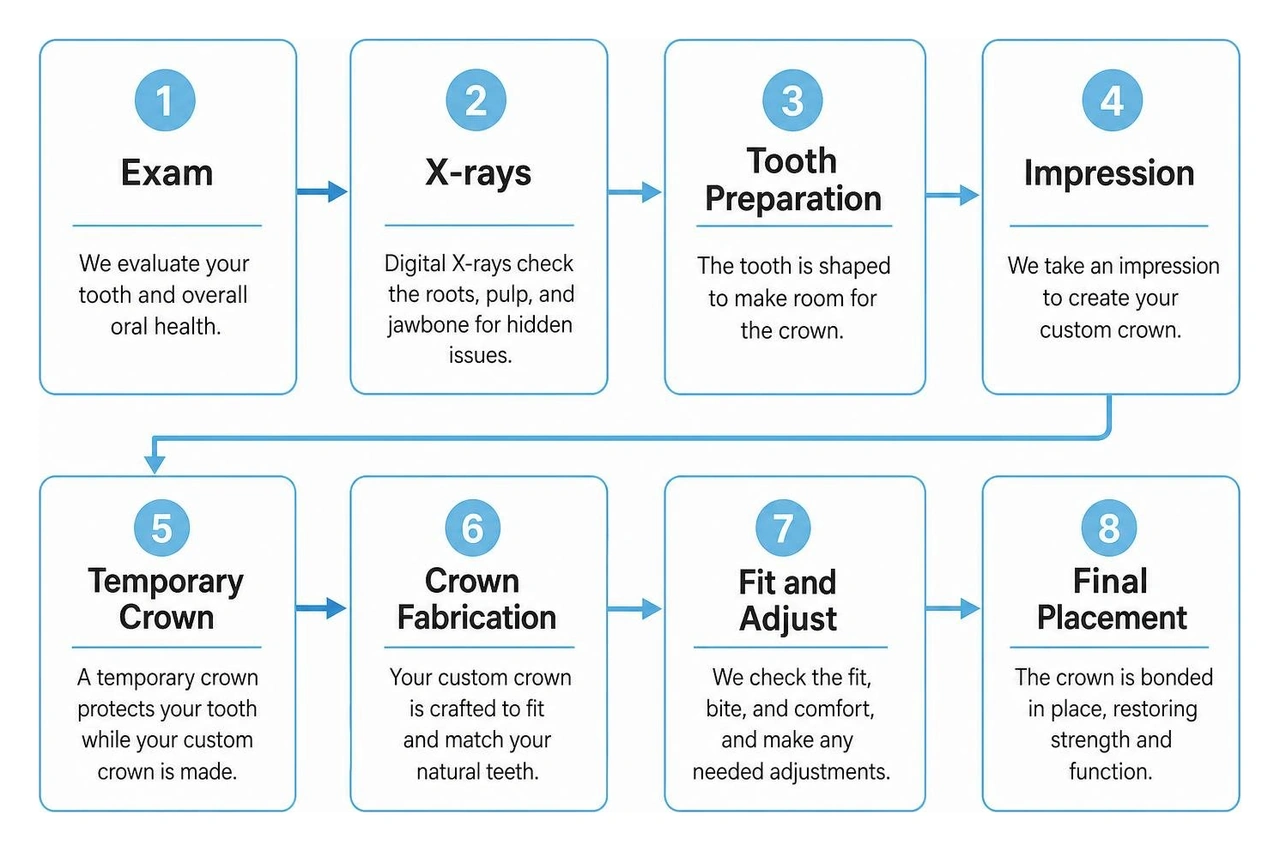
- Diagnostic Digital Radiographs: Detailed X-rays let us see the roots, interior pulp, and surrounding jawbone to ensure there are no hidden infections.
- Core Buildups: If a large portion of your natural tooth structure is missing from decay or trauma, we place durable filling material to rebuild the tooth so the crown has a solid shape to grip.
- Pulp Therapy or Root Canal Treatment: When deep decay reaches the inner nerve of the tooth, a root canal removes infected tissue before the crown seals the space.
- Post Placement: In teeth that need extra reinforcement after a root canal, a small post is placed inside the root canal space to anchor the core buildup securely.
- Periodontal Evaluation: Healthy gum tissue ensures the crown margins fit snugly without trapping plaque or causing irritation.
- Local Anesthesia: We keep you completely numb, relaxed, and comfortable throughout every step of your appointment.
Traditional Lab Fabrication vs Same-Day Milling
The method used to craft your crown also plays a role in your scheduling and overall care experience.
Traditional crown fabrication relies on a trusted dental laboratory. During your first visit, we gently shape your tooth, capture a precise impression, and place a comfortable temporary crown to protect your tooth while you eat and speak. The dental lab technician then custom-crafts your permanent crown from high-grade ceramic or metal. About two weeks later, you return for a second visit where we check the fit, make sure your bite feels natural, and permanently cement your new crown in place.
Same-day crowns use digital CAD/CAM technology to scan your prepared tooth and mill a custom ceramic crown right in the office. While this eliminates the need for a temporary crown and a second appointment, traditional lab-crafted crowns remain the standard of care for complex cosmetic cases or areas under heavy chewing stress where specialized layering creates optimal durability.
How Material Choices Influence Crown Costs and Longevity
The material chosen for your restoration balances aesthetic beauty, biting strength, and long-term durability. Front teeth require lifelike translucency that blends with your natural smile, while back molars must handle hundreds of pounds of biting pressure every day. Finding the best crowns for teeth involves matching the right material to your specific bite and personal goals.
Average Price for Crown Teeth by Material Selection
Crown materials vary in their composition, strength, and aesthetic qualities:
- All-Ceramic and Porcelain: Known for lifelike beauty, all-porcelain crowns match the color, shine, and translucency of natural enamel. They are ideal for front teeth and for patients with metal sensitivities.
- Zirconia Ceramics: Zirconia offers remarkable fracture resistance combined with a natural, tooth-colored appearance. It handles intense chewing forces, making it an excellent choice for molars and patients who grind their teeth.
- Porcelain-Fused-to-Metal (PFM): PFM crowns pair the strength of an underlying metal coping with a tooth-colored porcelain exterior. They have a long history of clinical success, though a subtle dark line can sometimes show near the gumline over time.
- Gold and Metal Alloys: Highly biocompatible and gentle on opposing teeth, gold alloy crowns rarely chip or wear down natural enamel. They provide exceptional longevity for back molars.
- Composite Resin: Composite resin crowns serve primarily as temporary or short-term solutions. While budget-friendly, resin is softer and wears down more quickly than ceramic or metal.
Durability, Maintenance, and Longevity Factors
A well-crafted crown can protect your smile for a decade or much longer when properly maintained. Daily brushing and gentle flossing around the crown margins prevent plaque buildup and recurrent decay where the cap meets your natural tooth.
If you clench or grind your teeth at night, wearing a custom night guard protects your restoration from excessive pressure. Regular checkups also allow us to verify the fit and perform a gentle crown bite adjustment if your bite shifts over time.
Dental Insurance Coverage, Savings Plans, and Payment Options
Navigating dental insurance can feel overwhelming, but our front desk team works alongside you to maximize your benefits. Insurance policies generally classify crowns as major restorative care, covering a percentage of the procedure when it is medically necessary.
Every policy sets its own annual maximums, deductibles, and waiting periods. Requesting a pre-treatment estimate before your procedure clarifies what your insurer will cover and gives you a clear understanding of the dental crown cost factors in Ohio.
Medical Necessity vs Cosmetic Exclusions
Dental insurance plans distinguish between restorative treatments and purely elective enhancements:
- Medically Necessary Restorations: When a tooth has severe fractures, large decayed areas that a filling cannot support, or structural weakness after a root canal, insurance typically provides restorative benefits. We provide clear digital X-rays and clinical notes showing structural compromise to help streamline claim approval.
- Cosmetic Exclusions: If a crown is placed solely to alter tooth shape or color without underlying decay or breakage, insurers often categorize the procedure as elective cosmetic care, which means out-of-pocket payment is required.
Managing Out-of-Pocket Price for Crown Teeth Without Insurance
If you do not have private dental insurance, you still have several practical options to manage your out-of-pocket investment:
- Health Savings Accounts (HSA) & Flexible Spending Accounts (FSA): You can use pre-tax healthcare dollars to cover crowns, core buildups, and associated restorative care.
- Third-Party Healthcare Financing: Services like CareCredit allow you to split treatment costs into manageable monthly payments with zero or low interest.
- In-House Dental Membership Plans: Our dental membership plan, the Smile Protection Savings Plan, offers uninsured individuals and families built-in savings on preventive and restorative treatments without waiting periods or annual maximums.
Comparing Crowns to Restorative Alternatives
A full-coverage crown is not always the only way to restore a tooth. Modern dentistry prioritizes conservative treatment, preserving as much healthy enamel and dentin as possible while restoring function.

Inlays, Onlays, and 3/4 Crowns
When damage is too extensive for a standard filling but does not compromise the entire tooth, partial-coverage restorations offer an effective middle ground. Inlays sit neatly inside the cusps of your tooth, while onlays (often called partial crowns) cover one or more damaged chewing cusps. By preserving healthy natural tooth structure, onlays support long-term strength while minimizing tooth preparation.
Composite Fillings and Cosmetic Veneers
For minor chips or smaller cavities, direct composite resin fillings bond directly to natural enamel, restoring the tooth in a single appointment. However, placing an oversized filling in a severely broken tooth increases the risk of tooth fracture under chewing pressure.
When aesthetic concerns affect front teeth without compromising structural strength, choosing between a crown vs veneer depends on tooth health. Veneers cover only the front surface of the tooth to improve shape and color, while crowns enclose the entire tooth to provide complete structural reinforcement.
Frequently Asked Questions About Dental Crown Costs
How long does a dental crown typically last before needing replacement?
With good home care and routine cleanings, a permanent crown generally lasts between 10 and 15 years, and many last much longer. Longevity depends on your oral hygiene habits, whether you grind your teeth, and regular dental checkups to ensure the protective seal remains intact.
Does dental insurance cover the full cost of a tooth crown?
Most dental insurance plans do not cover the complete cost of a crown. Standard dental policies usually cover a percentage of major restorative services, up to your annual policy cap. Your remaining balance depends on your deductible, your plan's benefit levels, and whether any preparatory treatments are required.
What are the main signs that a crown needs to be repaired or replaced?
Common signs that a crown needs evaluation include persistent pain or sensitivity to hot and cold, noticeable movement or looseness, visible chips in the ceramic material, or food constantly catching around the gumline due to cement breakdown.
Restoring Your Smile with Confidence
A strong, healthy smile allows you to eat your favorite meals, speak comfortably, and share your smile with confidence. Whether you are dealing with a broken tooth, replacing an aging restoration, or exploring options to protect your oral health, having clear information helps you make the right choice for your smile and your family budget.
At Champaign Dental Group, we have cared for our neighbors across Champaign County since 1997. We take the time to answer your questions, explain all your treatment options, and provide gentle, anxiety-free care in a welcoming environment. If you want to discuss restorative care or explore our Smile Protection Savings Plan, schedule a restorative consultation with our friendly team today.